

Fish shortage in Jamestown
Jamestown is, with Usshertown, the oldest district of Accra. The British built James Fort there in 1673: the Royal African Company made it a trading post for gold and slaves. Today the district lives from artisanal fishing, and it is where a new fishing harbour, funded by a Chinese grant of 60 million dollars, was commissioned on 13 September 2024: a 200-capacity market, a 60-tonne ice plant, a 200-tonne cold store. Yet on 25 April 2026, on the quay, the day’s catch fitted in a few crates and sacks. This photo essay looks at the gap between the new equipment and a shrinking resource.
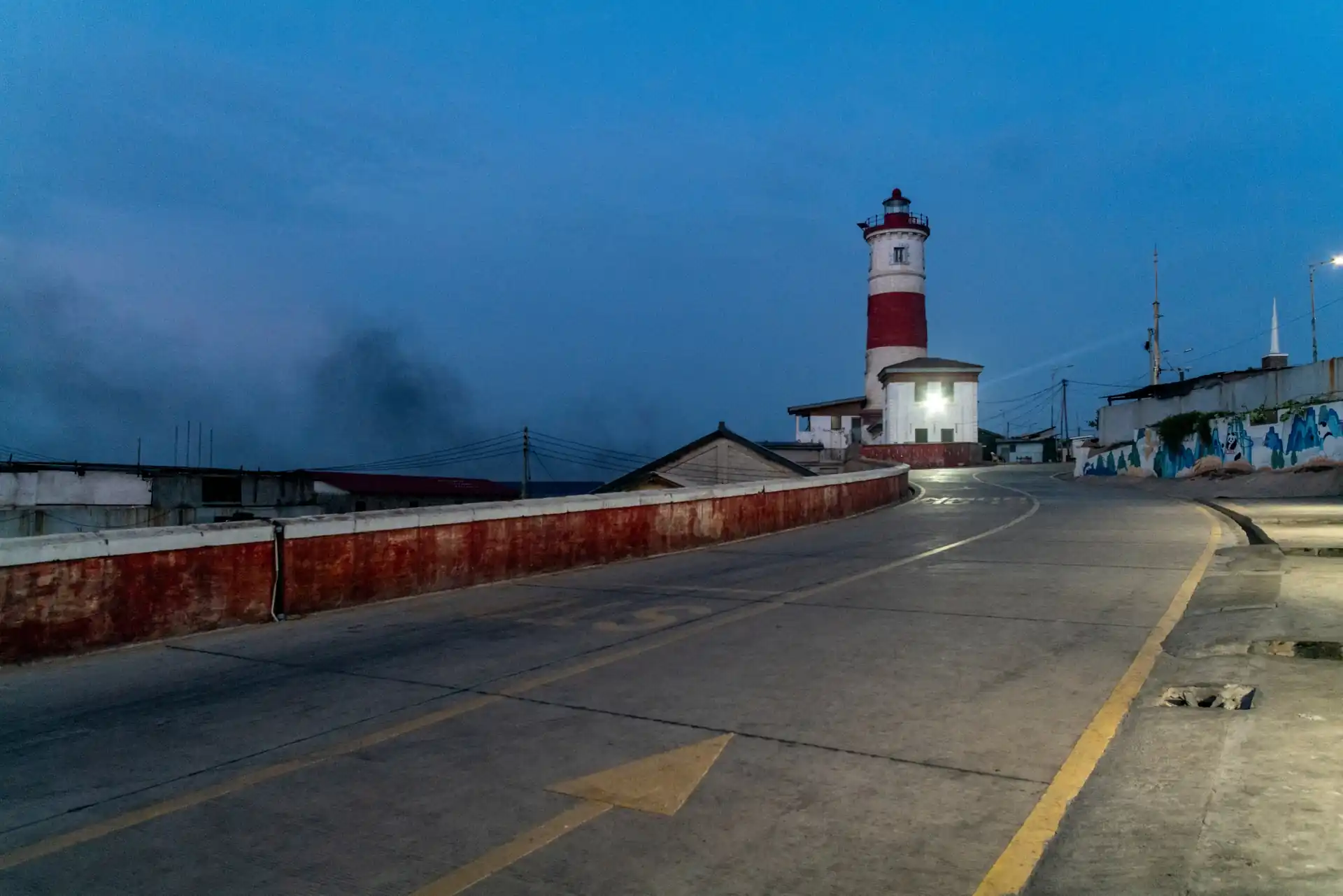
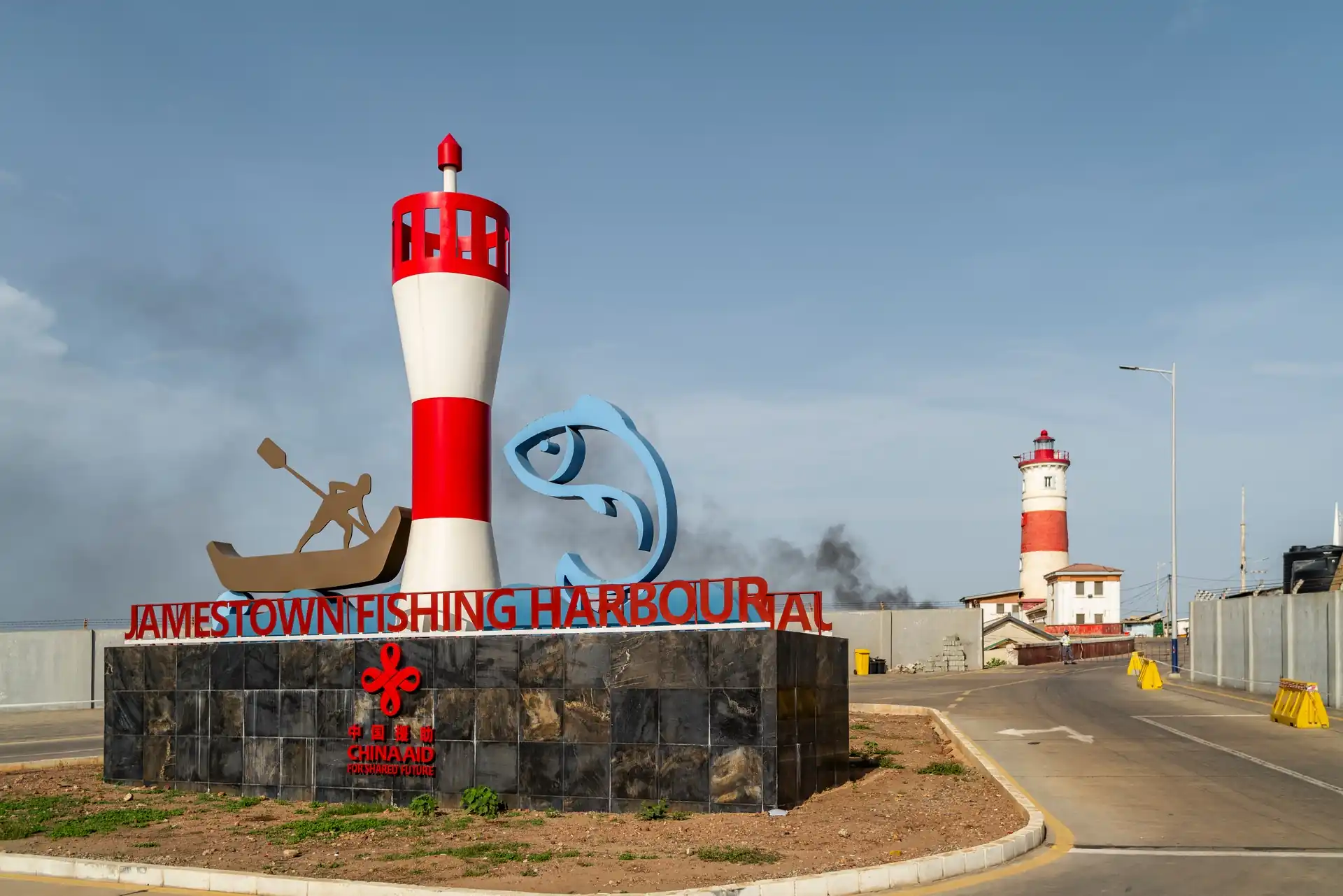
Jamestown, the lighthouse and the new harbour
The present lighthouse dates from 1932, built on the site of the 1871 light. About 28 m high, the red-and-white banded tower is operated by the Ghana Ports and Harbours Authority. At its foot, a monument bears the name Jamestown Fishing Harbour and the China Aid logo. The harbour was commissioned on 13 September 2024.
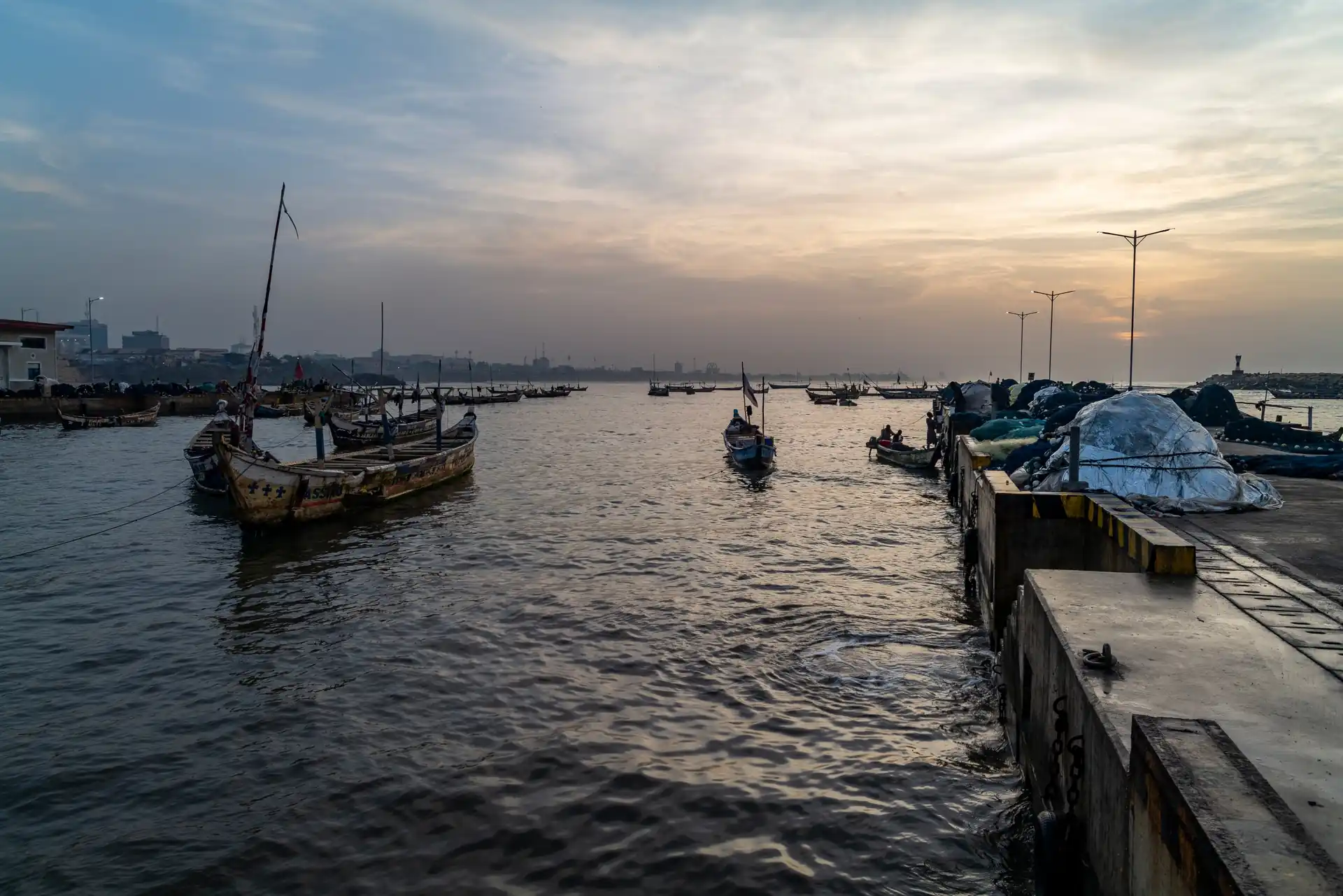
Pirogues and the harbour basin
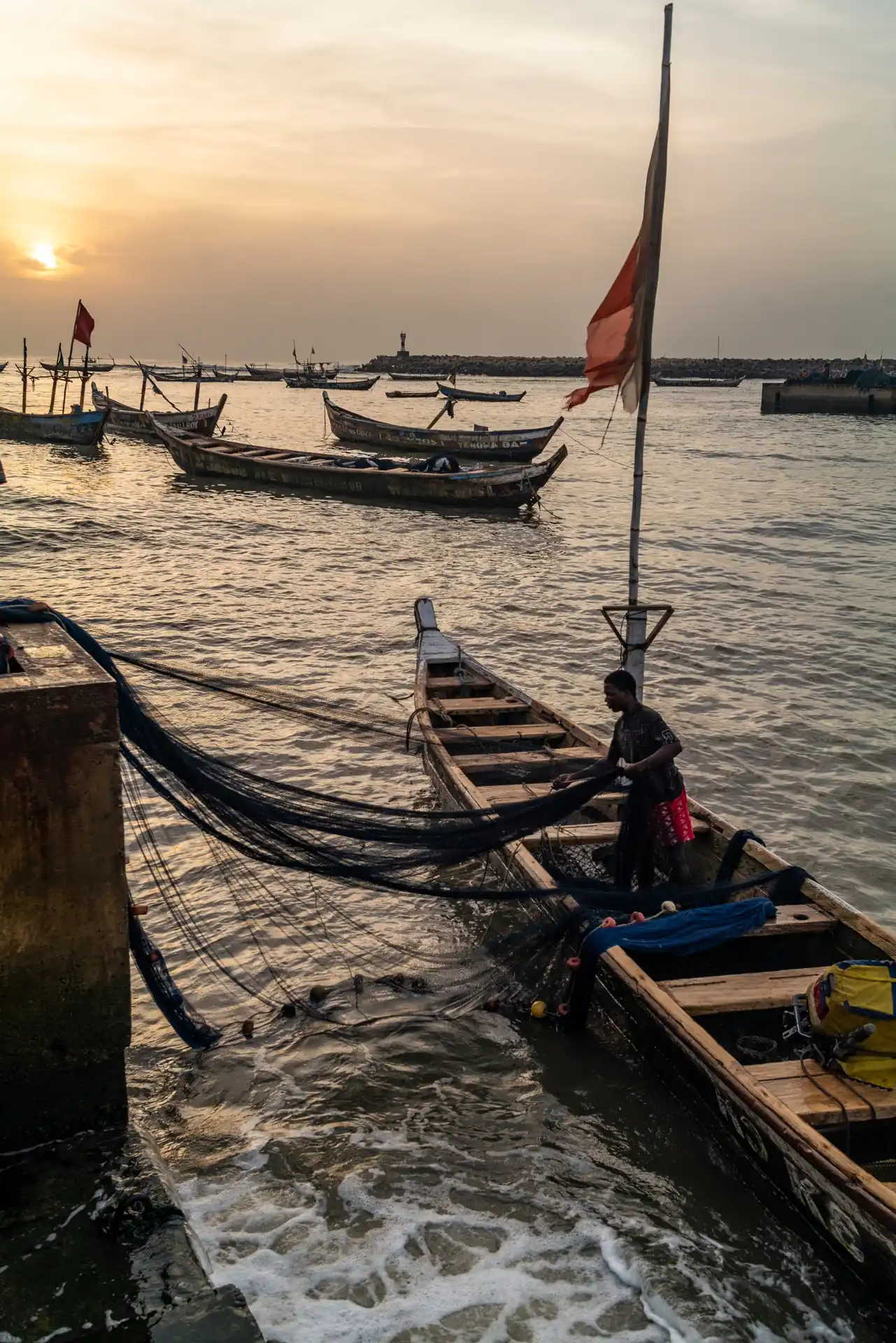
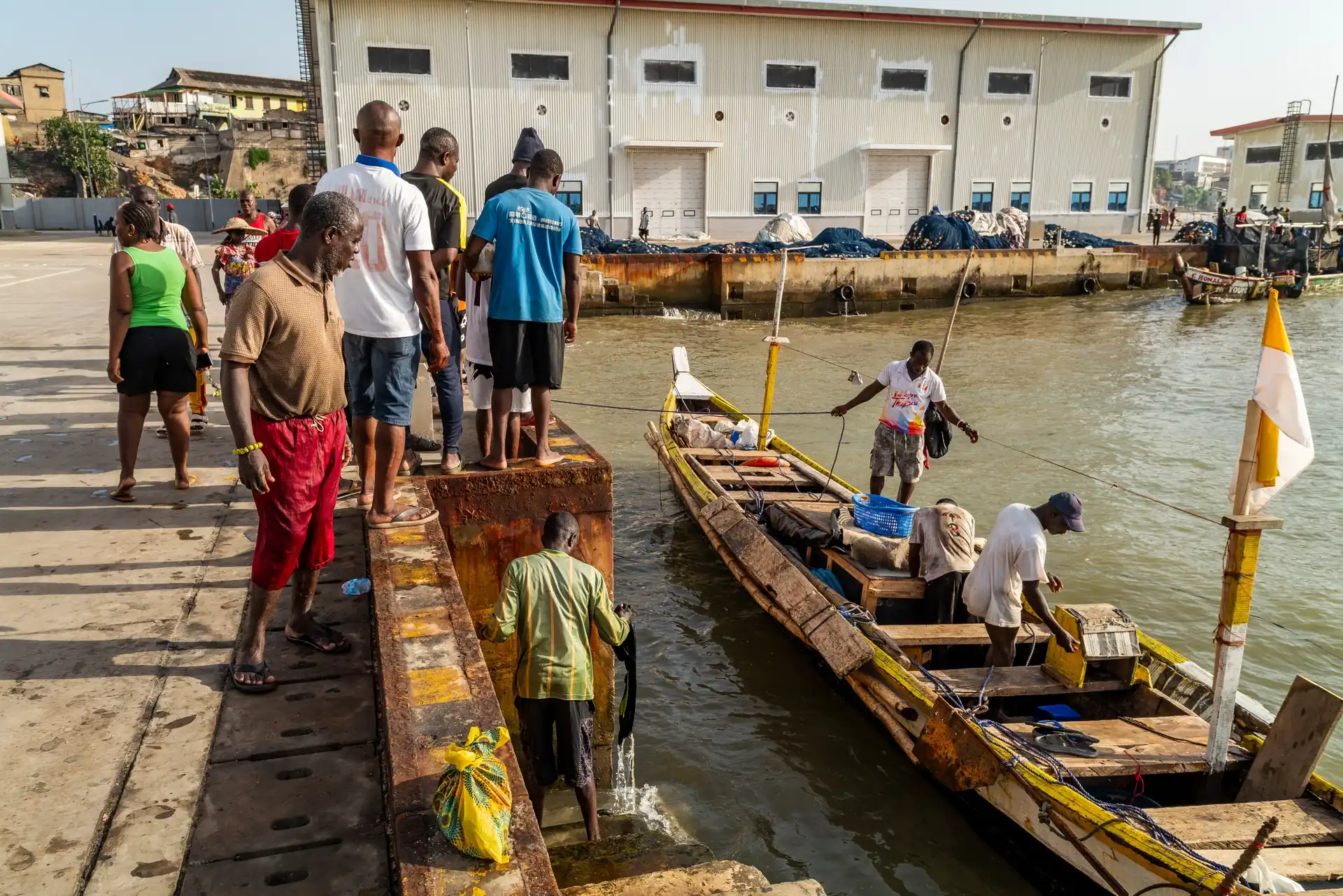
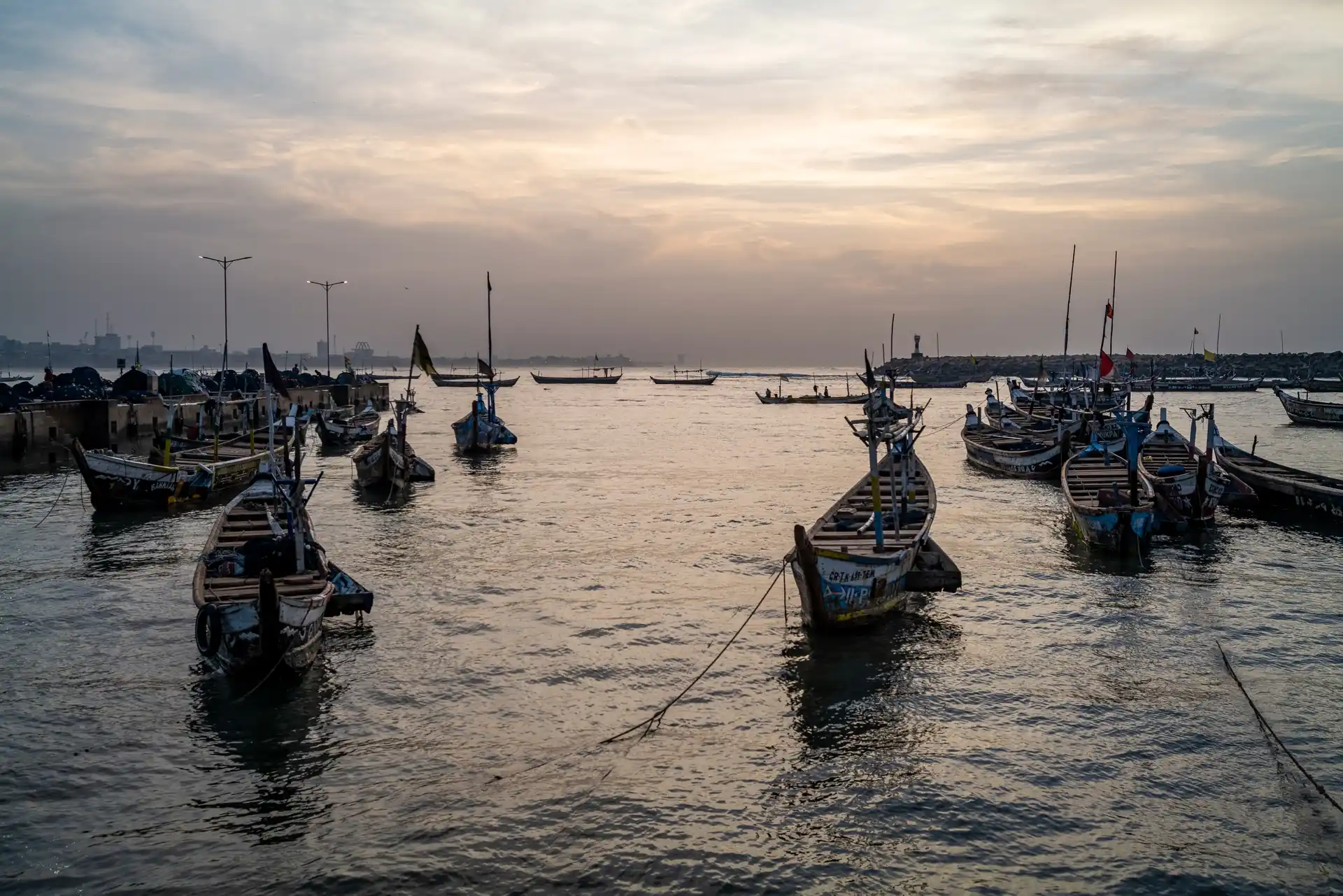
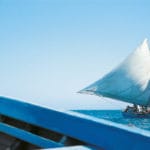
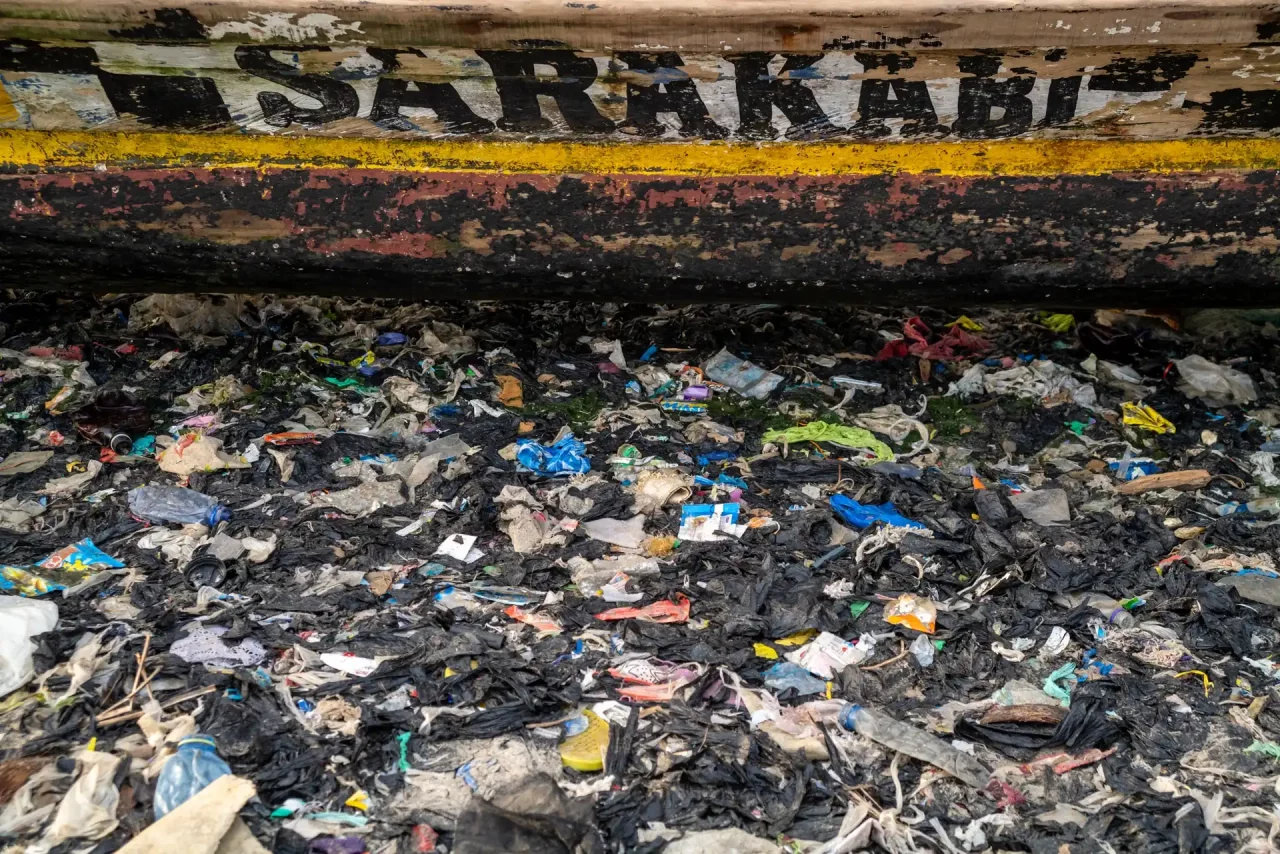
In Ghana, the artisanal fleet grew from about 8,000 canoes in 1990 to 13,650 in 2017, according to an analysis published in The Conversation in 2024. The 2013 census counted 12,728, 73% of them fitted with an outboard motor. In the Jamestown basin, painted hulls crowd along the quay: more boats, for a shrinking resource.
Nets and fishermen
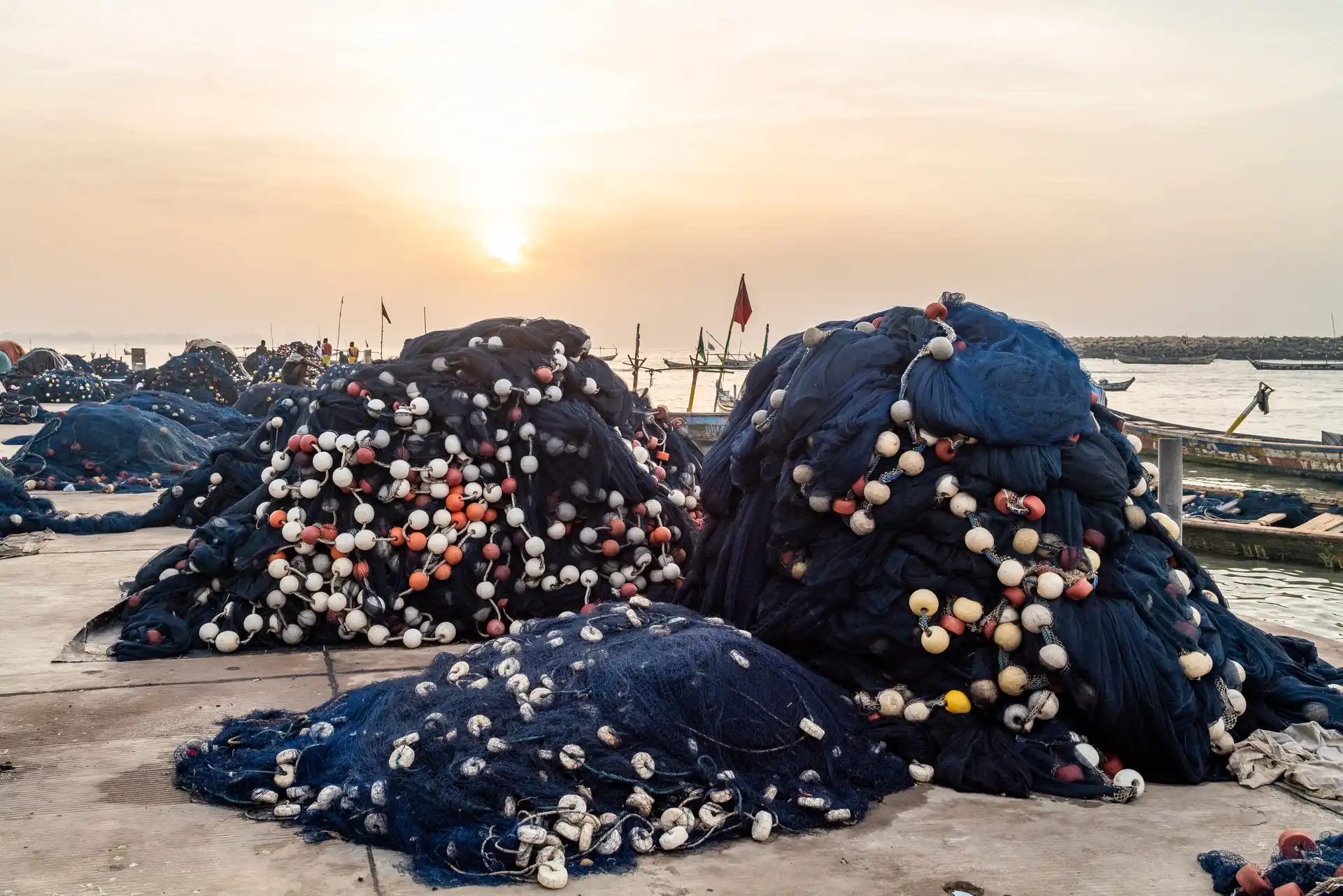
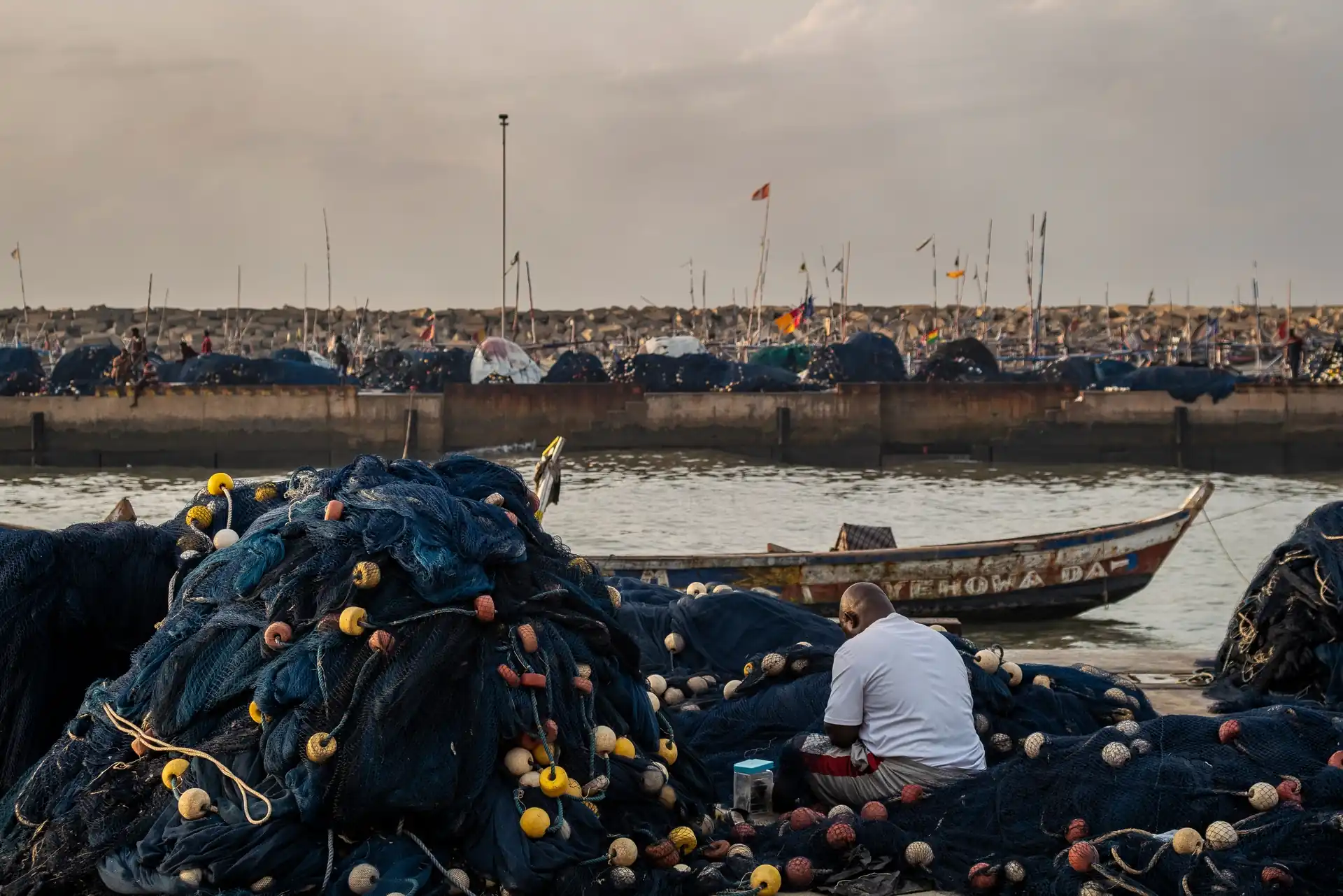
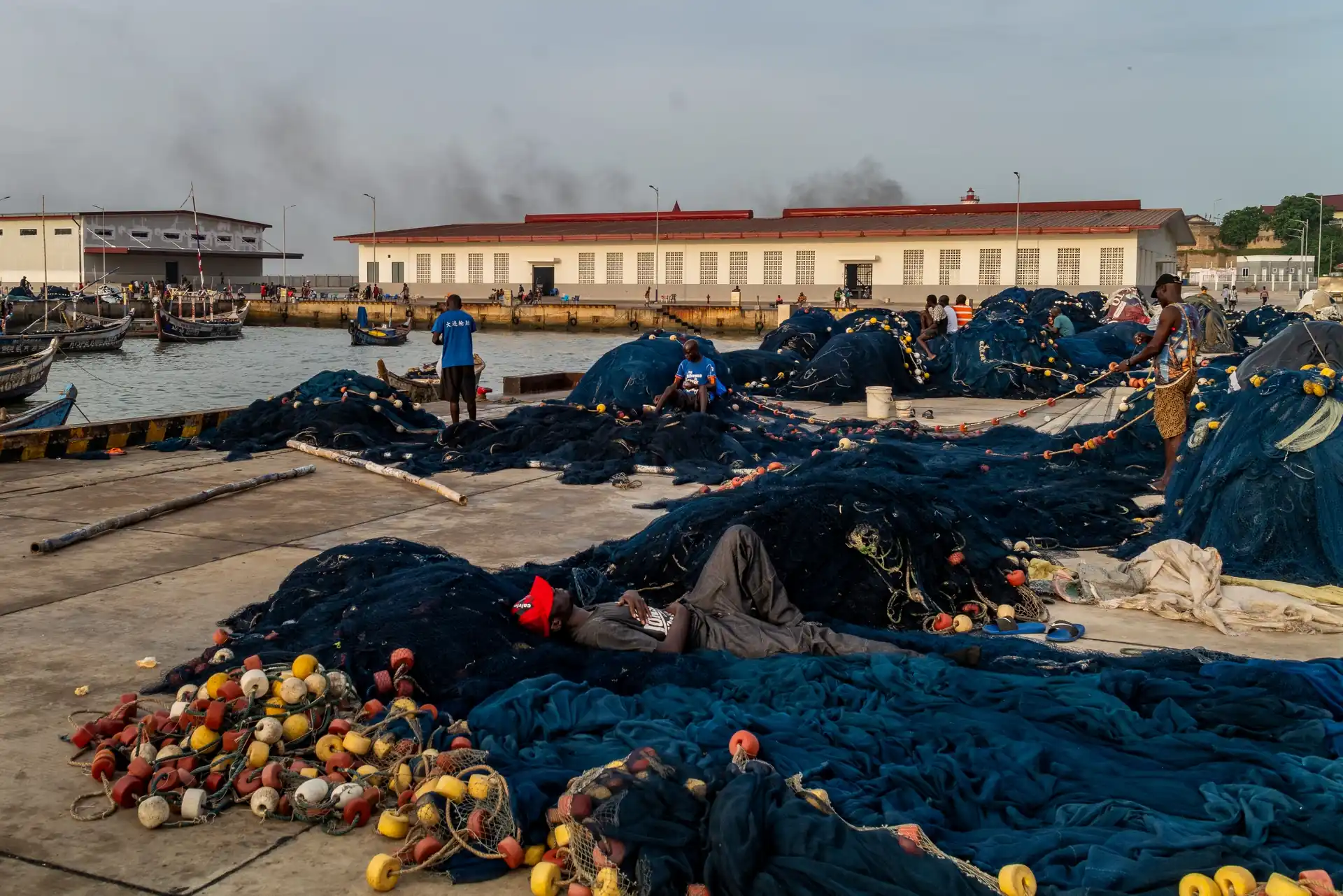
Nets are piled up, mended, loaded back on board. Yet landings of small pelagic fish in Ghana fell by 59% between 1993 and 2019; those of Sardinella aurita dropped from 119,000 tonnes in 1992 to 11,834 tonnes in 2019. The causes put forward: warming waters, industrial trawlers, and the growing number of canoes, with their larger nets and more numerous engines.
The day’s catch
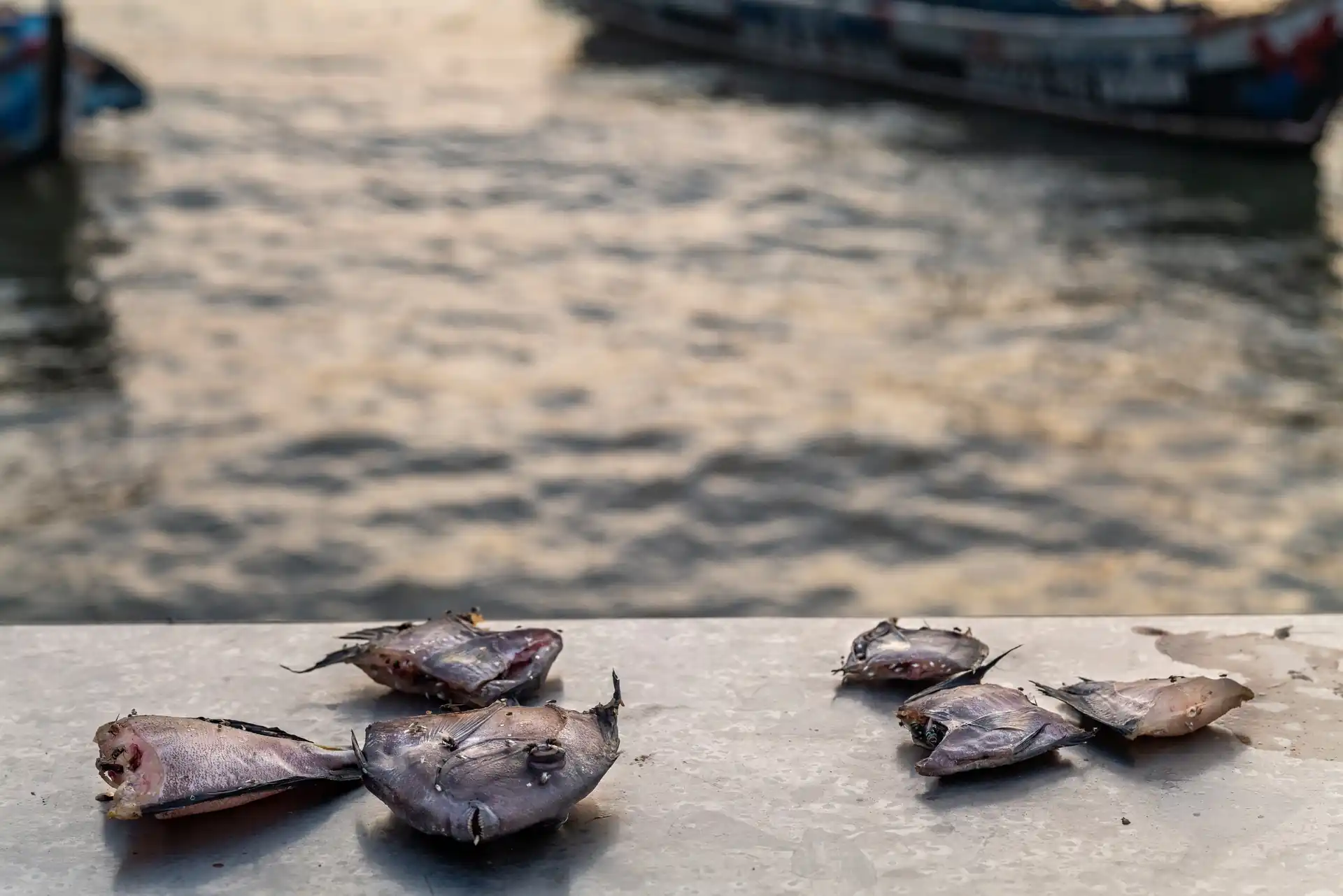
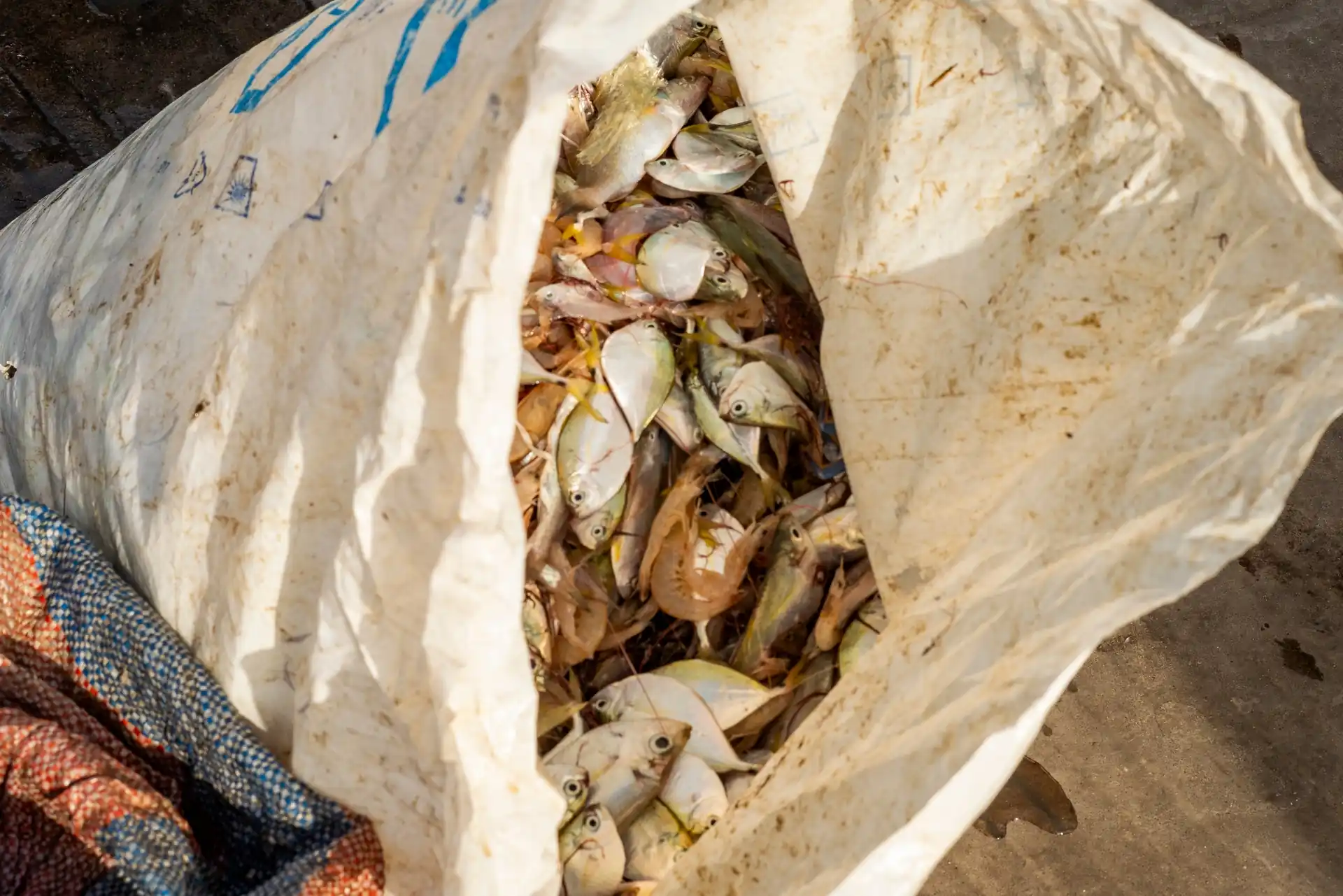
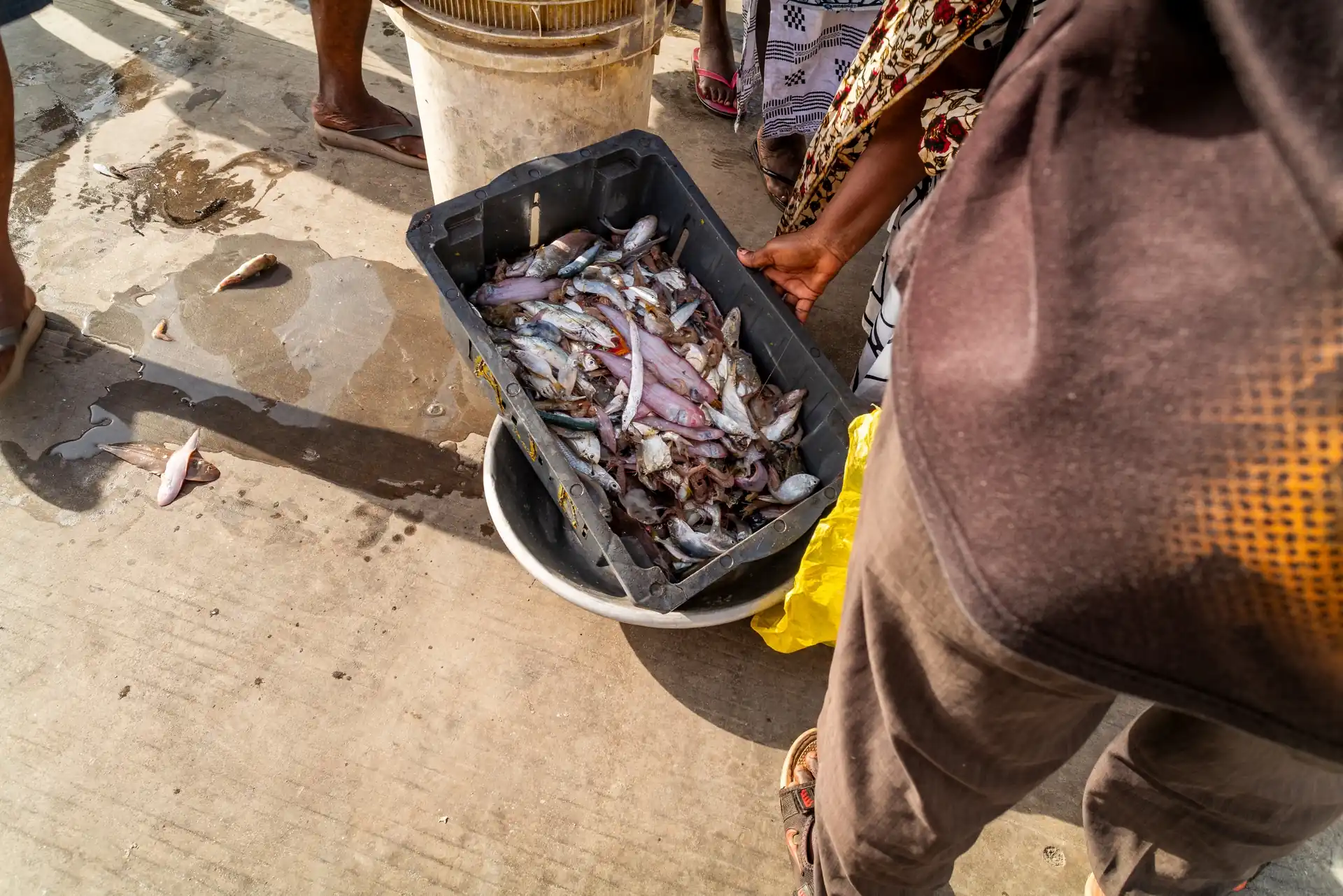
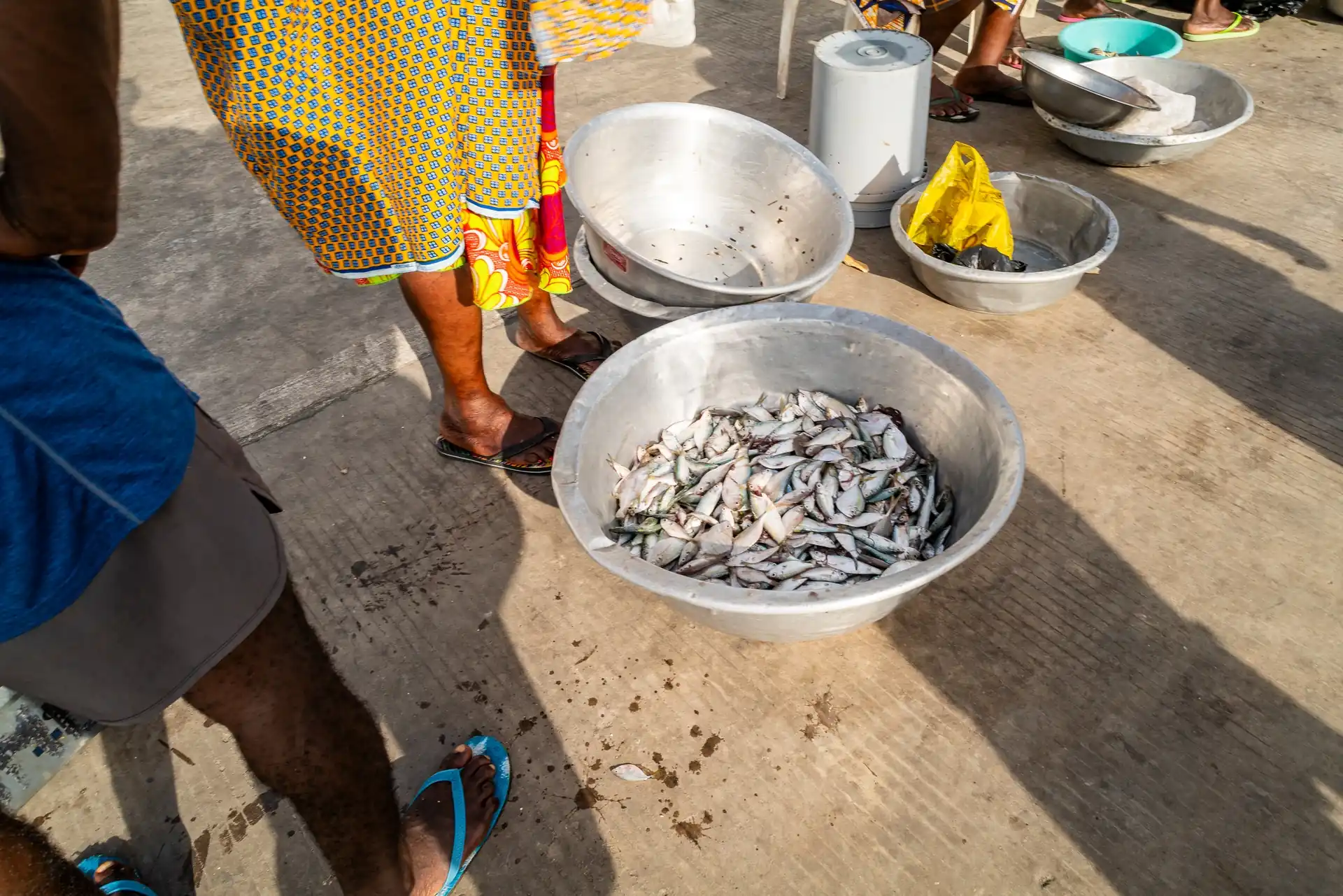
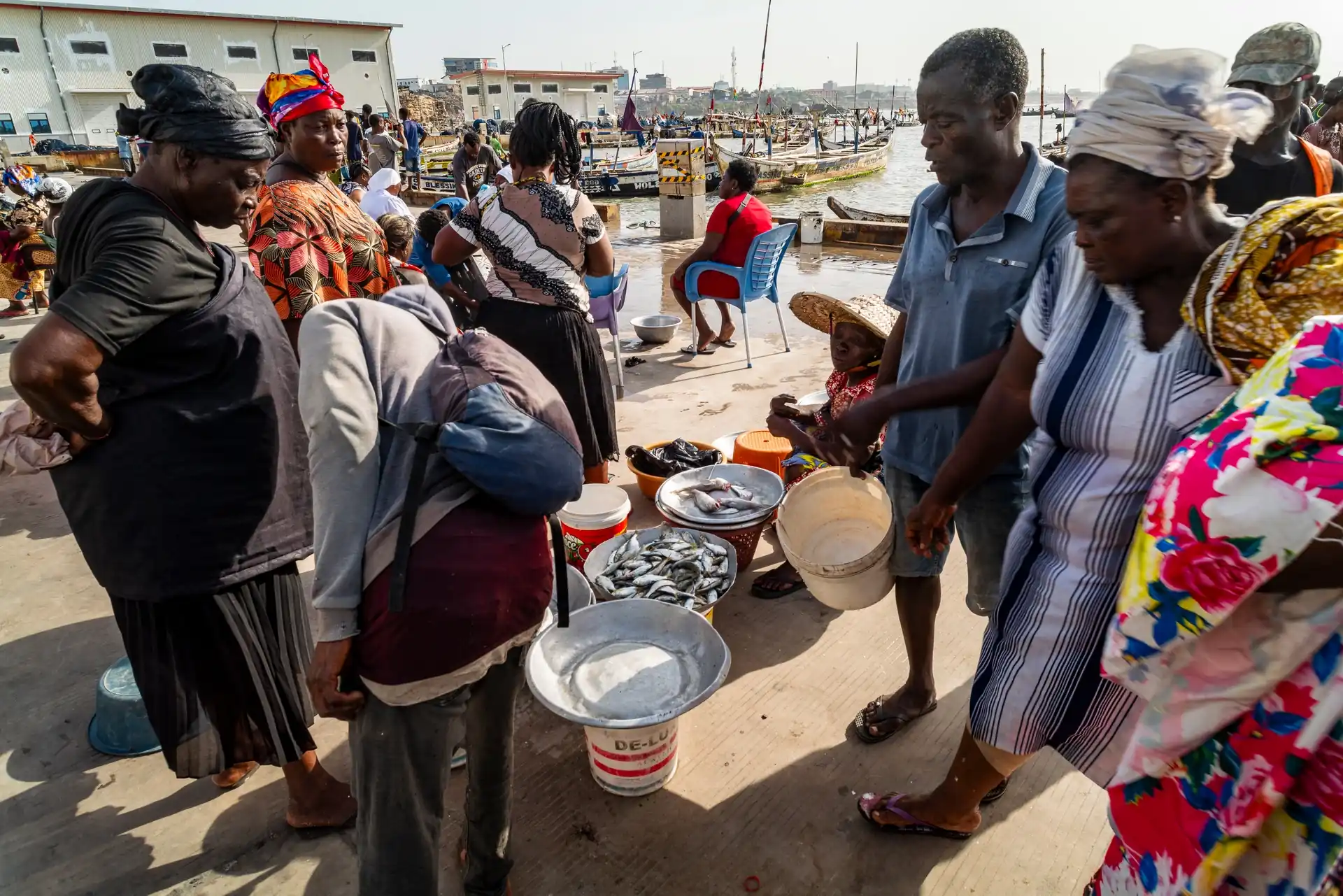
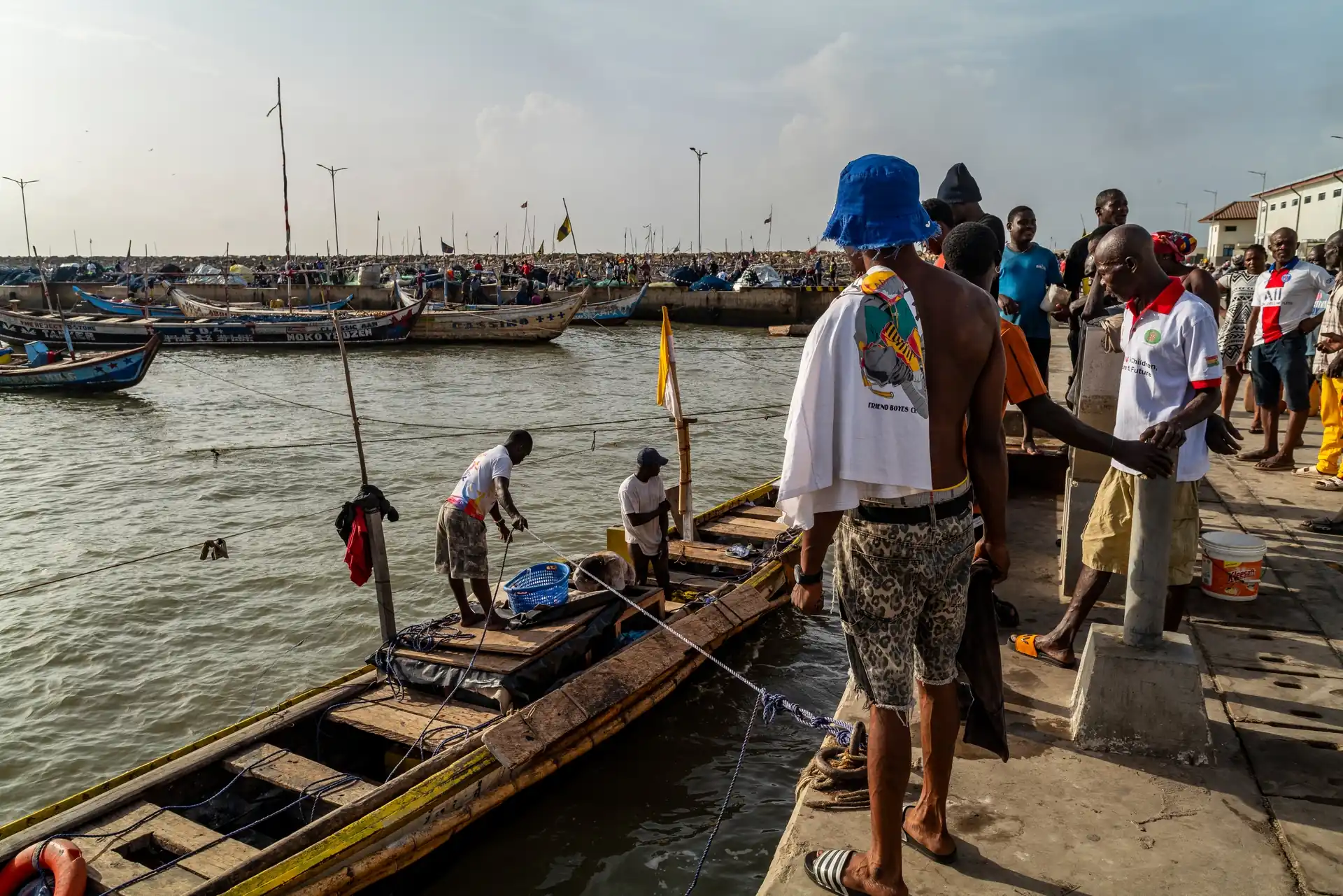
On the wet quay, the day’s catch fits in a few crates, a sack, some basins of small silvery fish. Ghana imports more than 600,000 tonnes of fish a year, according to an SFMP programme study reported in 2018, and fishing employs about 10% of Ghanaians.
The fish hall
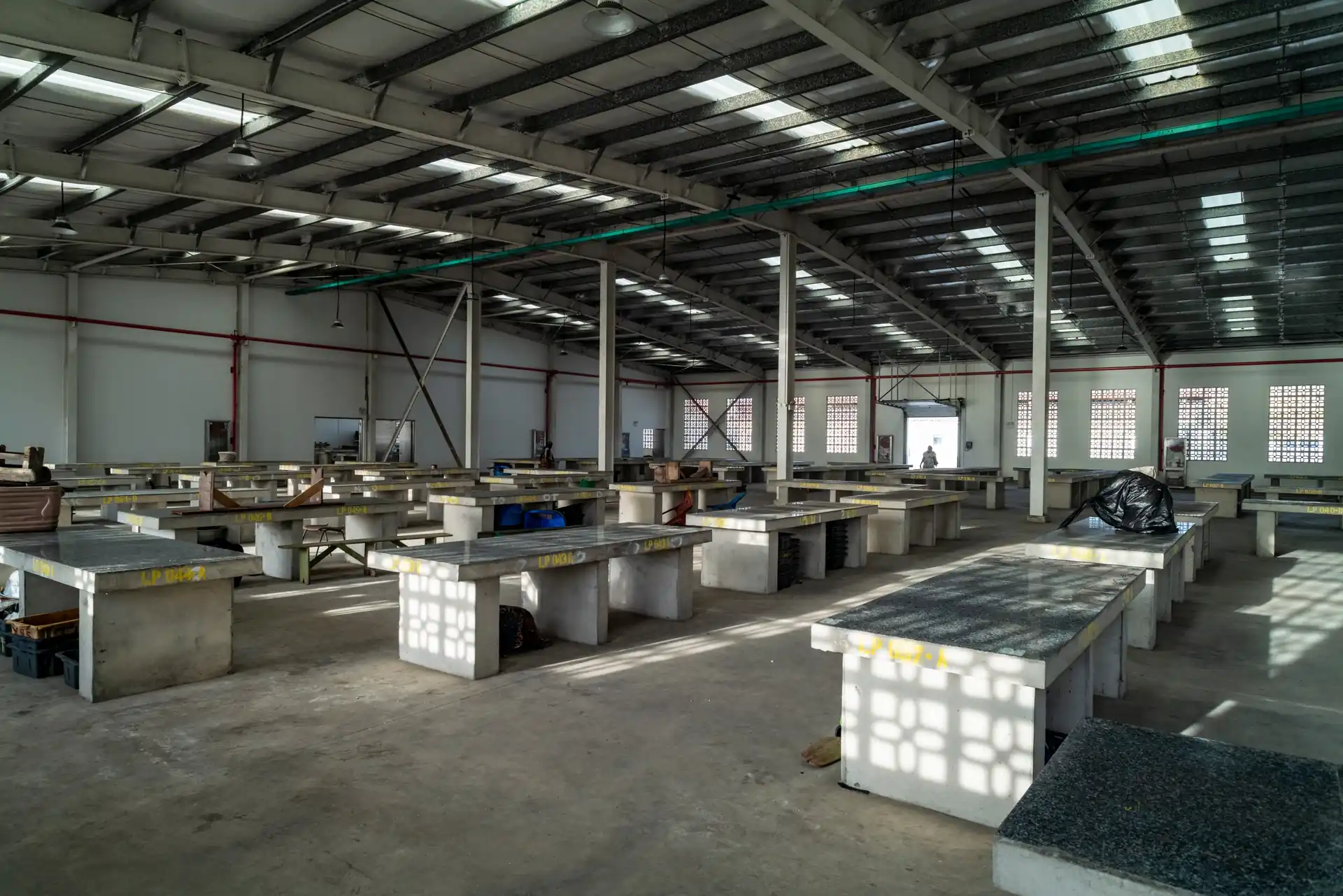
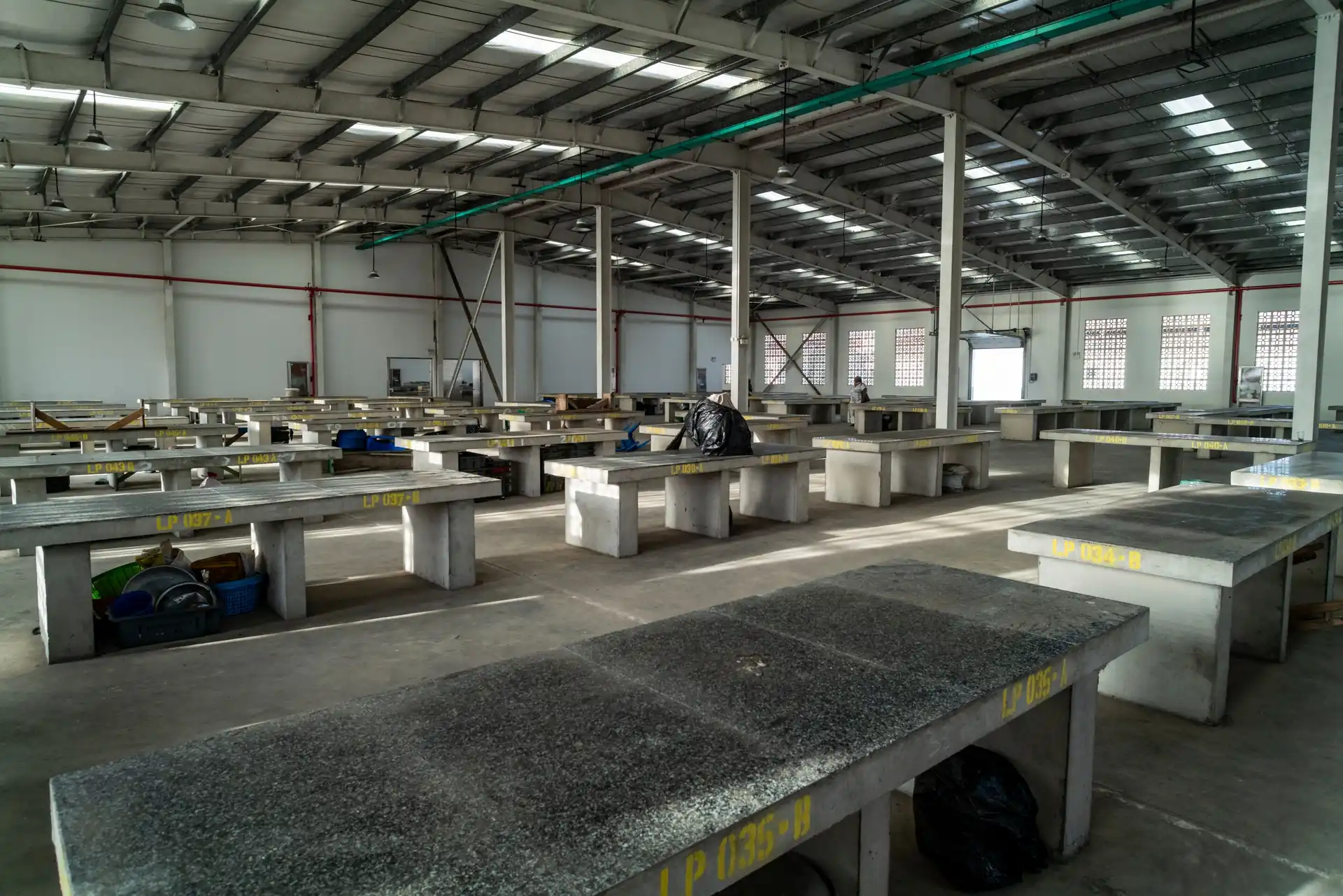
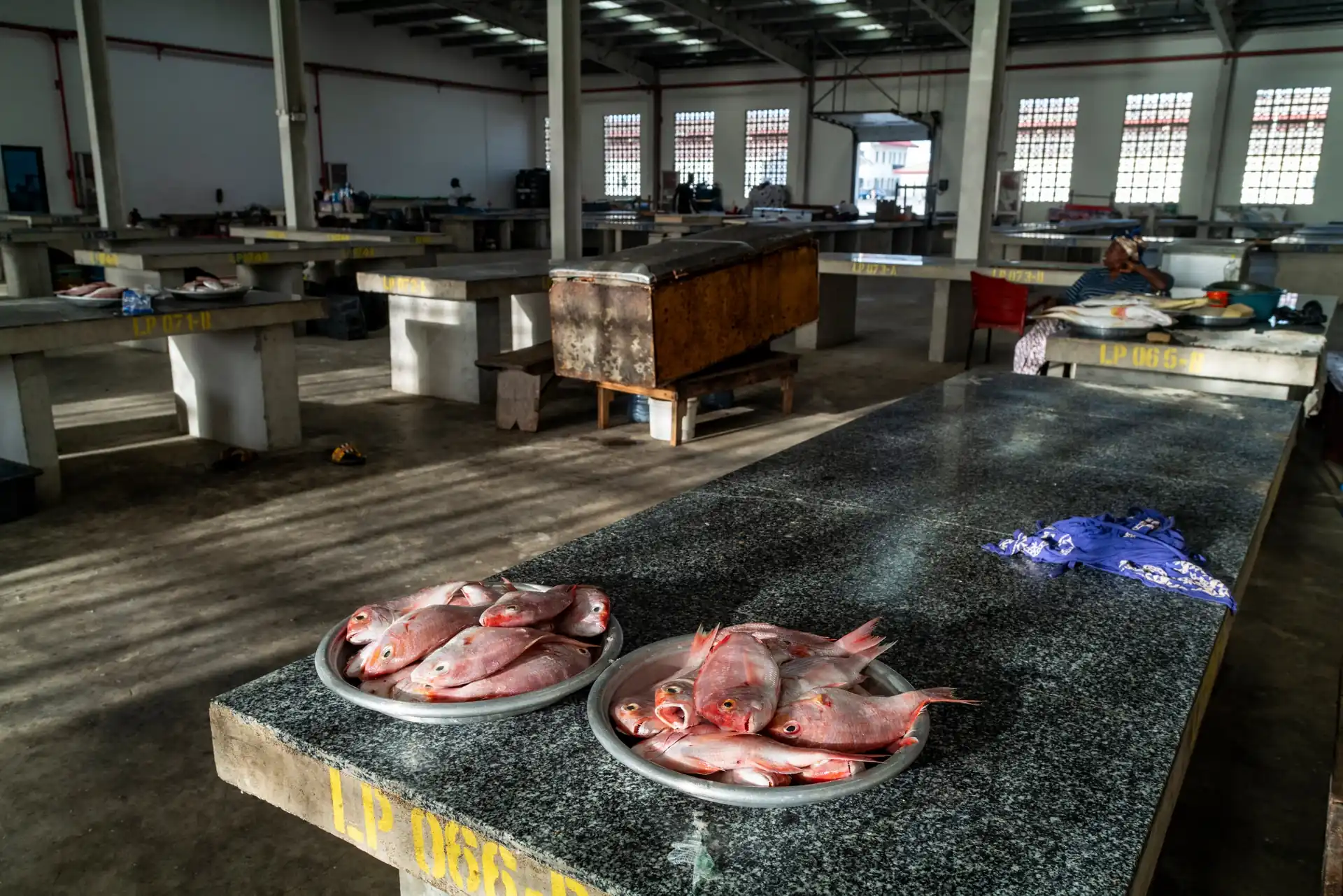
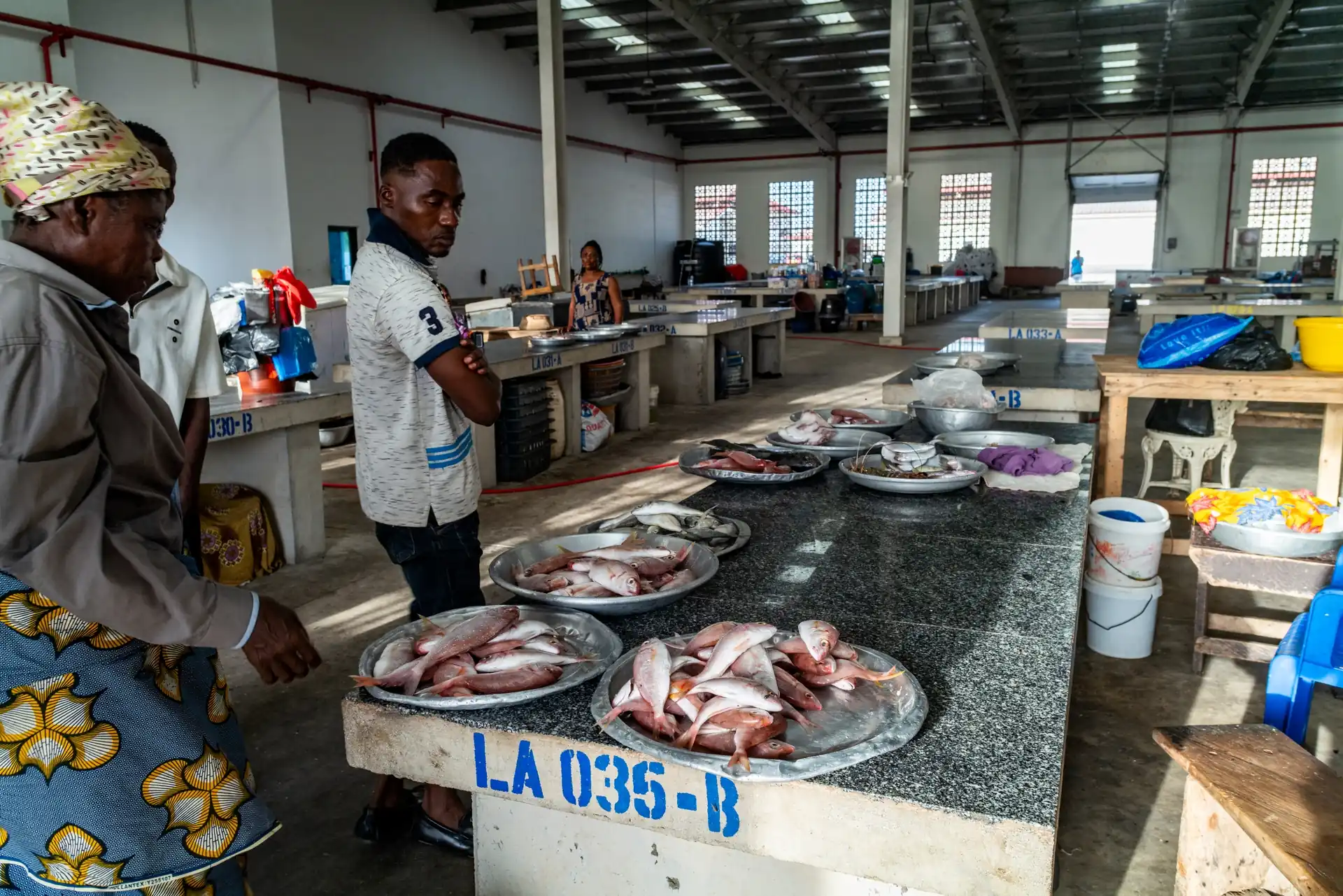
The new market has 200 places; a 60-tonne ice plant and a 200-tonne cold store go with it. In the images, the granite tables are numbered and the hall is almost empty: a few plates of red fish sit on one table.
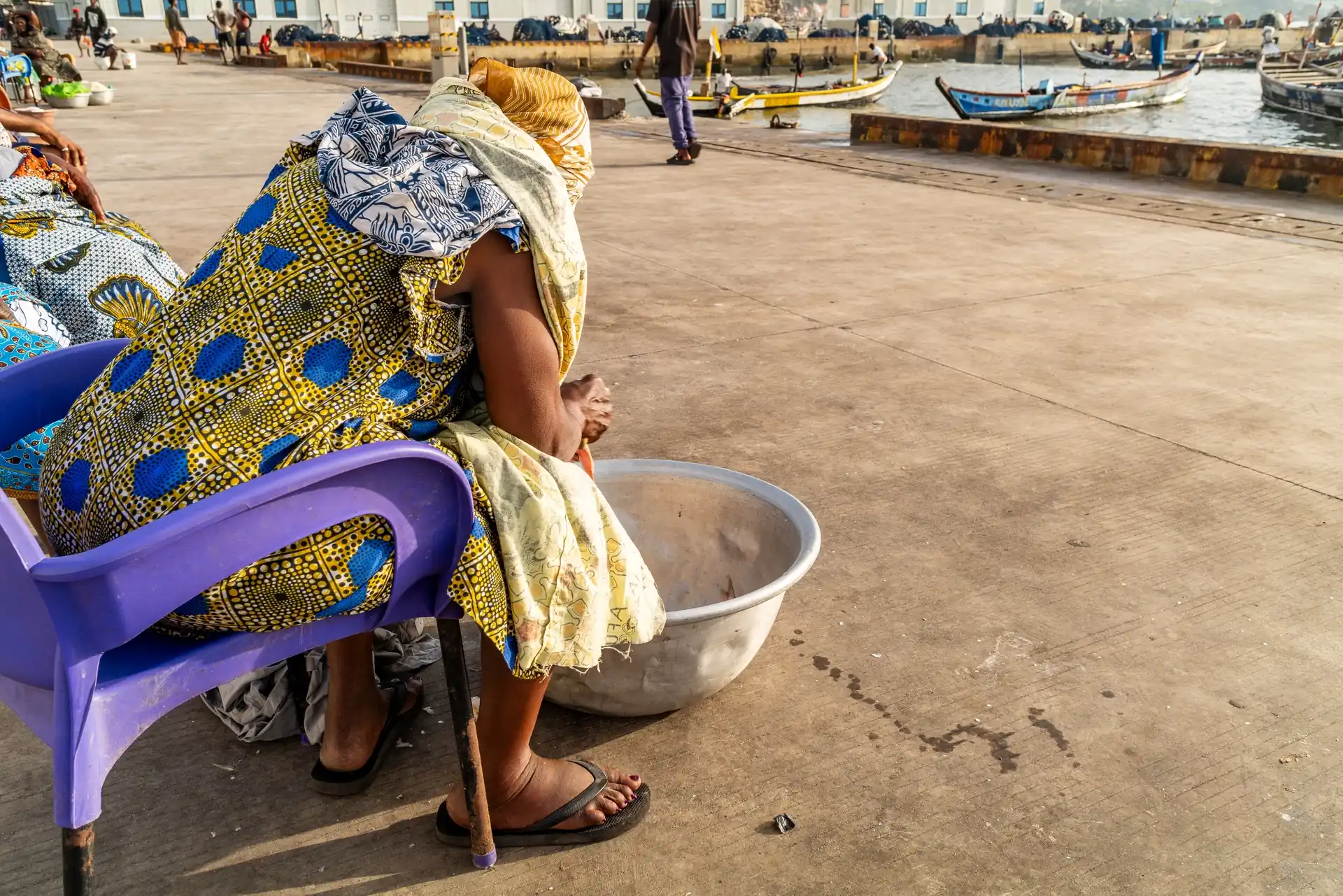
Those who wait
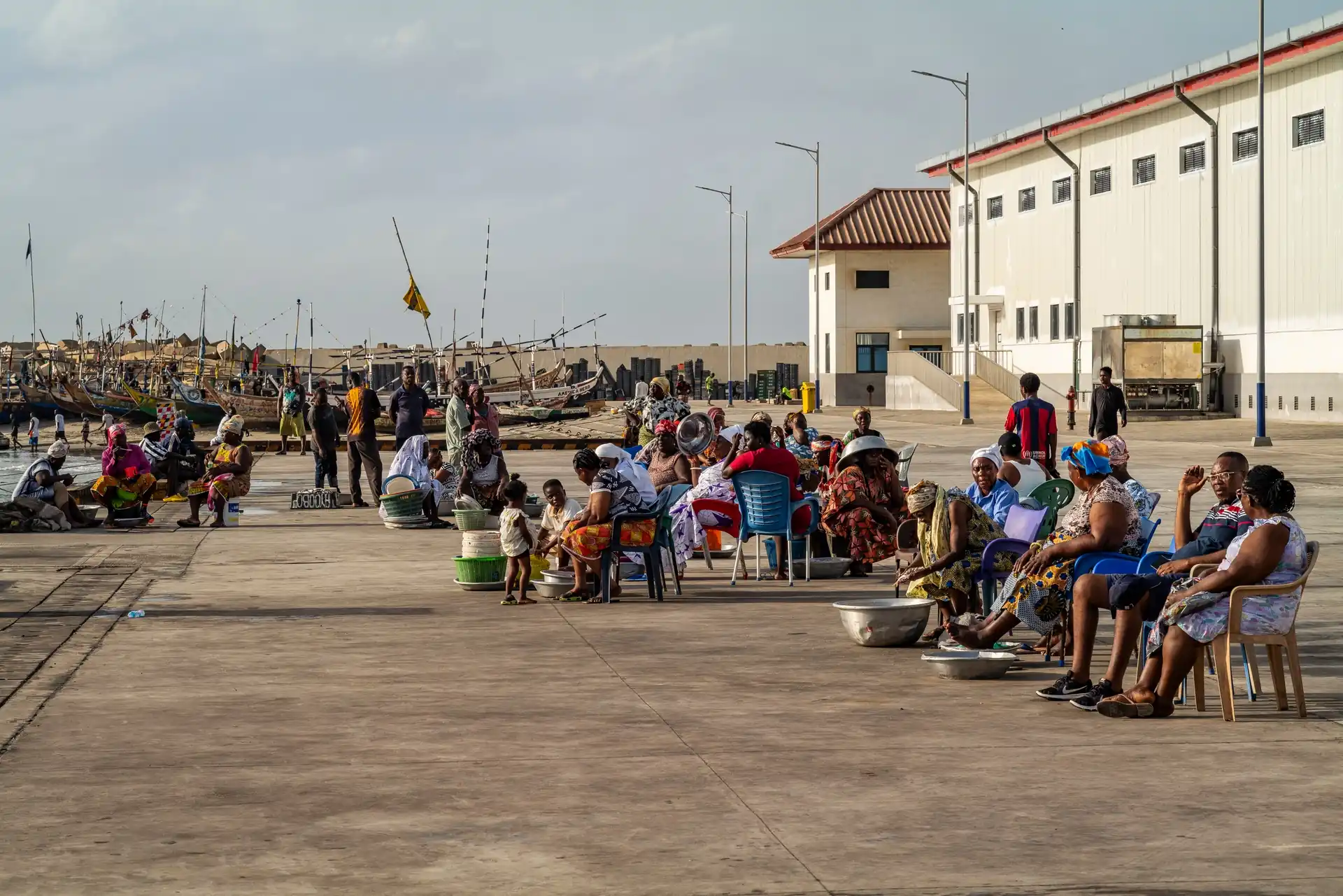
Seated facing the basin, in silhouette or in the shade of the hall, the fish traders wait for the pirogues. Around them: plastic chairs, aluminium basins, the comings and goings of the quay.
Landing, crowd and light
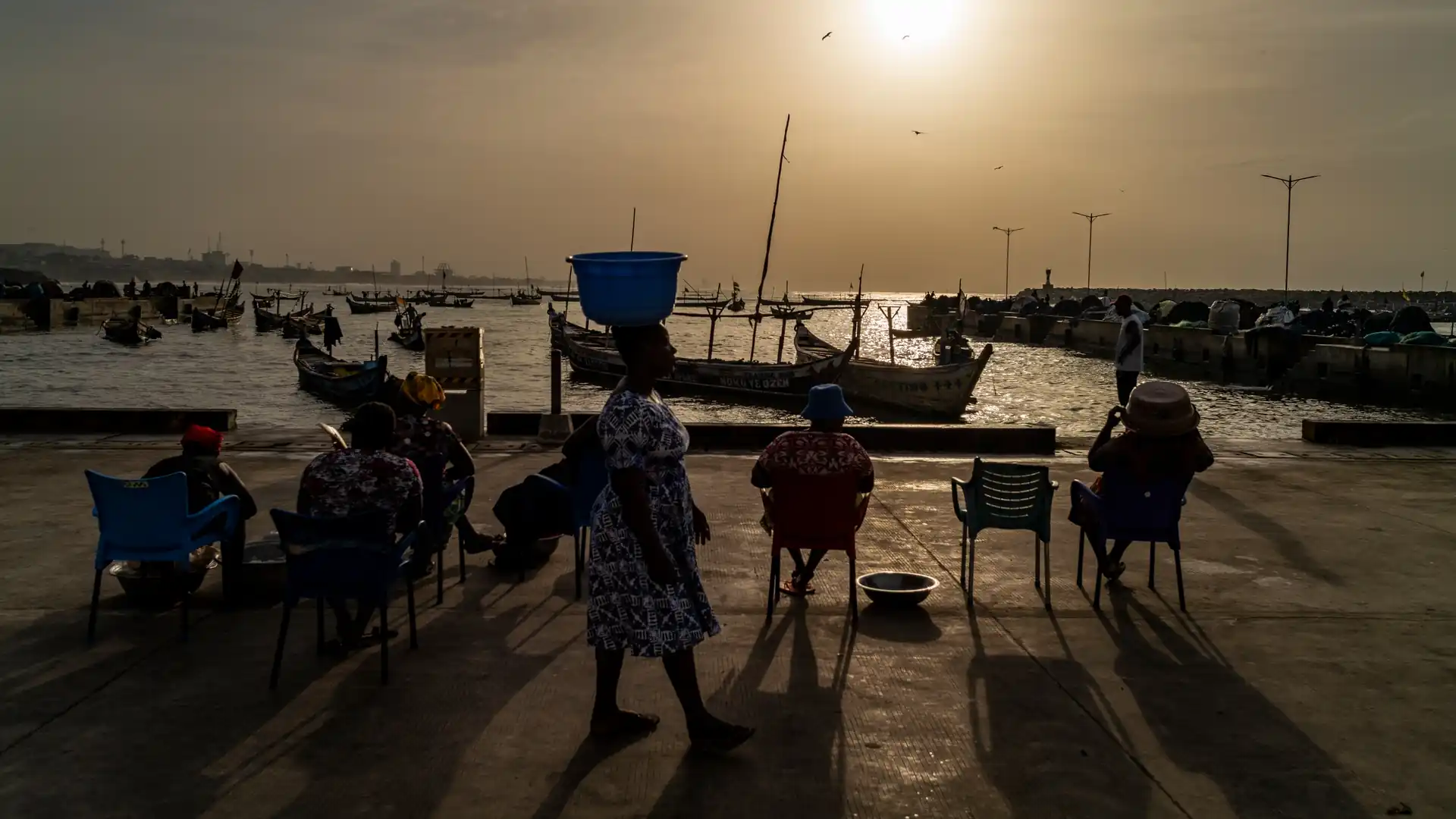
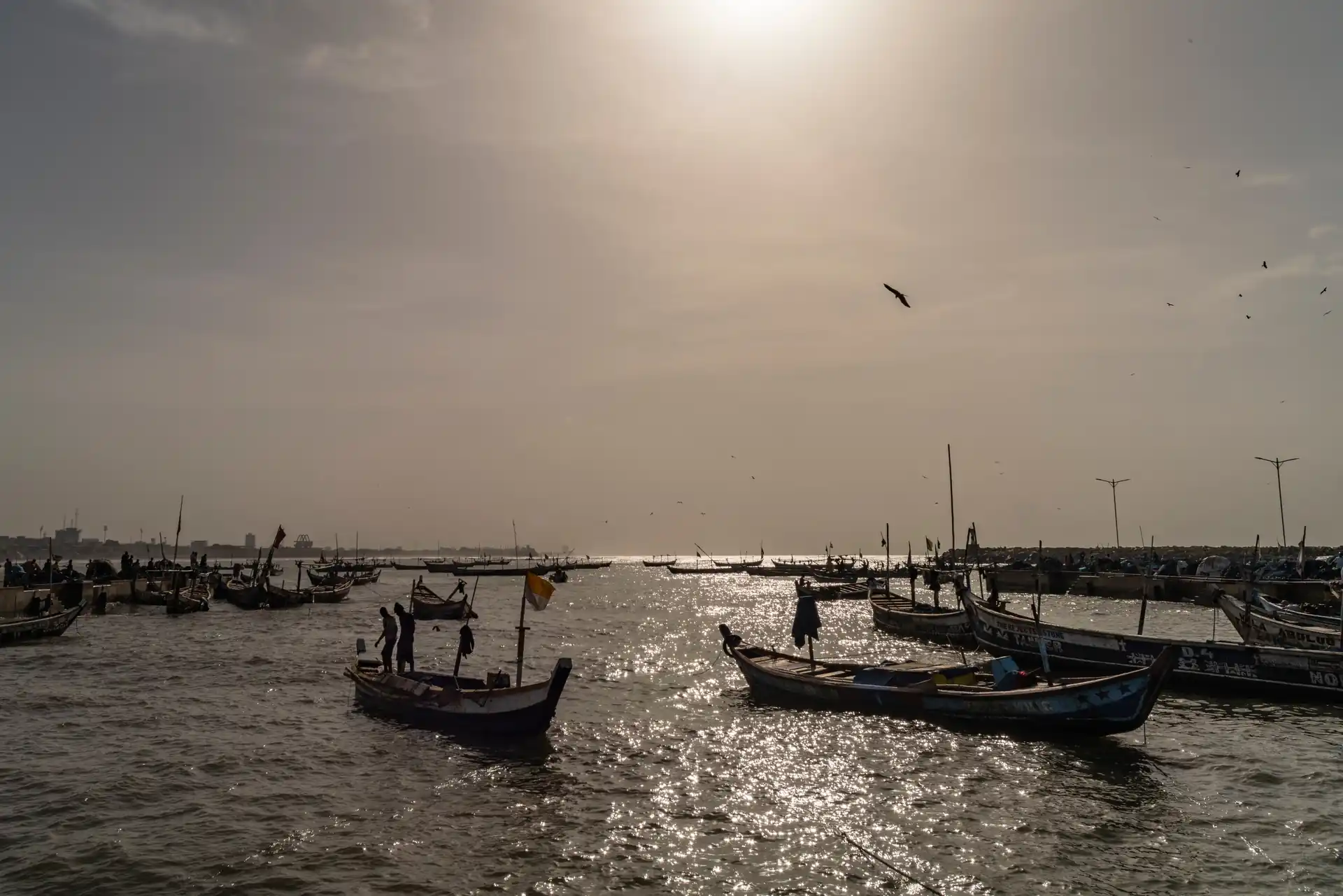
When a pirogue lands, the crowd presses onto the quay. At the end of the essay, backlight erases the details: silhouetted pirogues on glittering water, birds, a veiled sun.
Tarek Charara
Click here to see all the photos
Sources :
https://gna.org.gh/2024/09/president-akufo-addo-commissions-jamestown-fishing-harbour/
https://www.myjoyonline.com/small-pelagic-fish-near-total-depletion-report/
https://en.wikipedia.org/wiki/Jamestown/Usshertown,_Accra
https://en.wikipedia.org/wiki/Fort_James,_Ghana
https://www.crc.uri.edu/download/Ghana-Marine-Canoe-Frame-Survey-2013.pdf
Text and images © 2026 Tarek Charara/Kaleidos images.
All rights reserved.
Fish shortage in Jamestown
© Tarek Charara/Kaleidos images