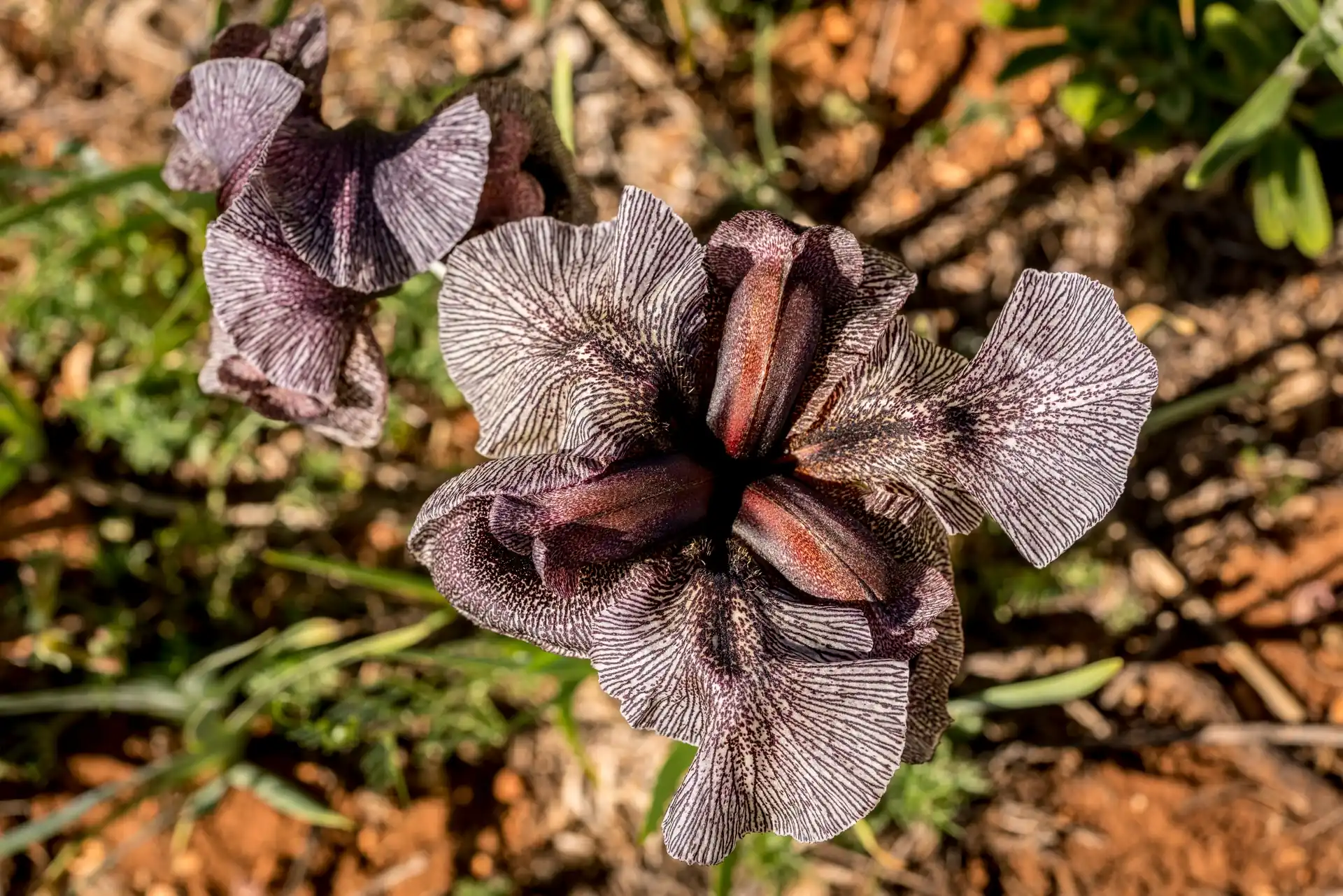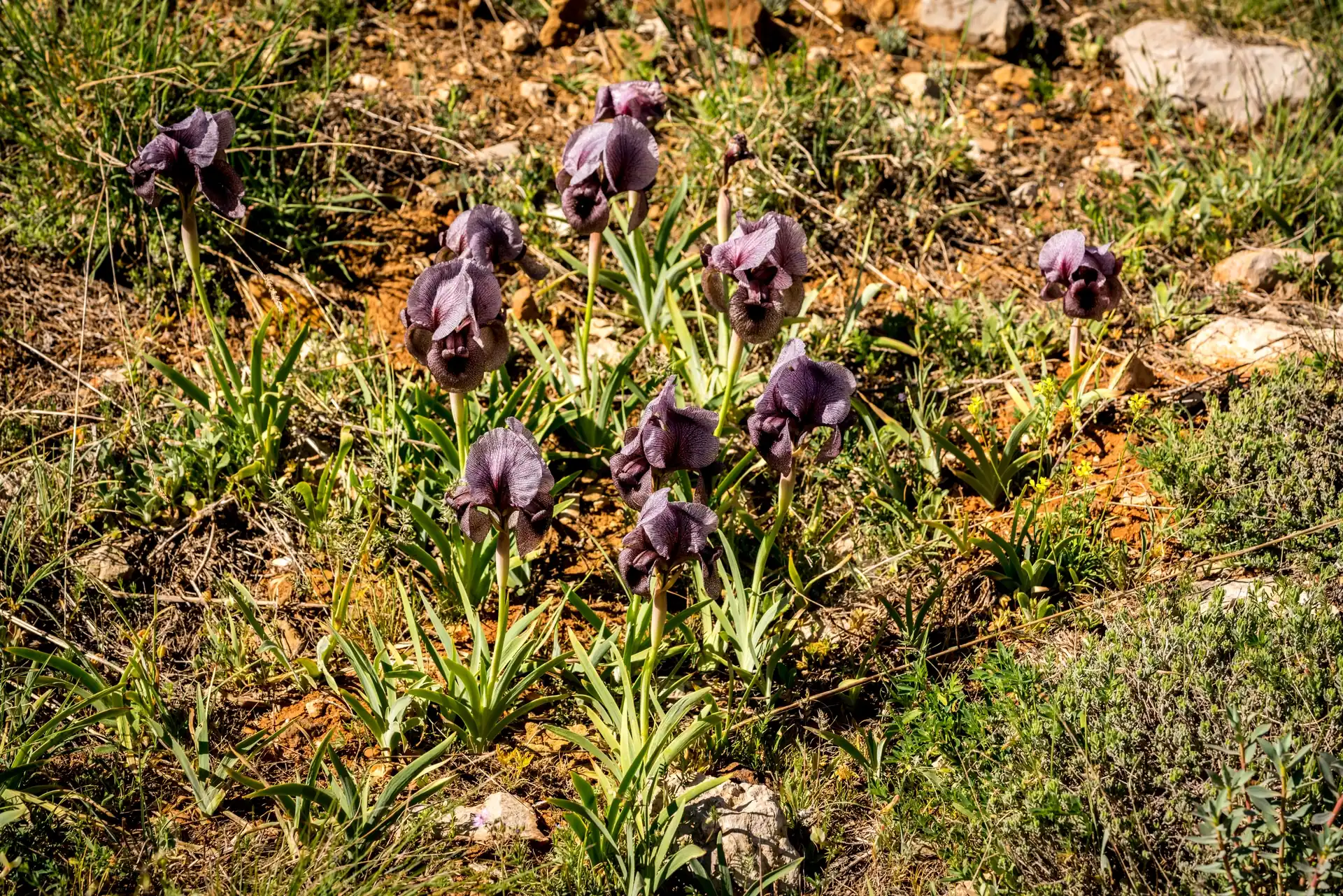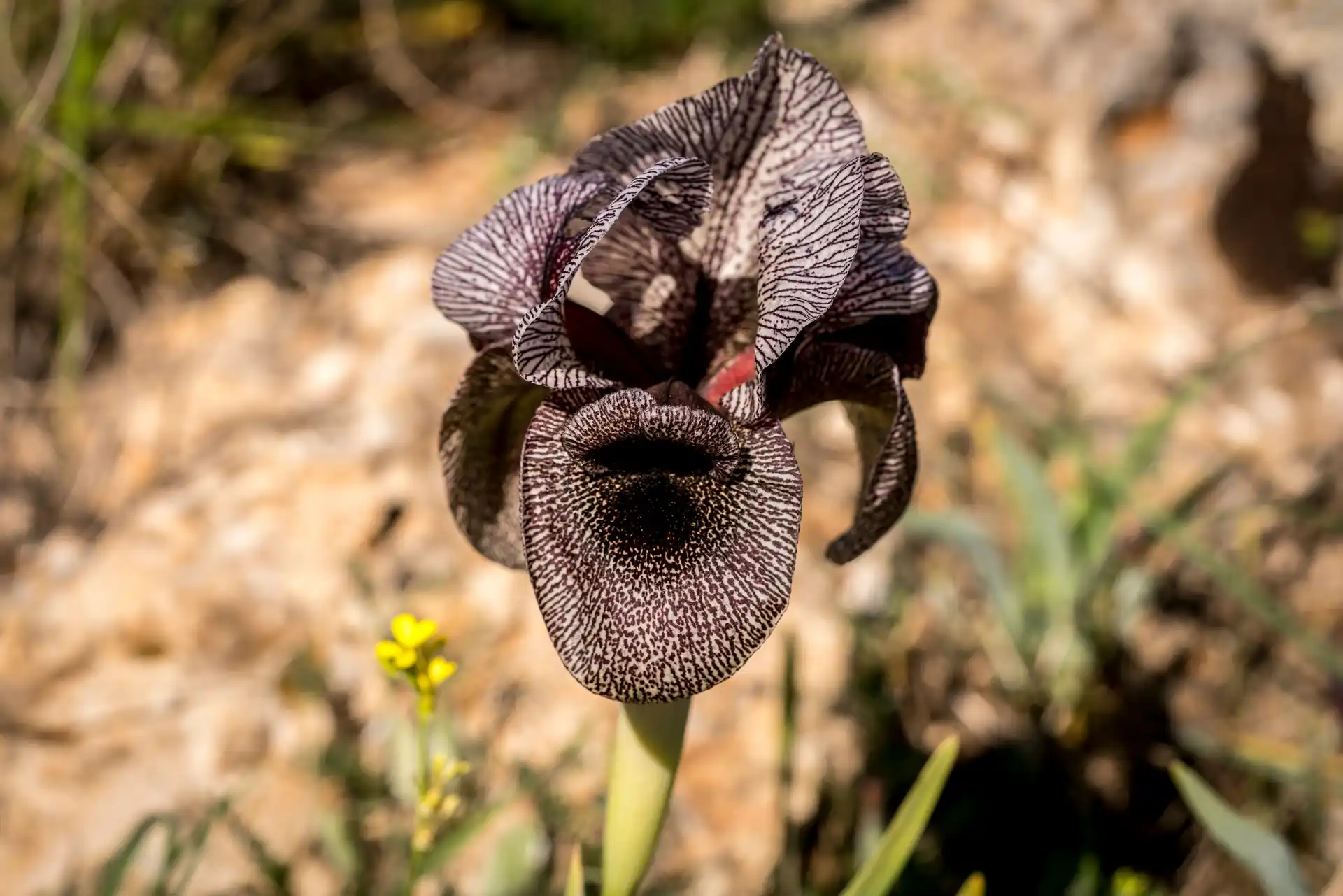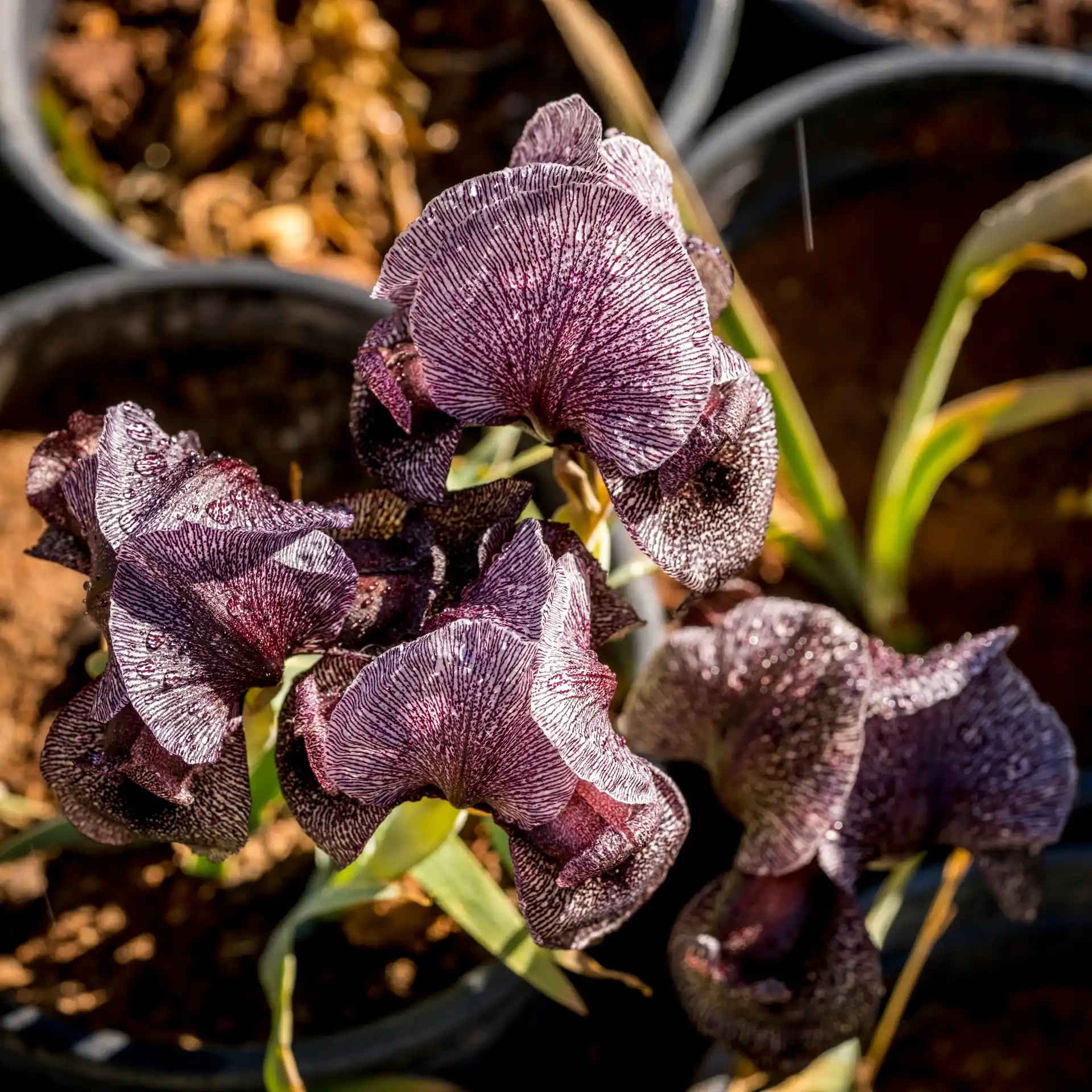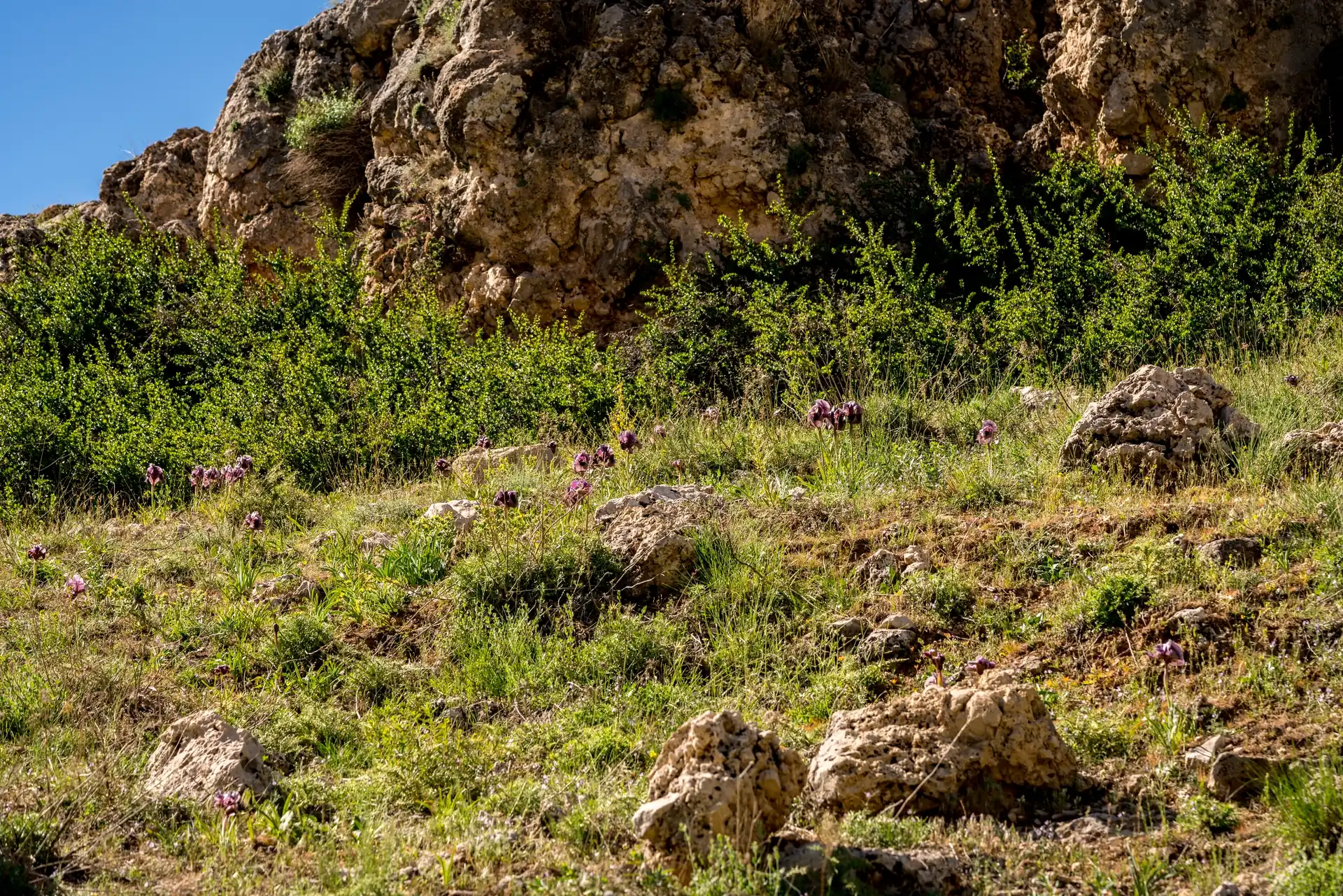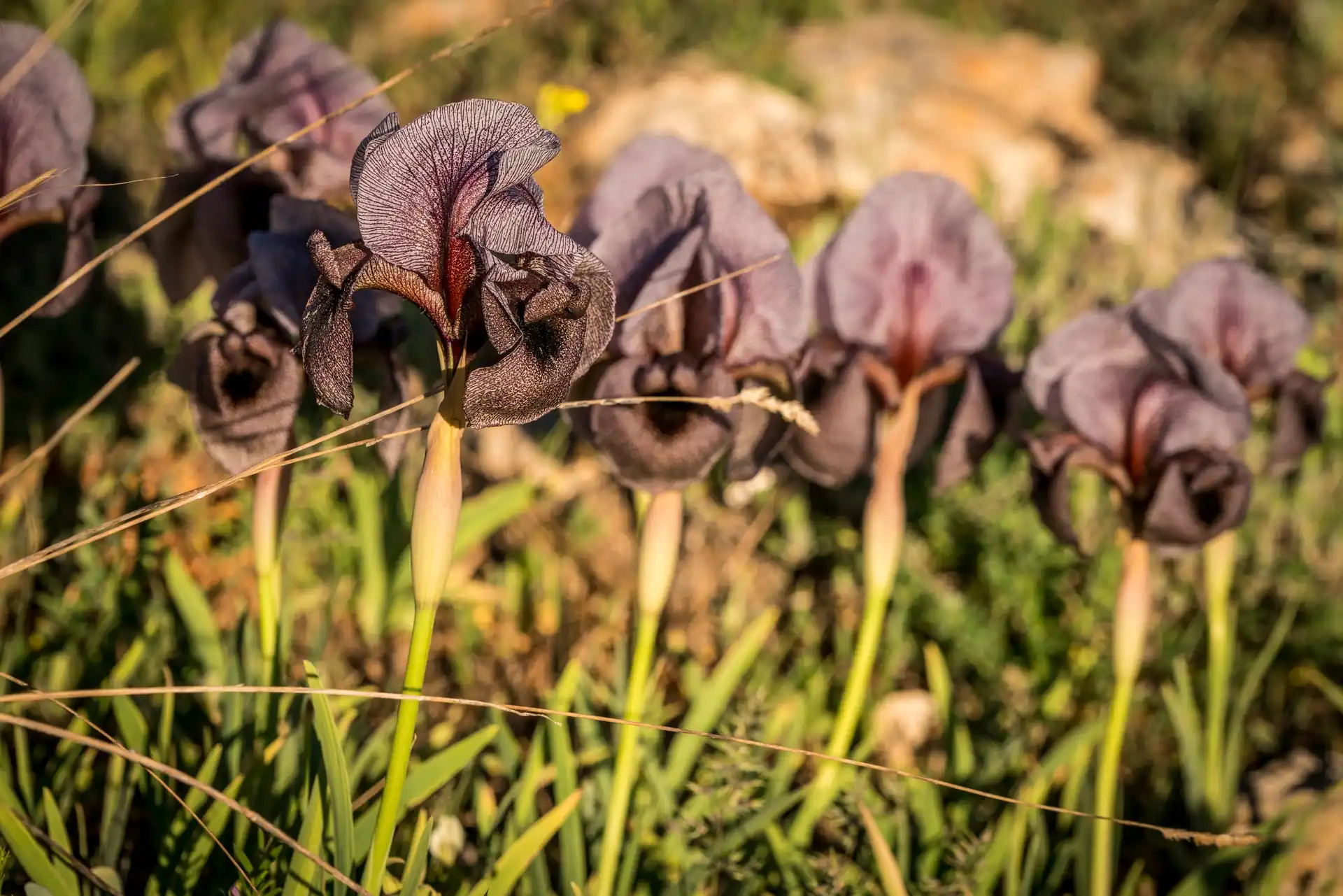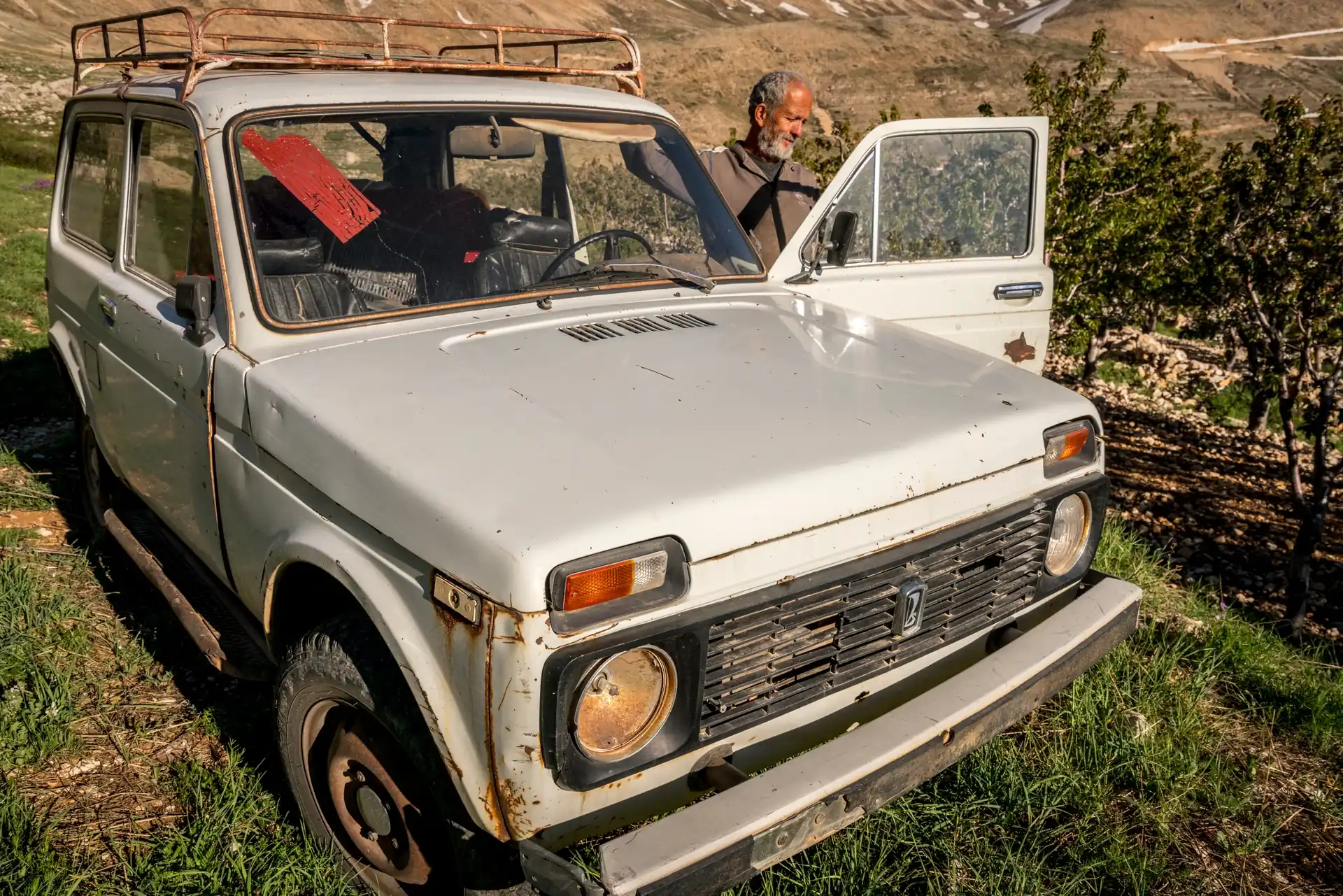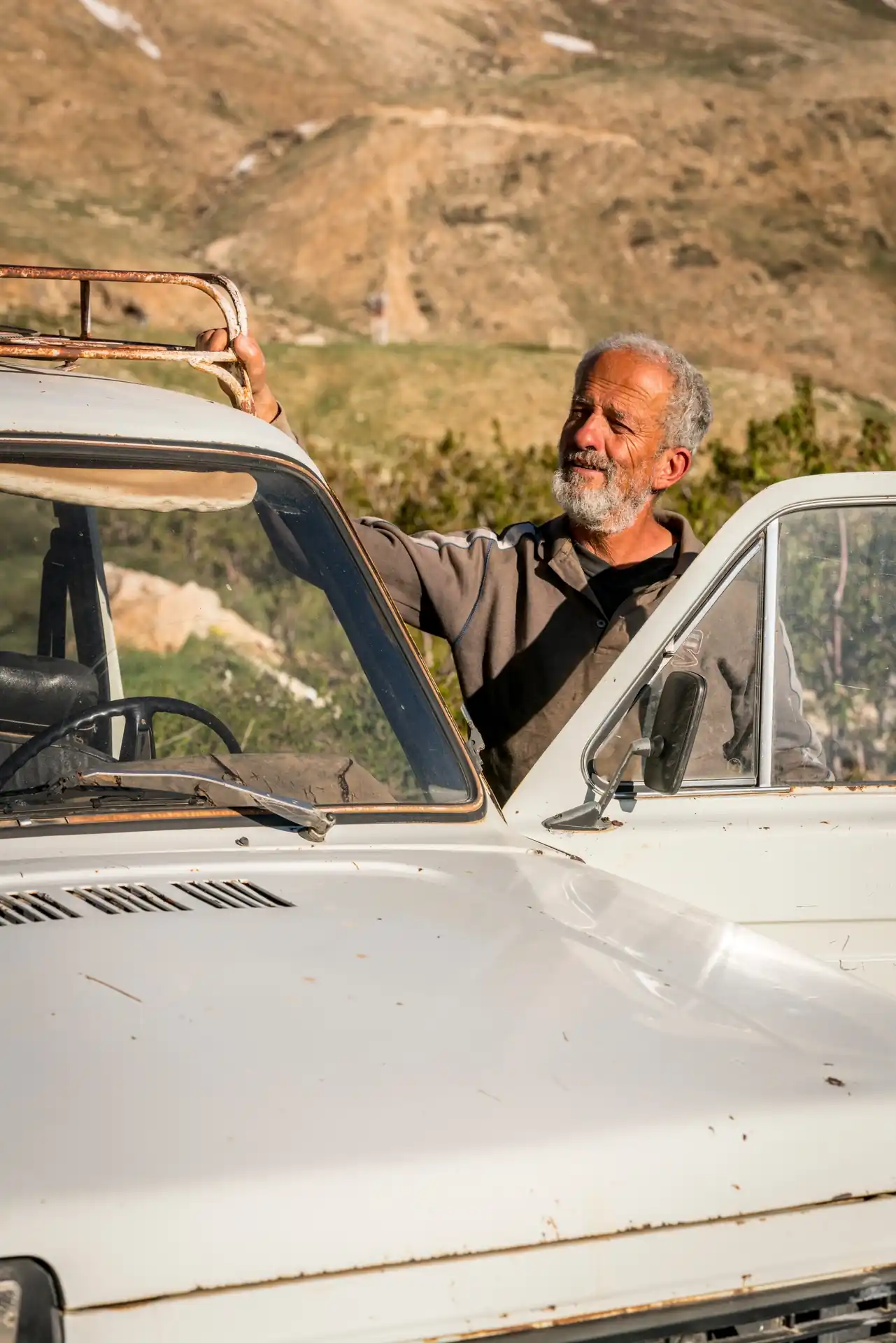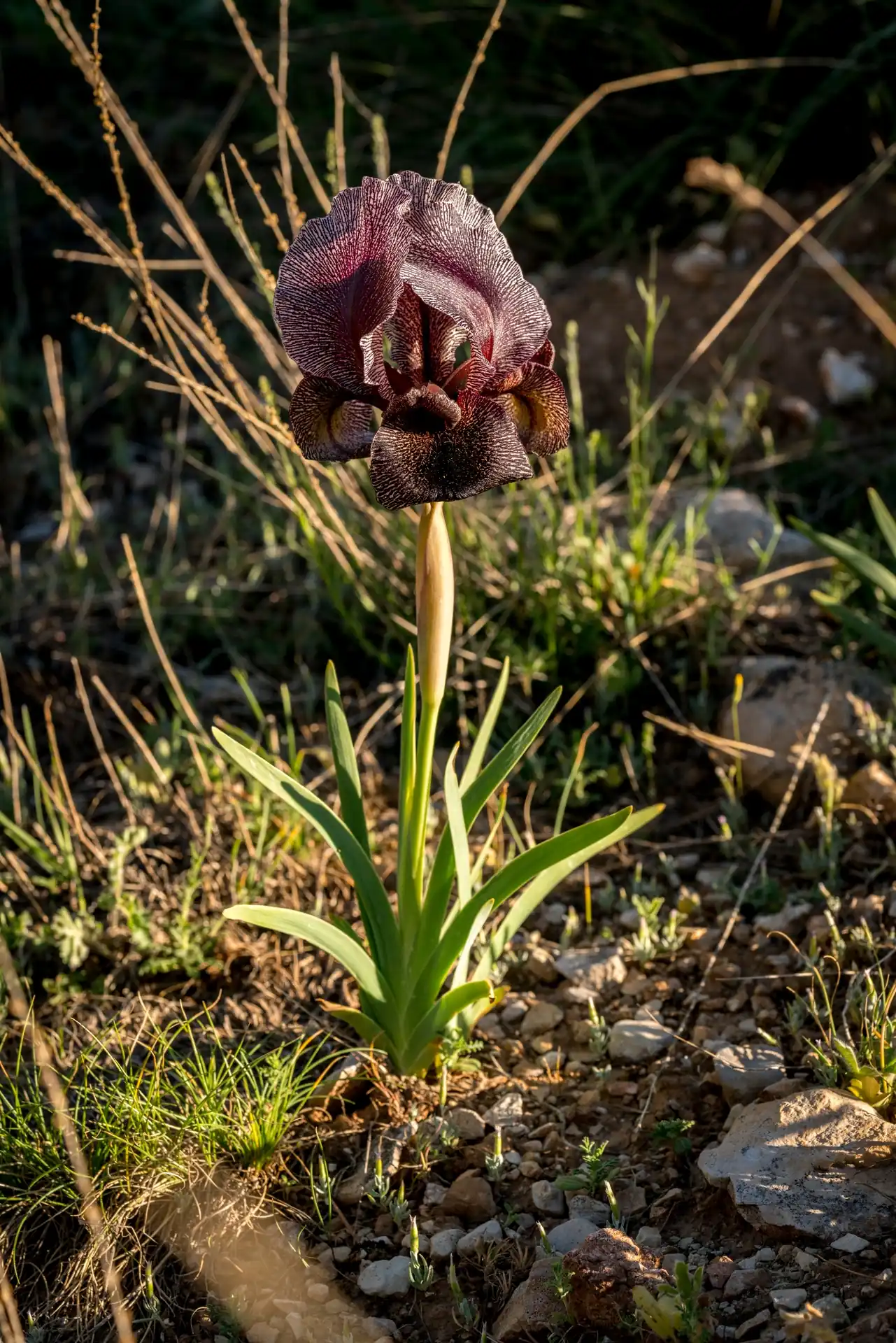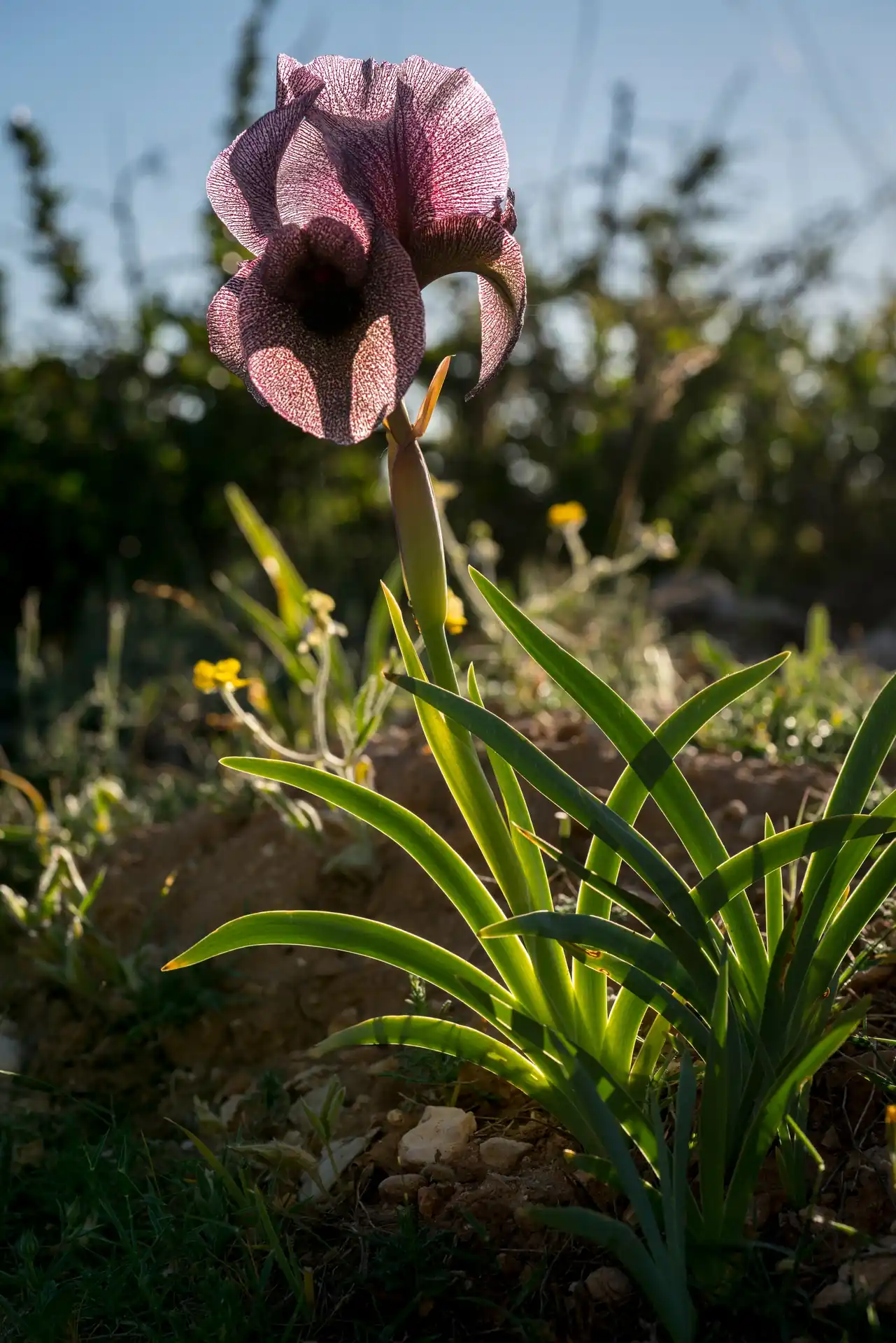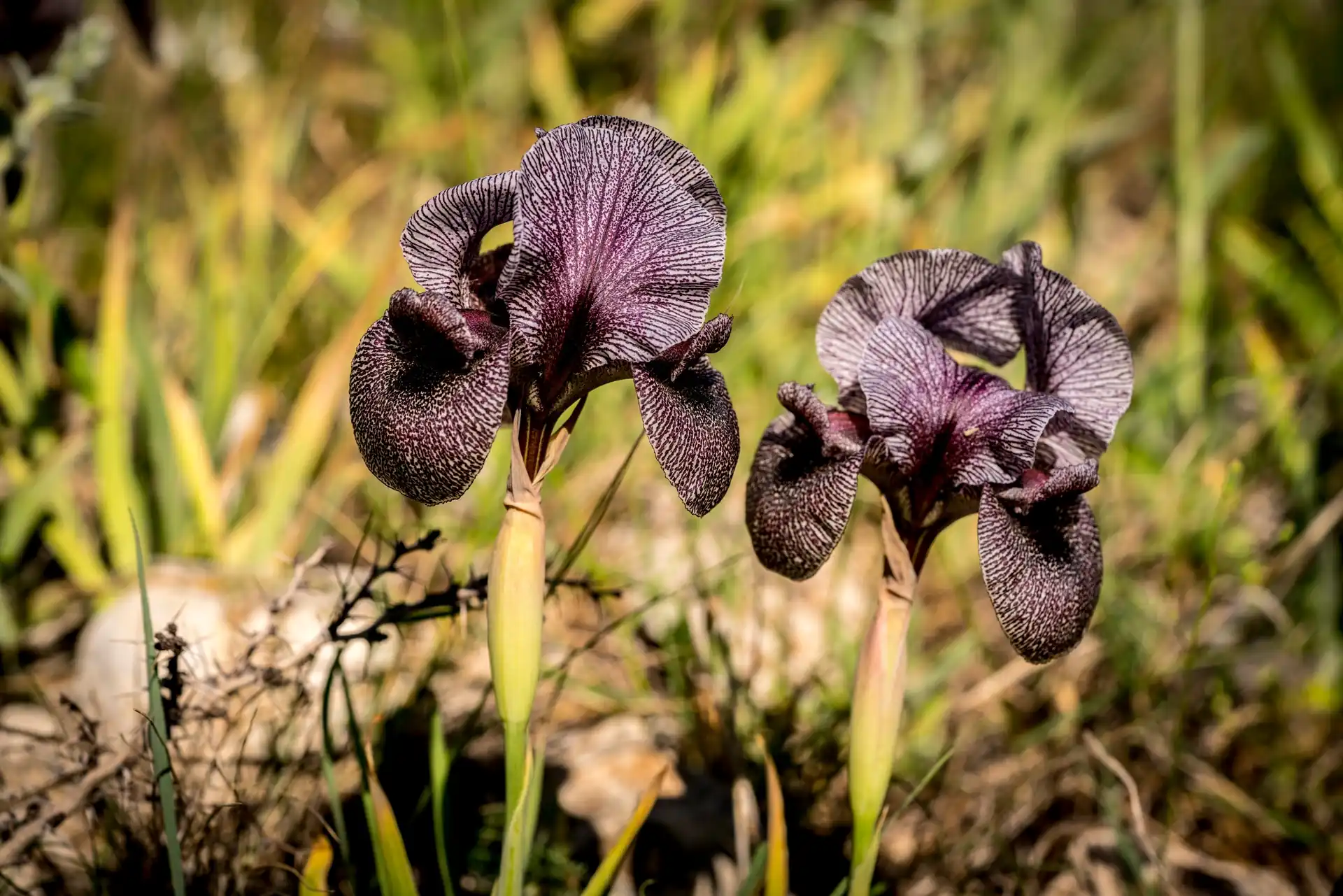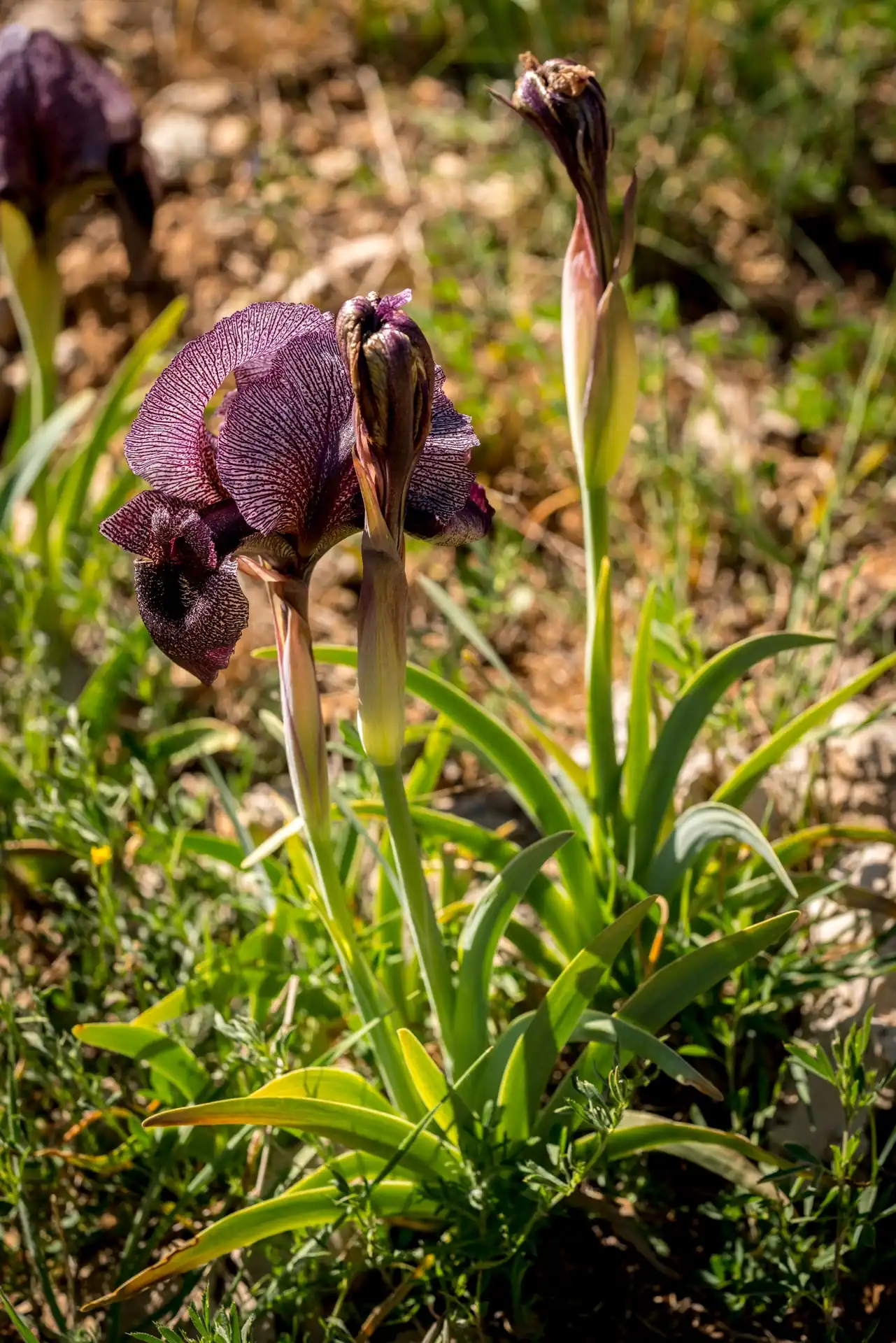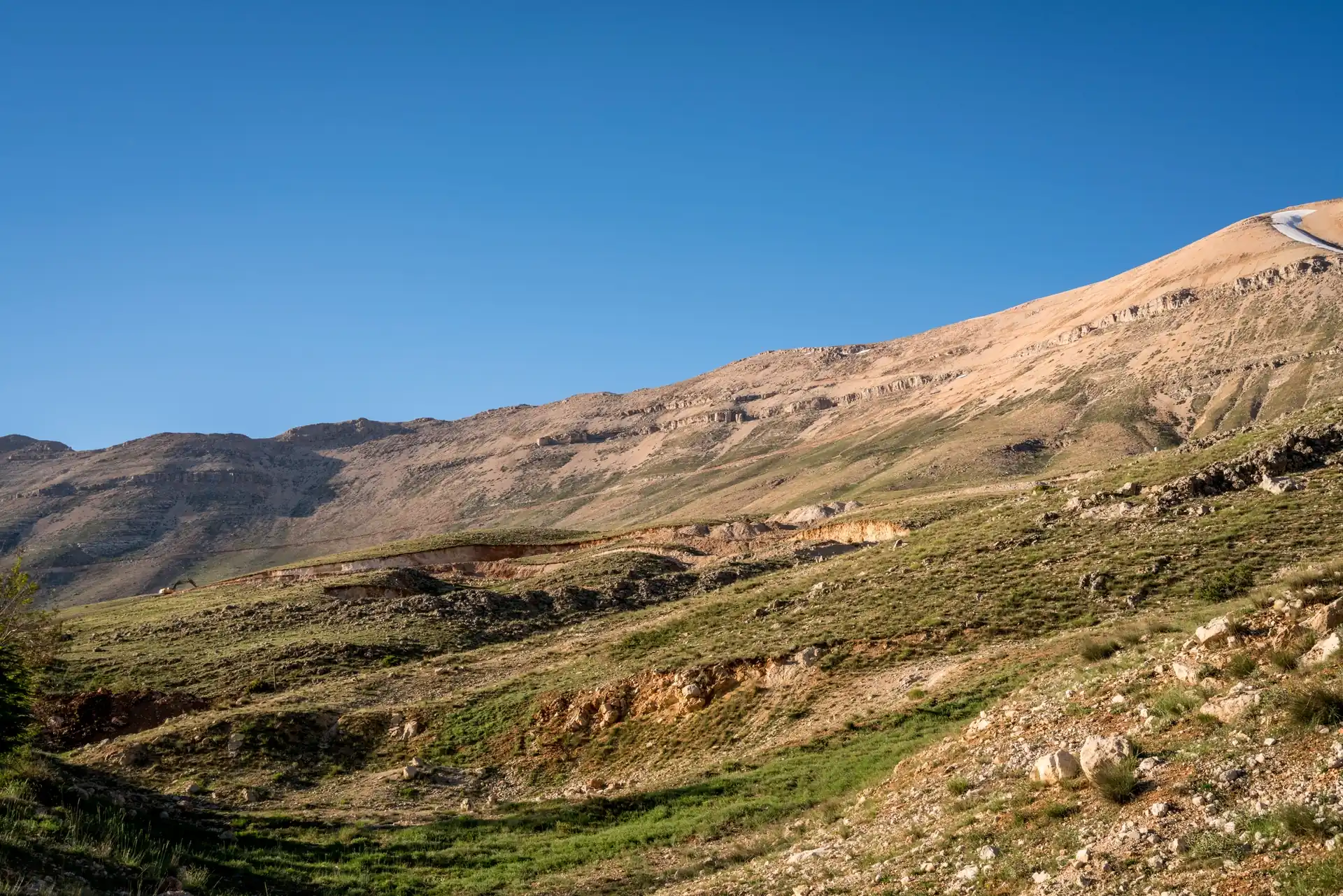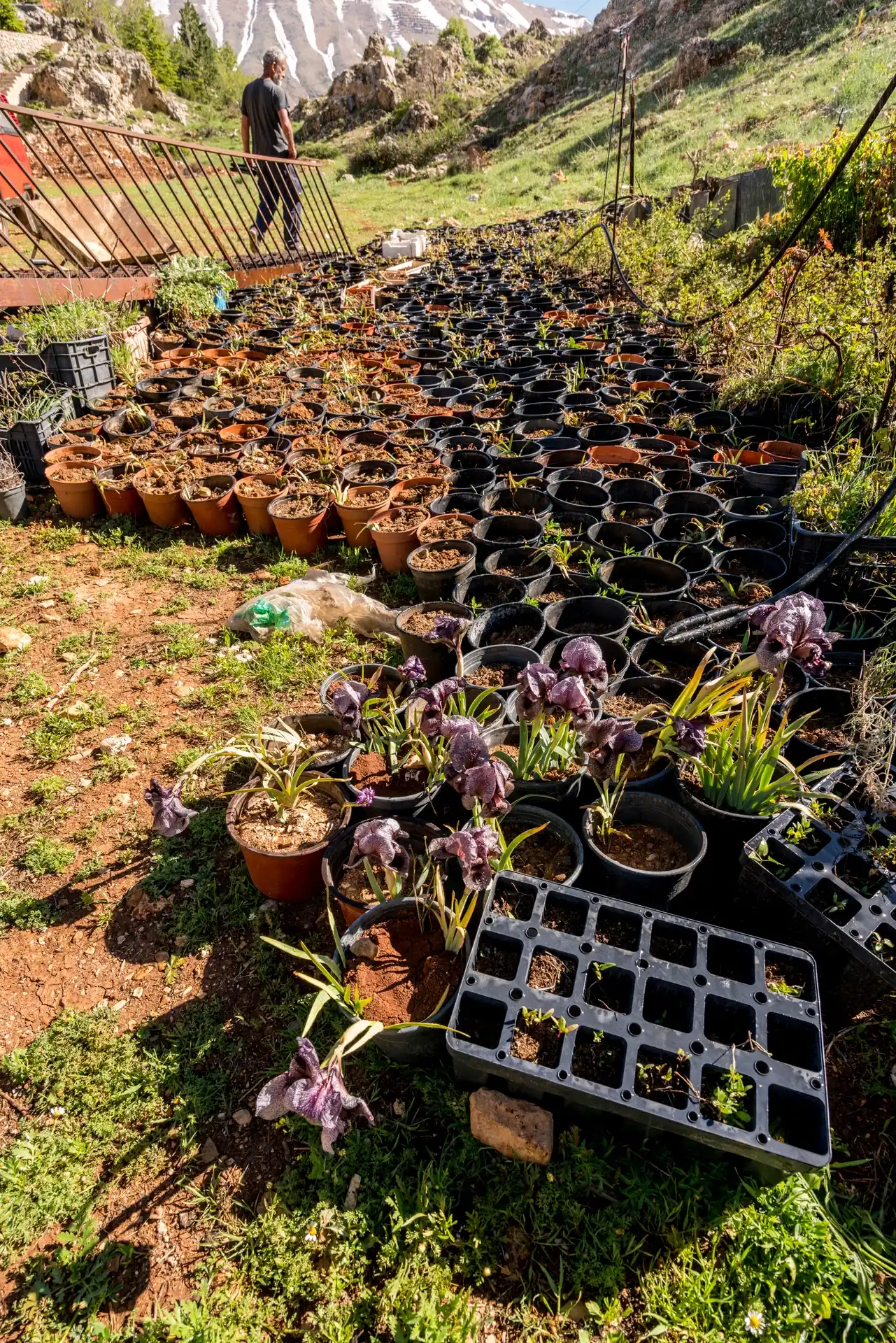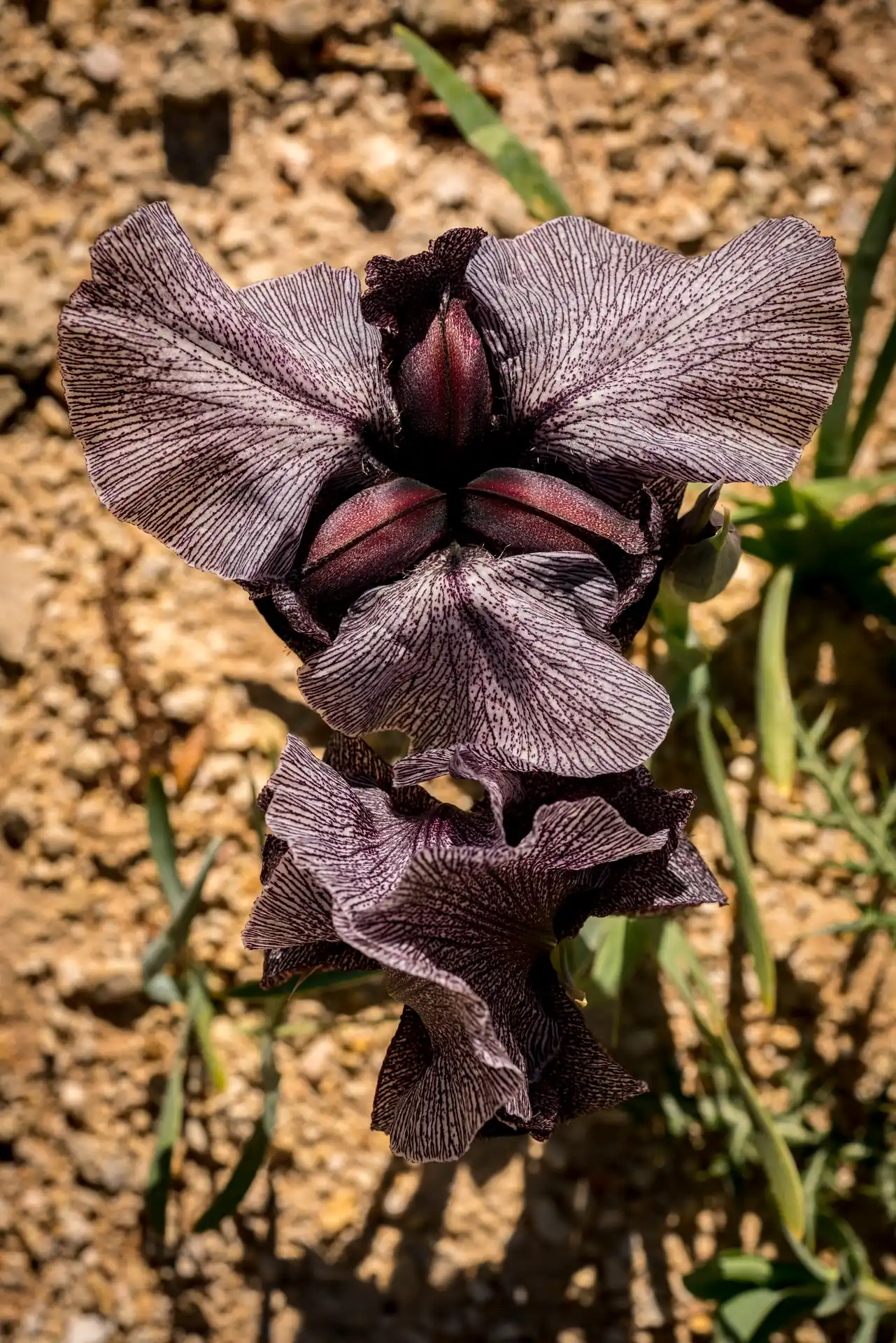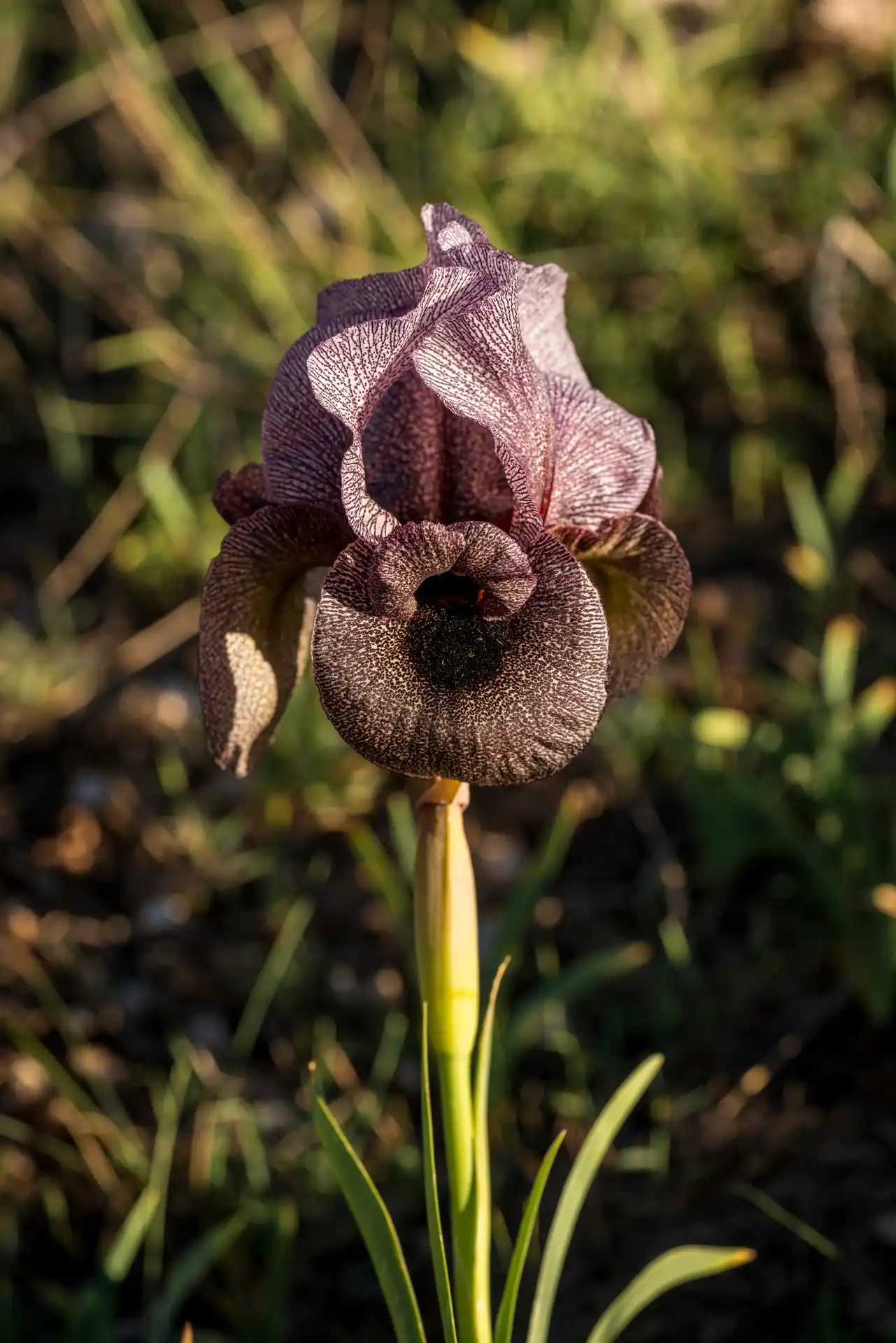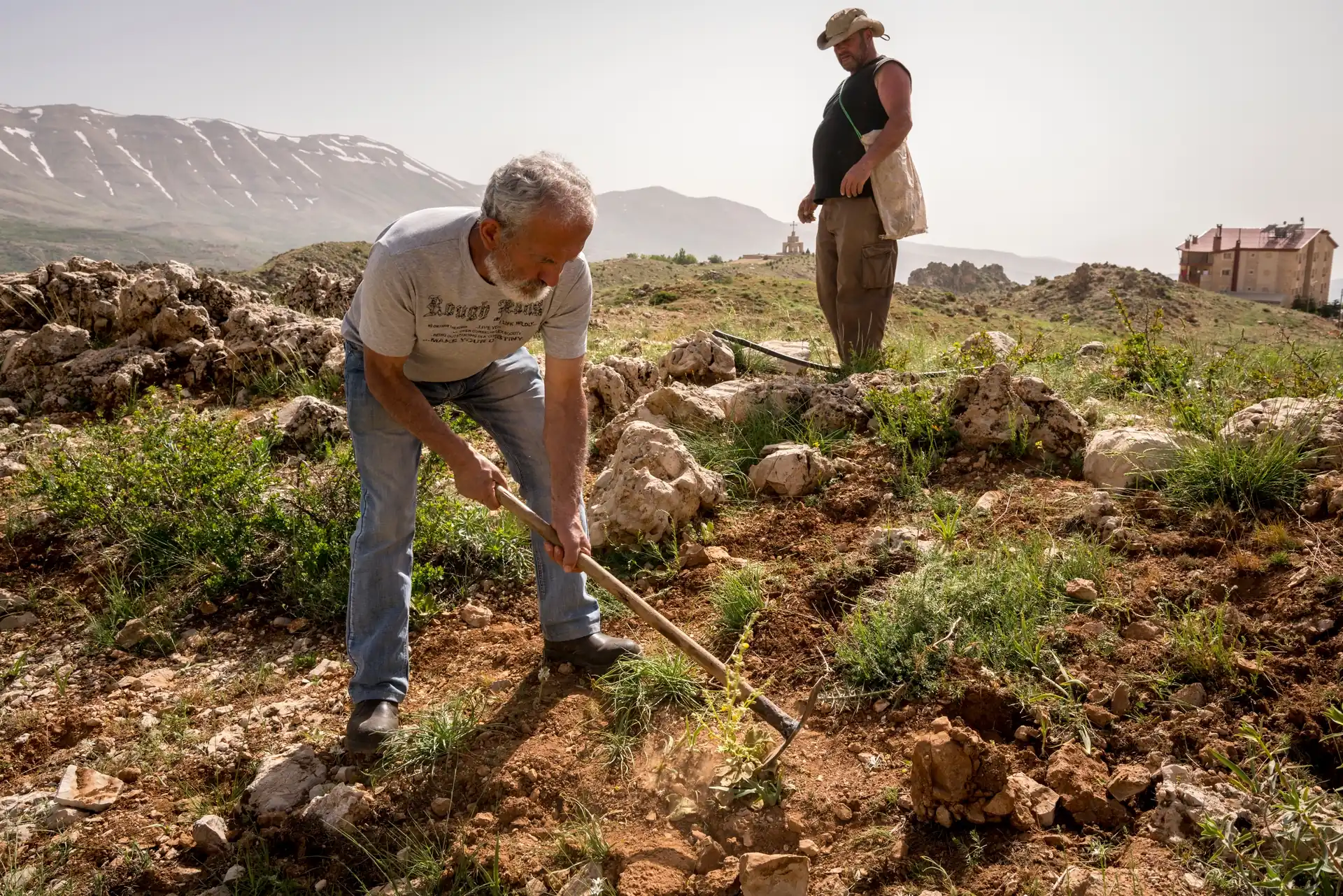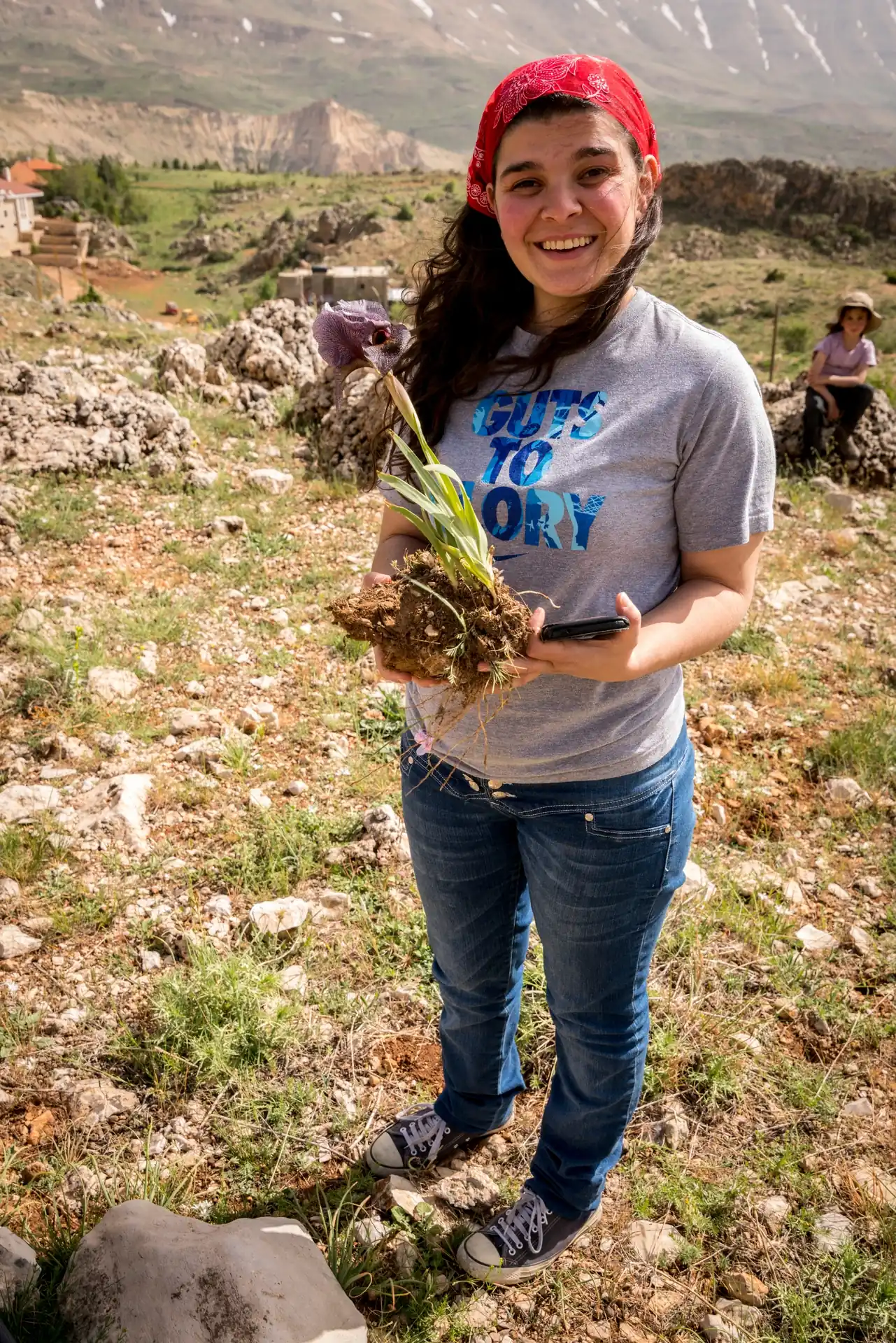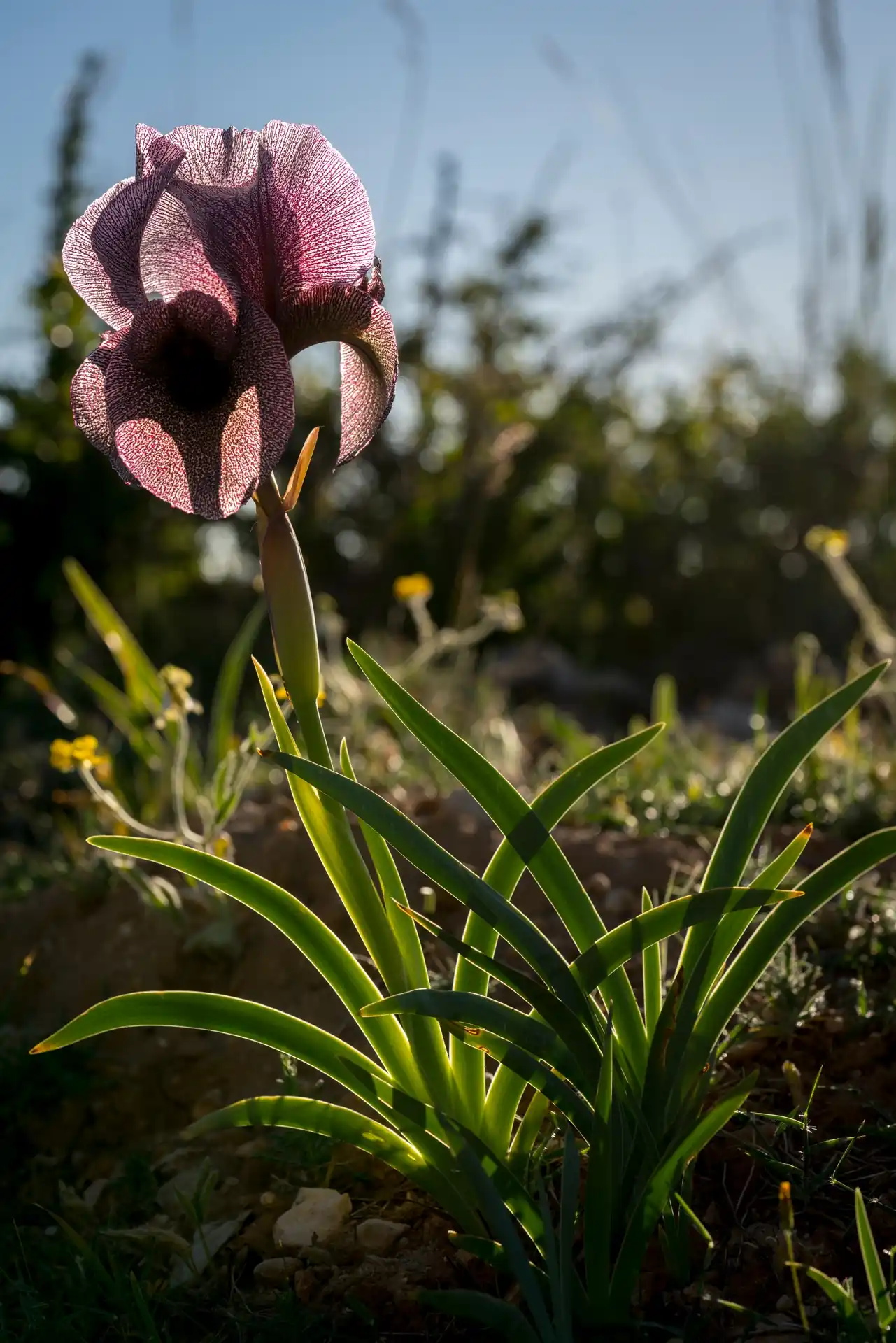


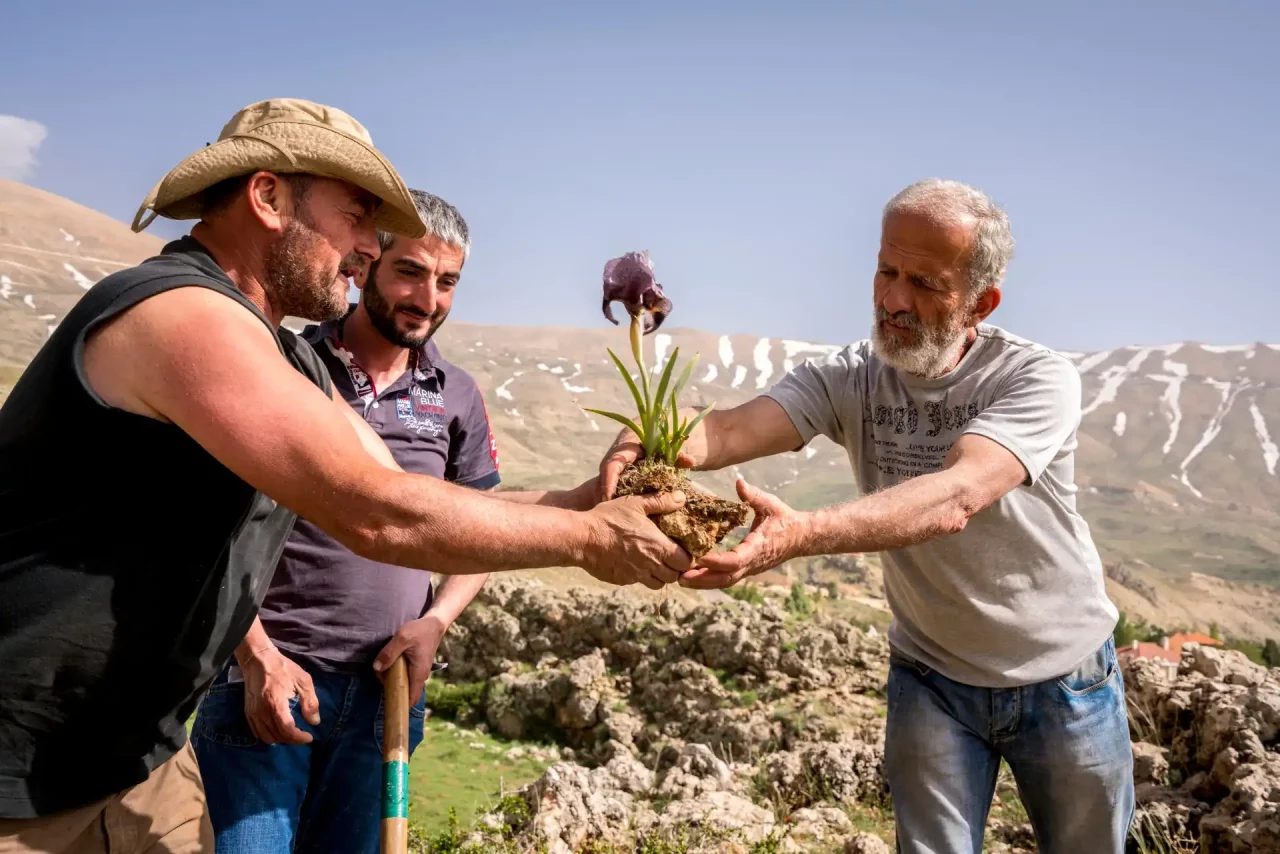
In the Cedars region (Al Arz), above Bsharri in Lebanon, grows a rare and striking flower: Iris cedreti Dinsmore ex Chaudhary. It belongs to the Oncocyclus section, the so-called “royal irises” described by botanists and travellers since antiquity, with references found in ancient Egyptian and Persian texts. The name Oncocyclus, from the Greek for “mass” and “circle”, refers to the dark, circular signal patch at the heart of each flower.
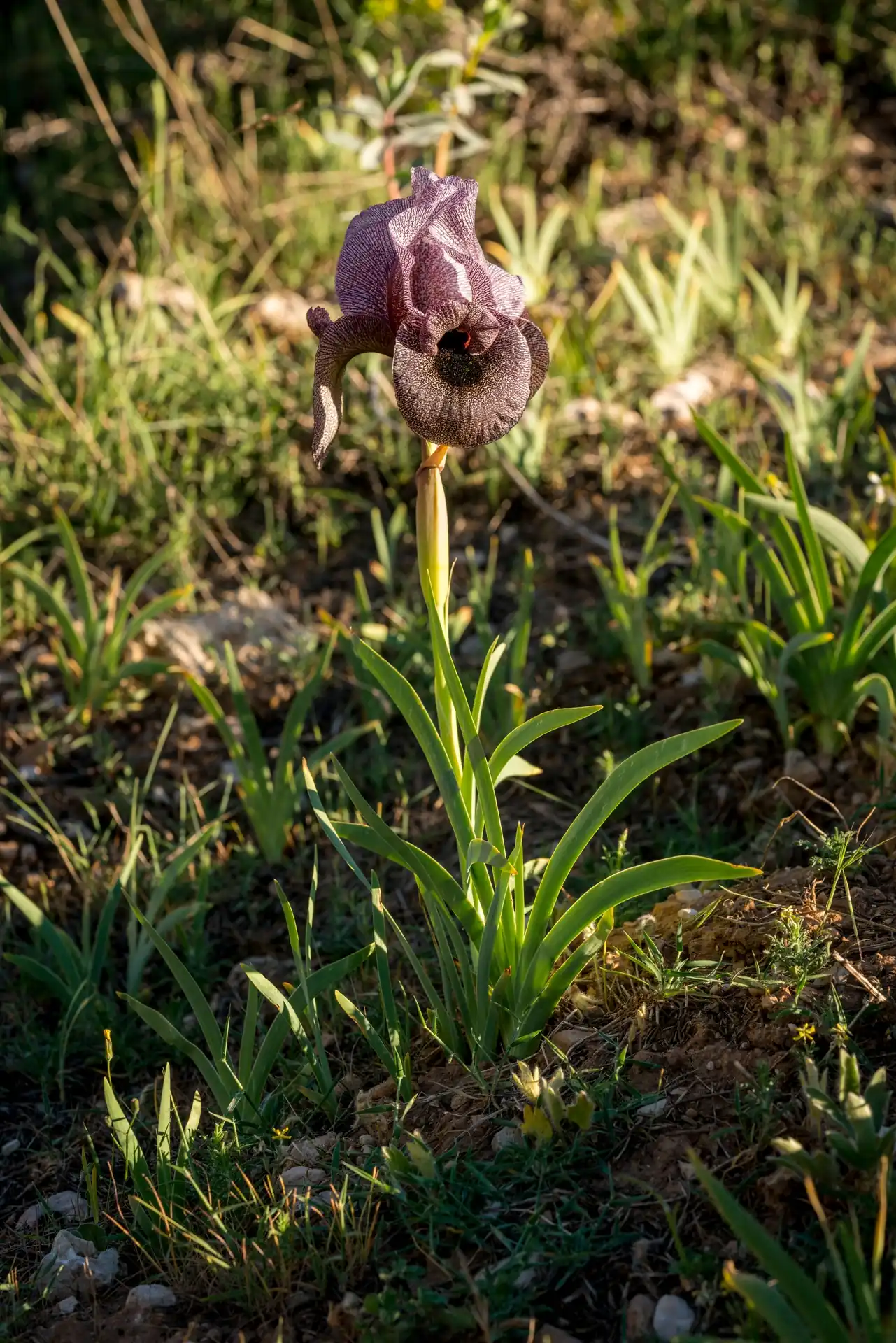
What sets Iris cedreti apart from the irises familiar in European or North American gardens — border irises spreading by rhizome, Dutch irises grown from bulbs, Siberian irises — is above all its extreme geographic rarity. While those cultivated varieties grow on every continent, Iris cedreti exists in the wild on a single stretch of the Mount Lebanon range, between 1,200 and 2,000 metres of altitude, on sunny, well-drained, rocky slopes. This strict endemism, shared with only three other irises found nowhere else but Lebanon (I. sofarana subsp. sofarana, I. sofarana subsp. kasruwana and I. westii), makes it one of the country’s most threatened plants: it is listed by the IUCN as critically endangered, and only about half of the historically recorded Lebanese Oncocyclus iris populations are thought to survive today.
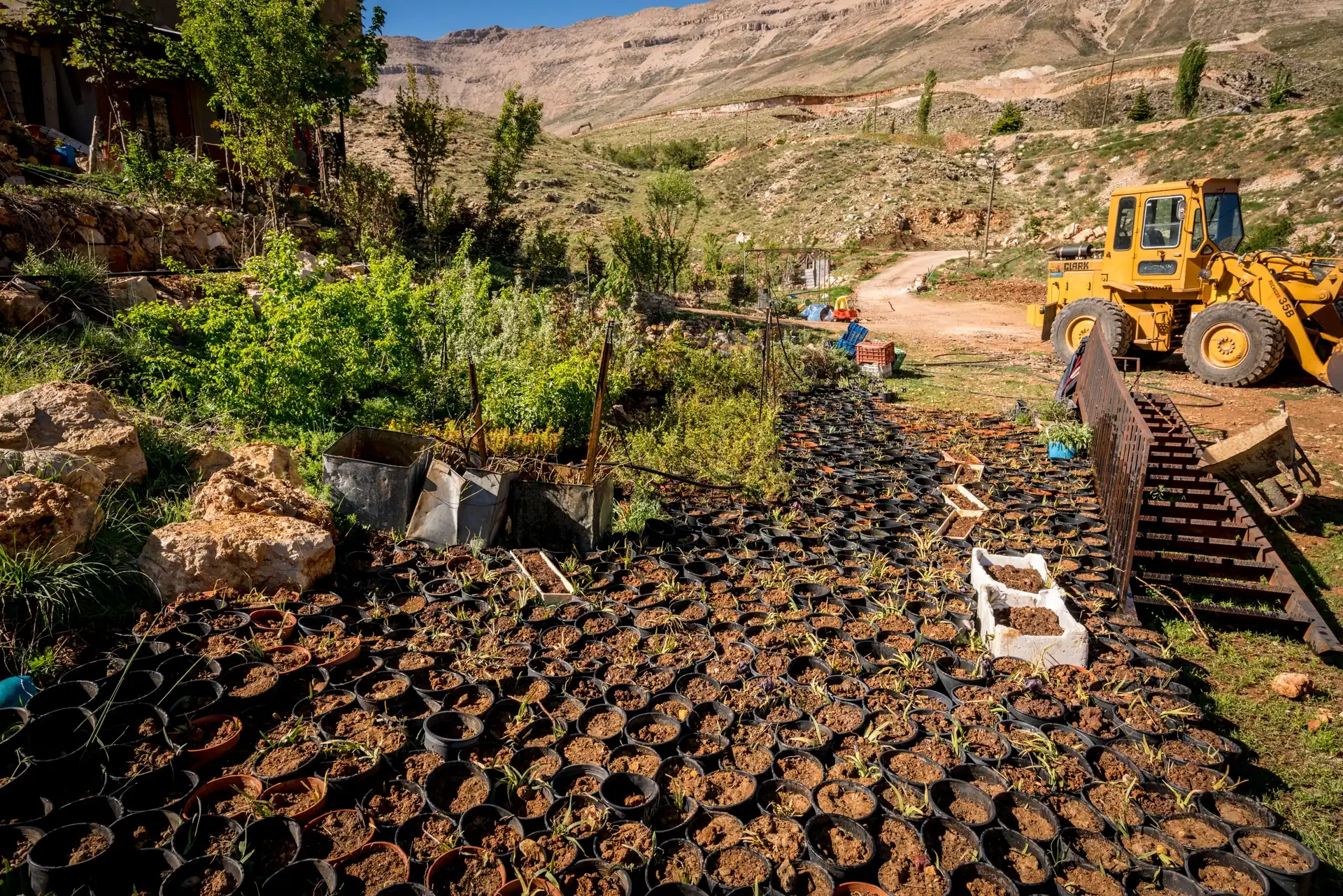
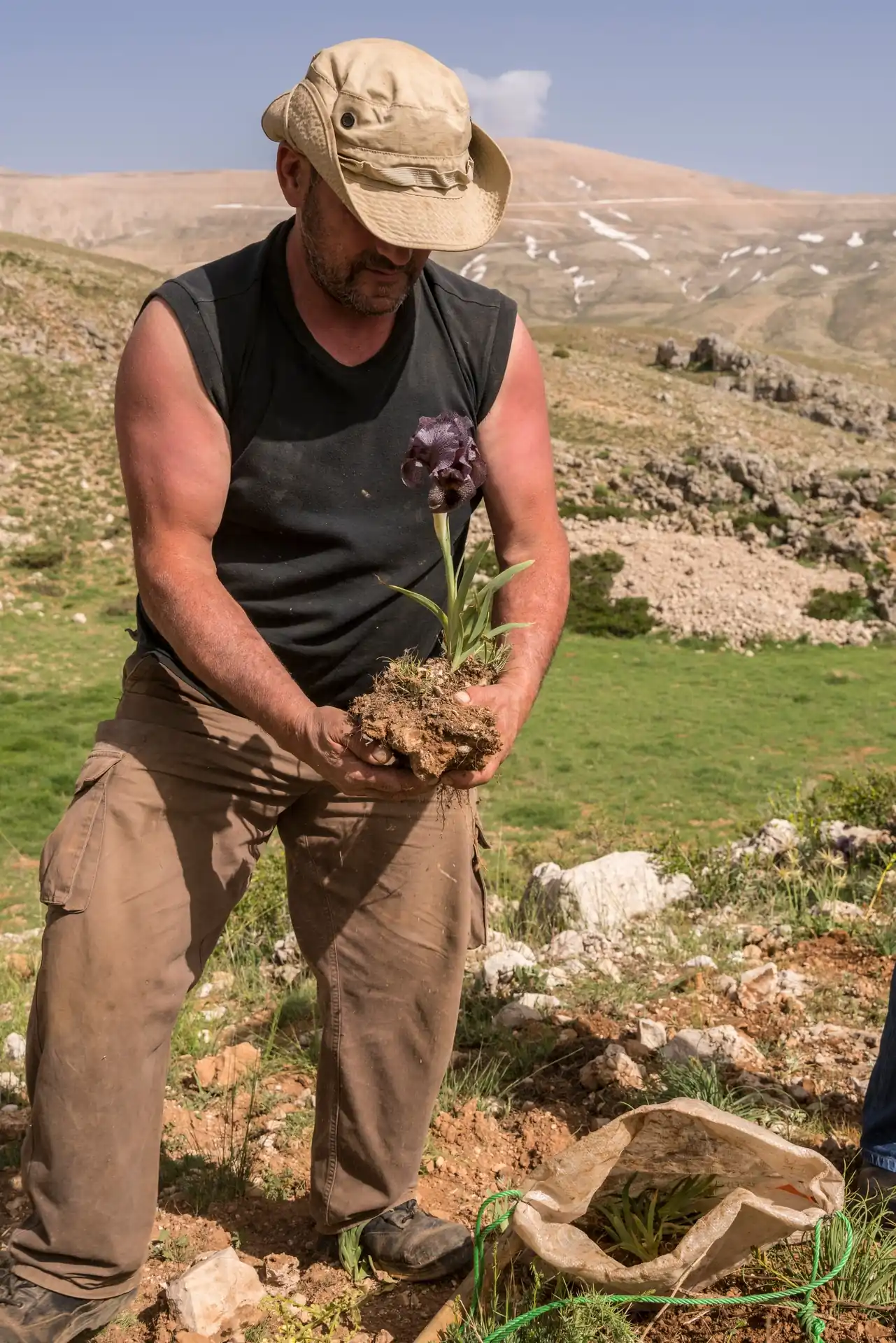
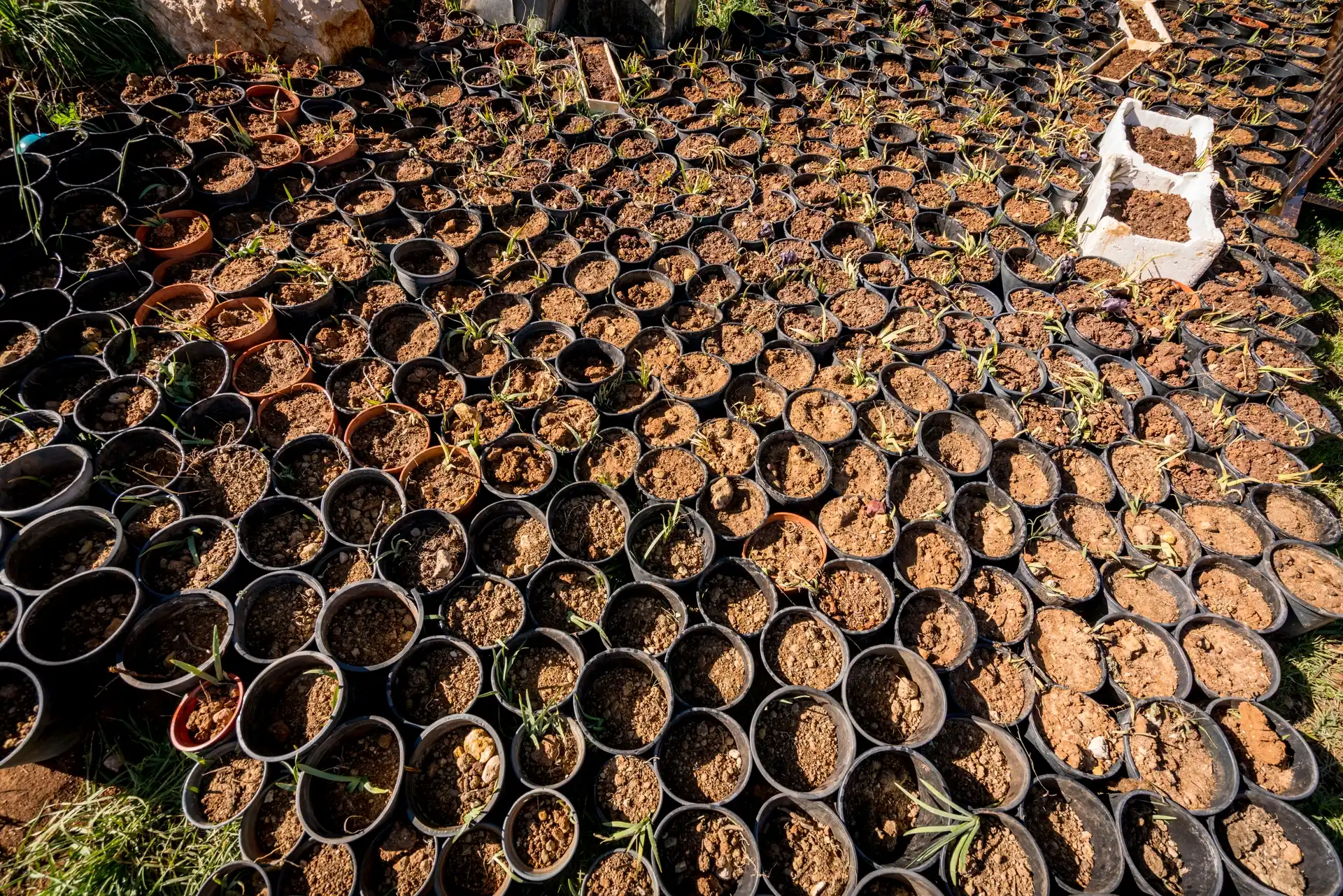
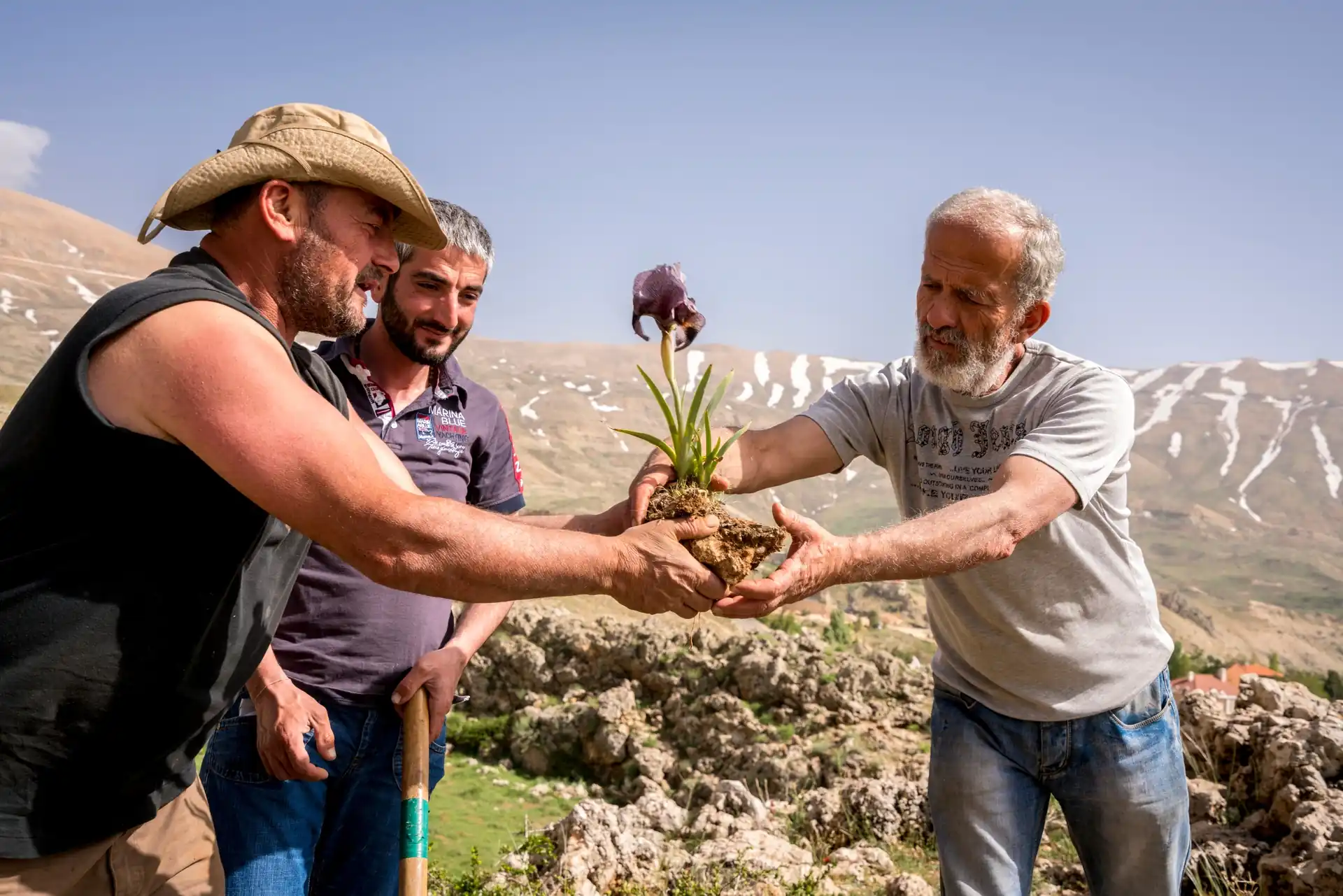
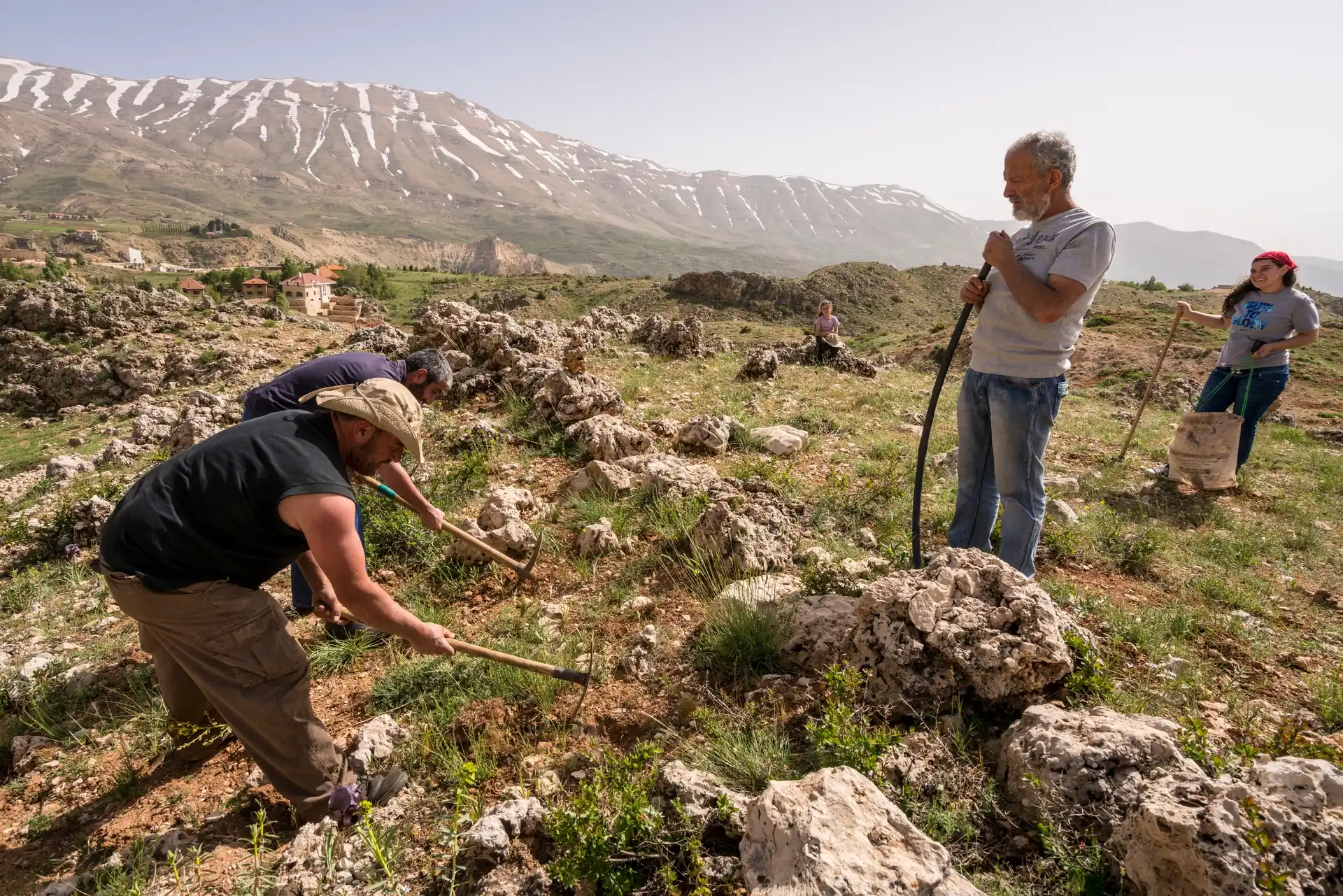
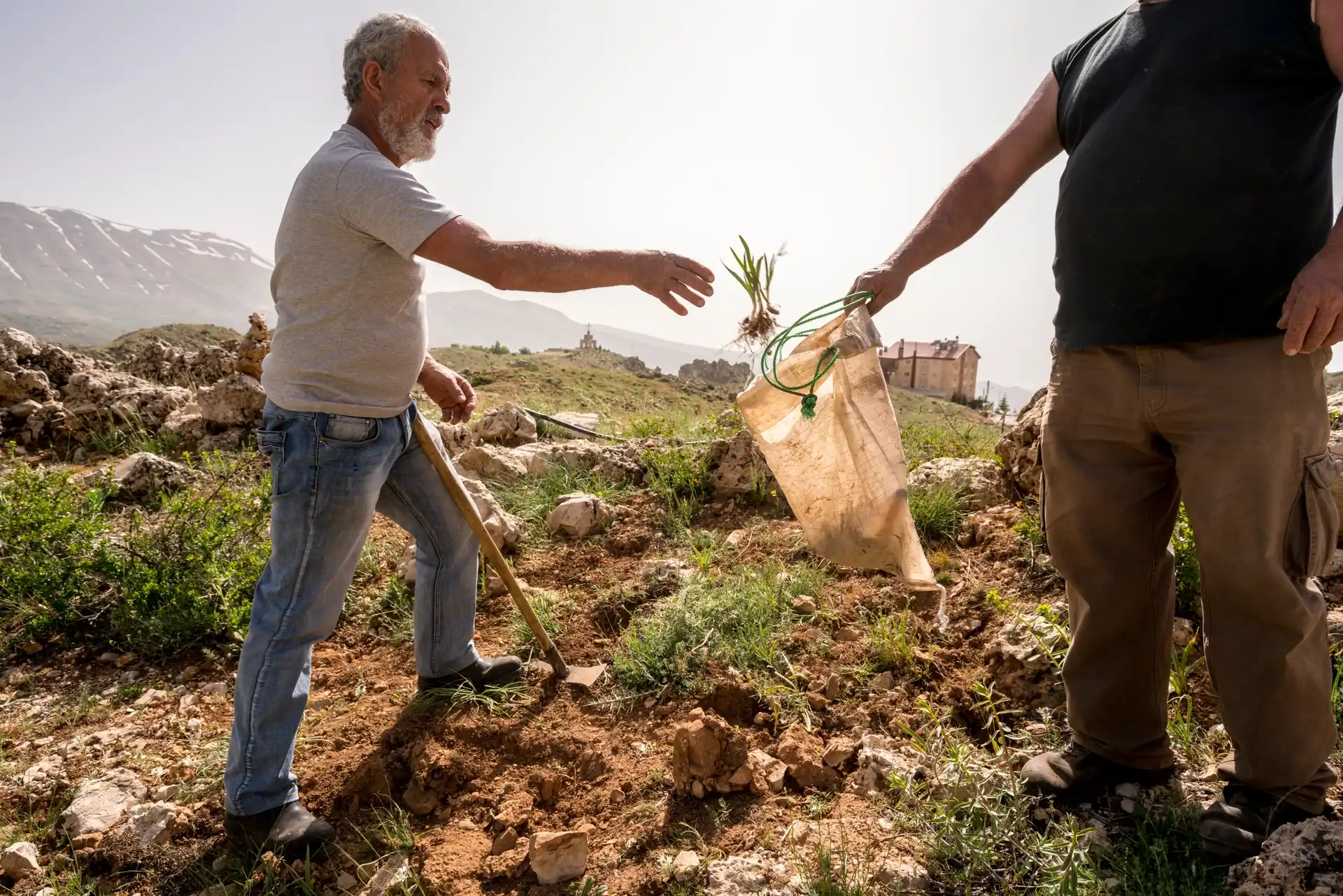
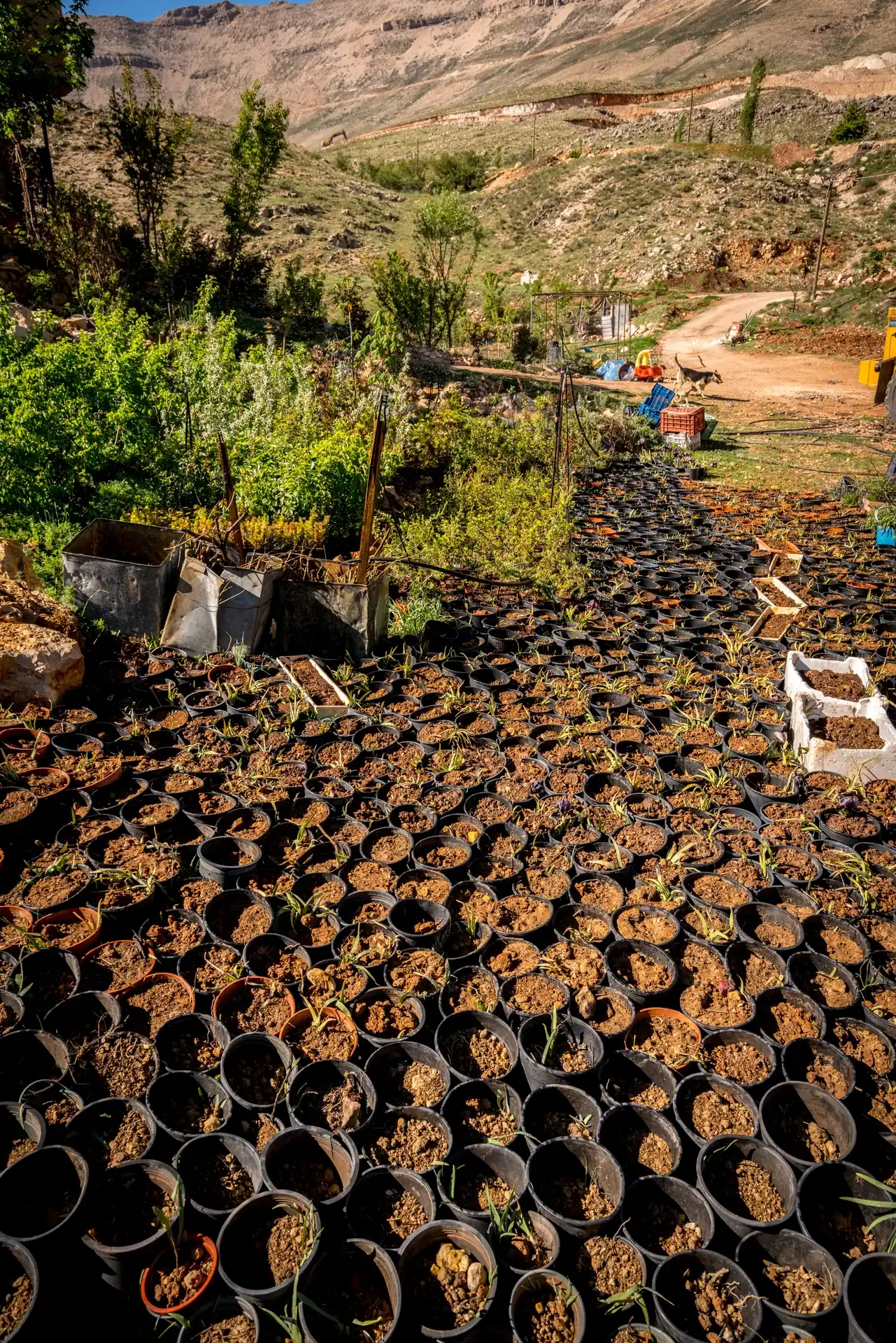
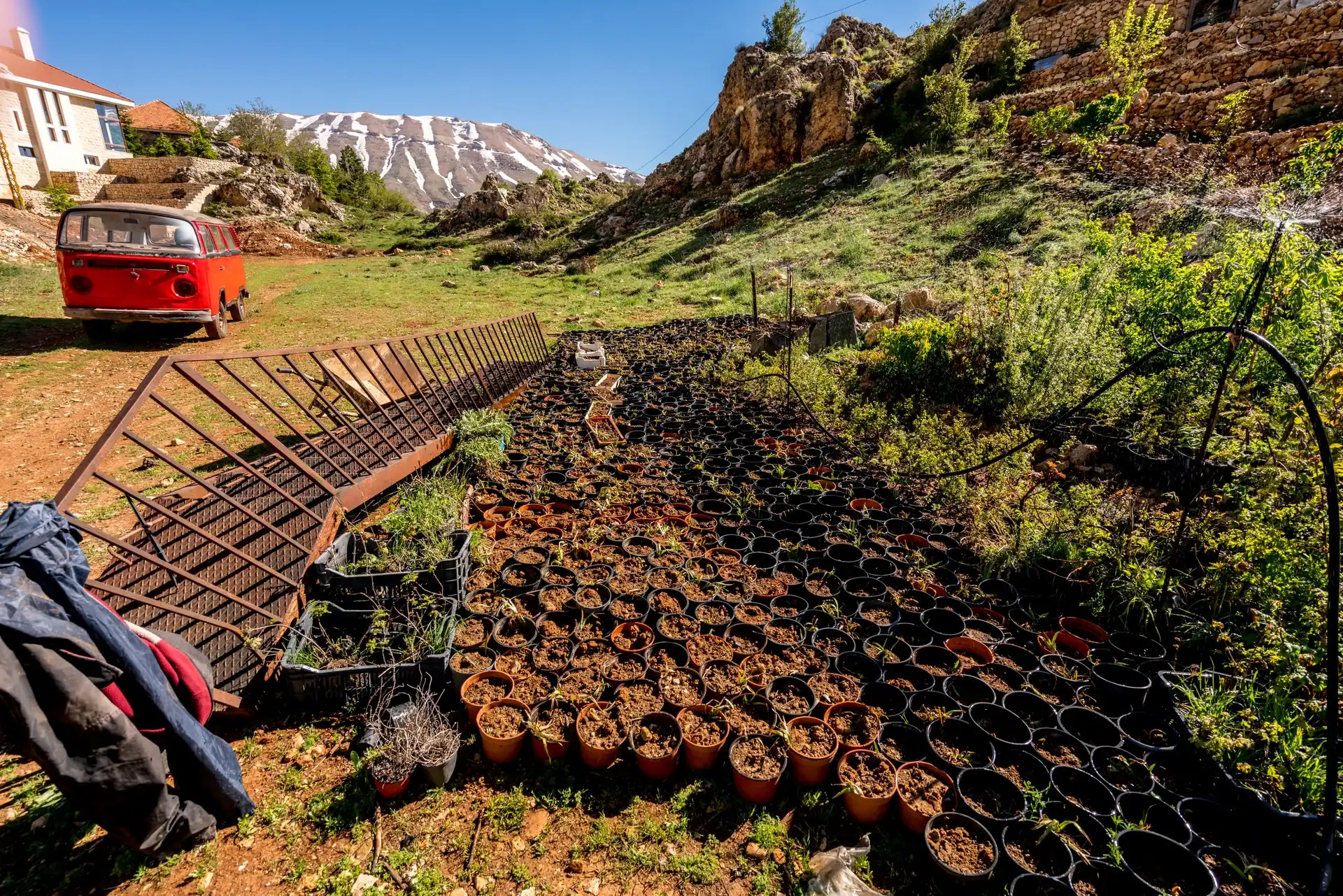
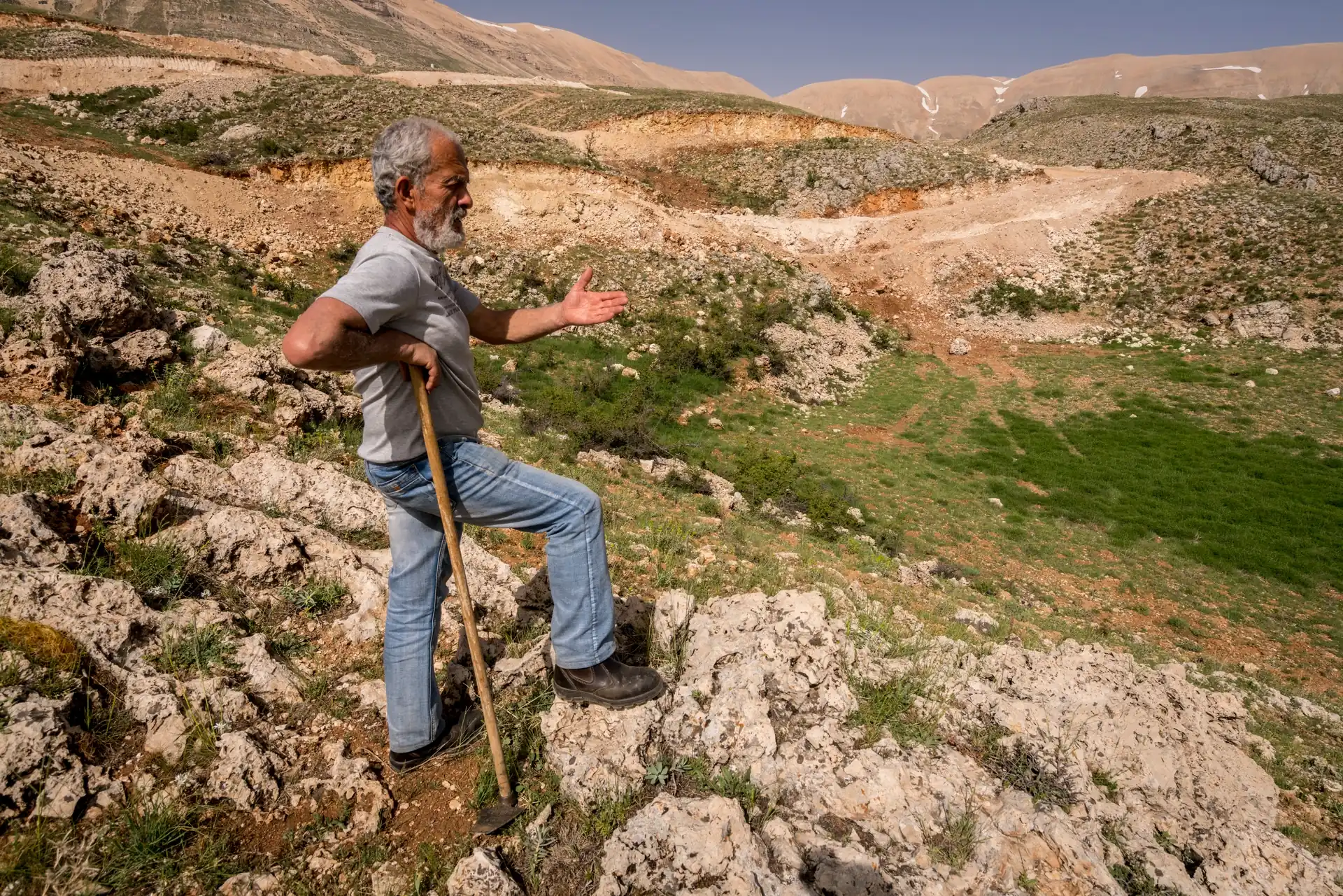
Its flower stands apart just as clearly: a single, very large bloom per stem, its near-white background entirely covered with a dense scattering of fine dots and veins in dark purple, maroon or near-black — a pattern absent from the more evenly coloured, often multi-flowered garden irises. Its biology differs too: growing from a short, compact rhizome rather than a bulb, it goes fully dormant through the dry Mediterranean summer before flowering again in May. This fragility is what makes every transplant delicate, a challenge Doctor Youssef Tawk takes on each year to save the plants from the Cedrar tourism project, which now threatens more than half of their natural habitat.
Tarek Charara
Text and images © Tarek Charara/Kaleidos images.
All rights reserved.
Sauvegarde de l’Iris Cedreti Dinsmore
© Tarek Charara/Kaleidos images