

Baalbek. Photo essay.
Most of the time we’re on the lookout for the image, running after the event with our cameras around our necks in the hope of capturing that “decisive” moment in our eyes.
Sometimes we’re lucky enough to be able to work on a subject and take our time. To let ourselves be imbued and inspired by a subject.
Here, the magnificent site of Baalbek in Lebanon – a UNESCO World Heritage Site – was the inspiration for an almost meditative work.
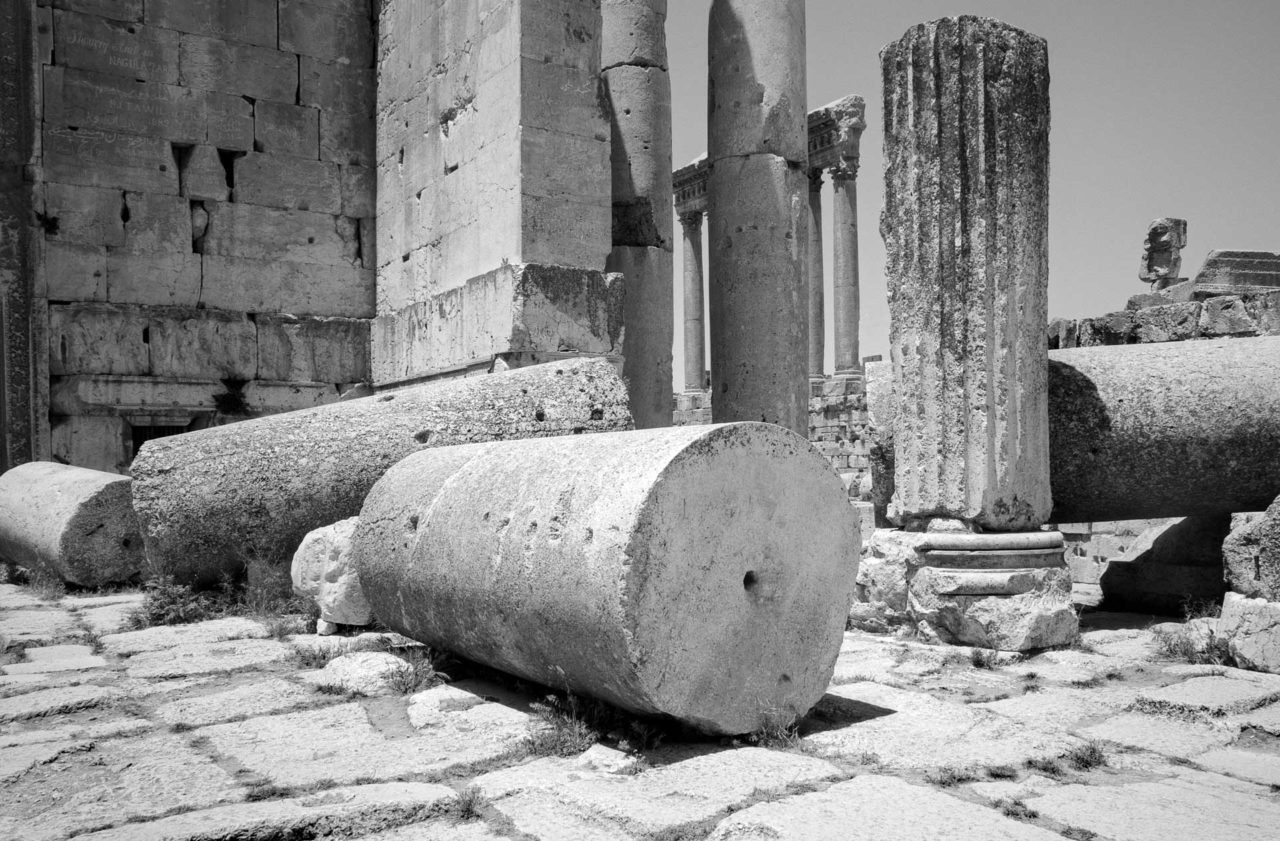
Black-and-white photos taken with a large-format view camera, a rigorous composition that balances each photo… Time stands still!
Photos by Laurent Abad.
Temple of Bacchus
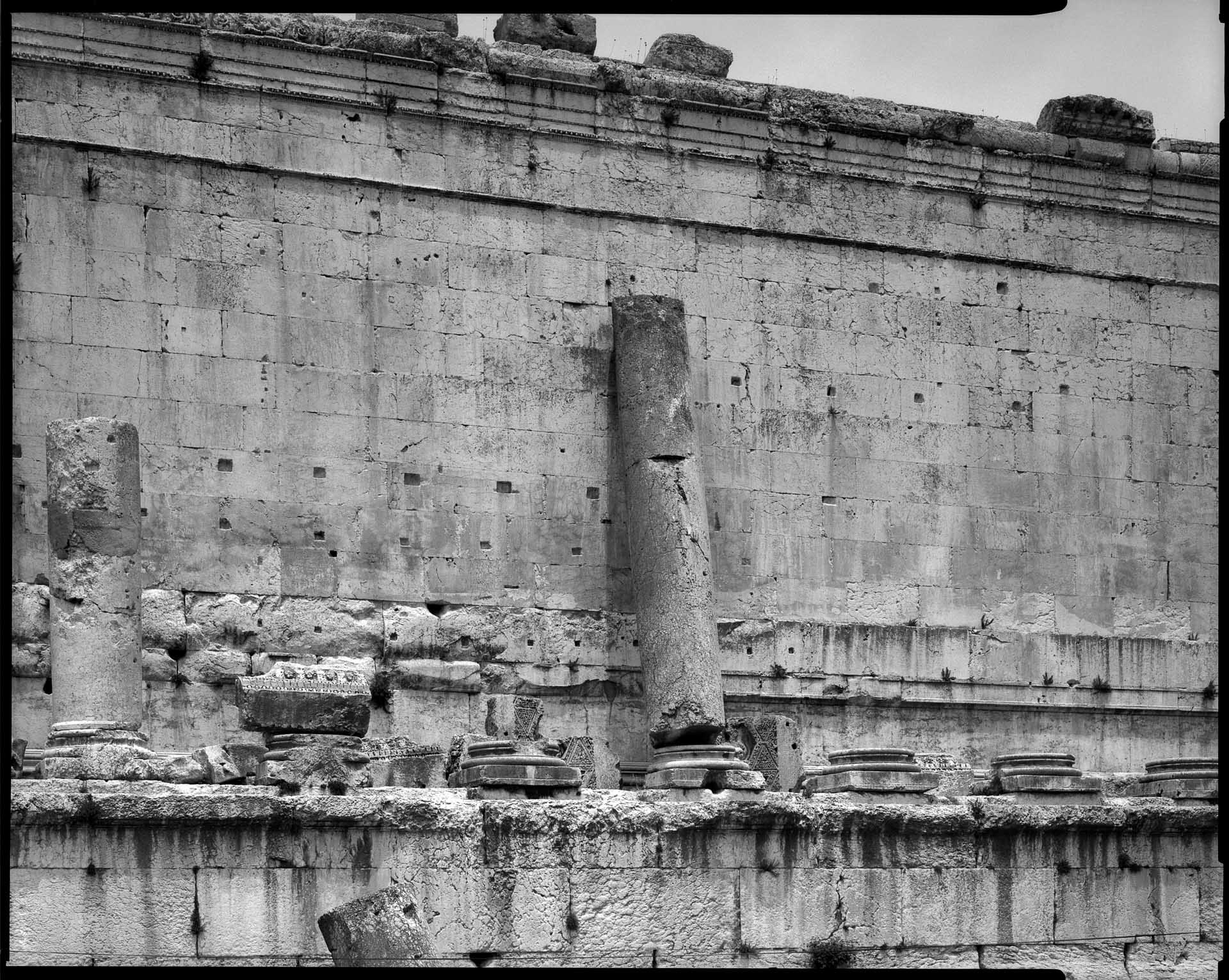
Baalbek, Lebanon. Baalbek, Lebanon. The Temple of Bacchus. One of the world’s largest and best-preserved Roman temples. It served as an influential model for neo-classical architecture. Commissioned by the Roman emperor Antoninus the Pious, the temple took a hundred years to build (from 150 to 250). Slightly smaller than the Temple of Baal-Jupiter, it is nonetheless 66 metres long, 35 metres wide and 31 metres high. The leaning column of the Temple of Bacchus.
Baalbek
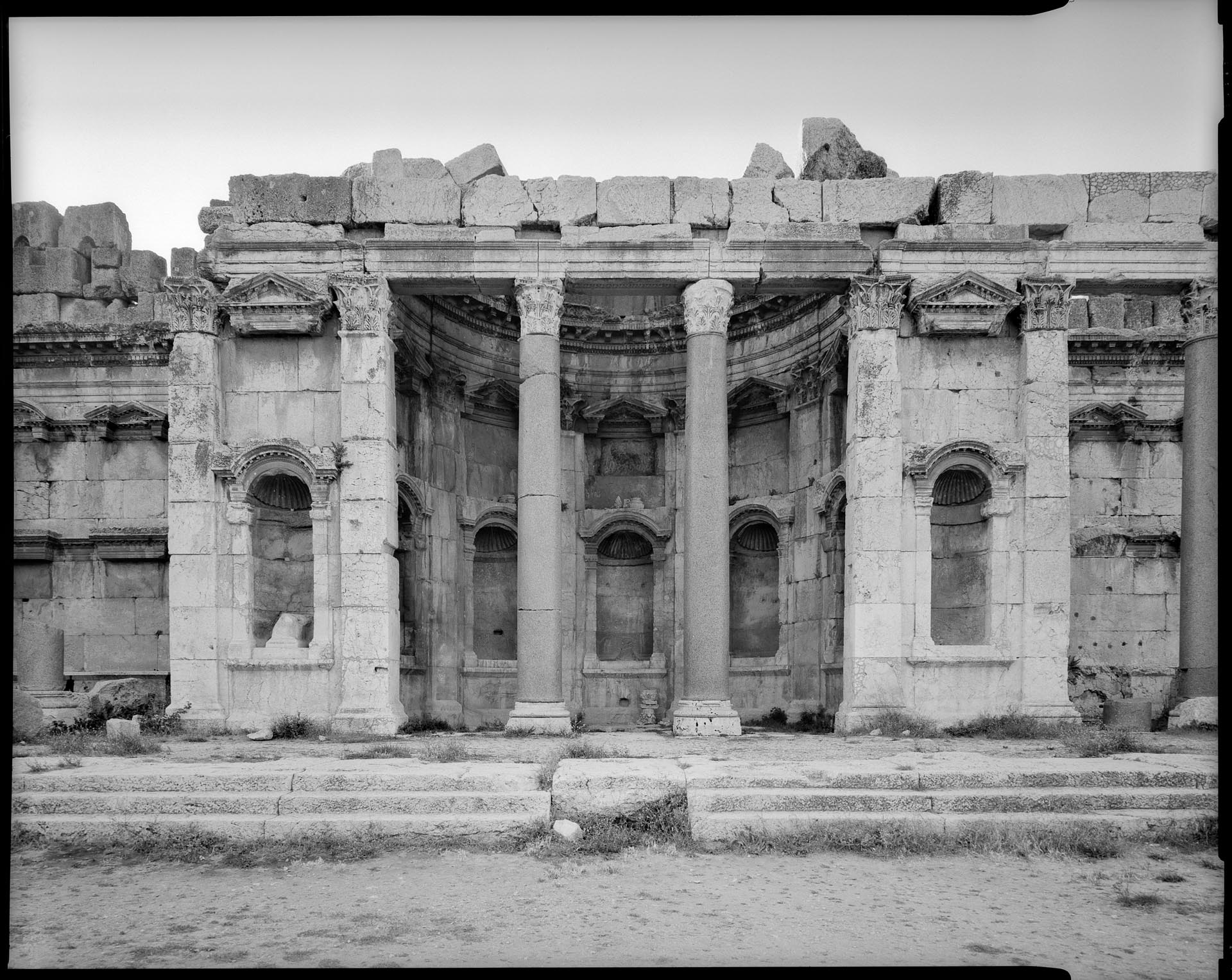
Baalbek, Lebanon. Semicircular exedra in the great courtyard of the Temple of Jupiter.
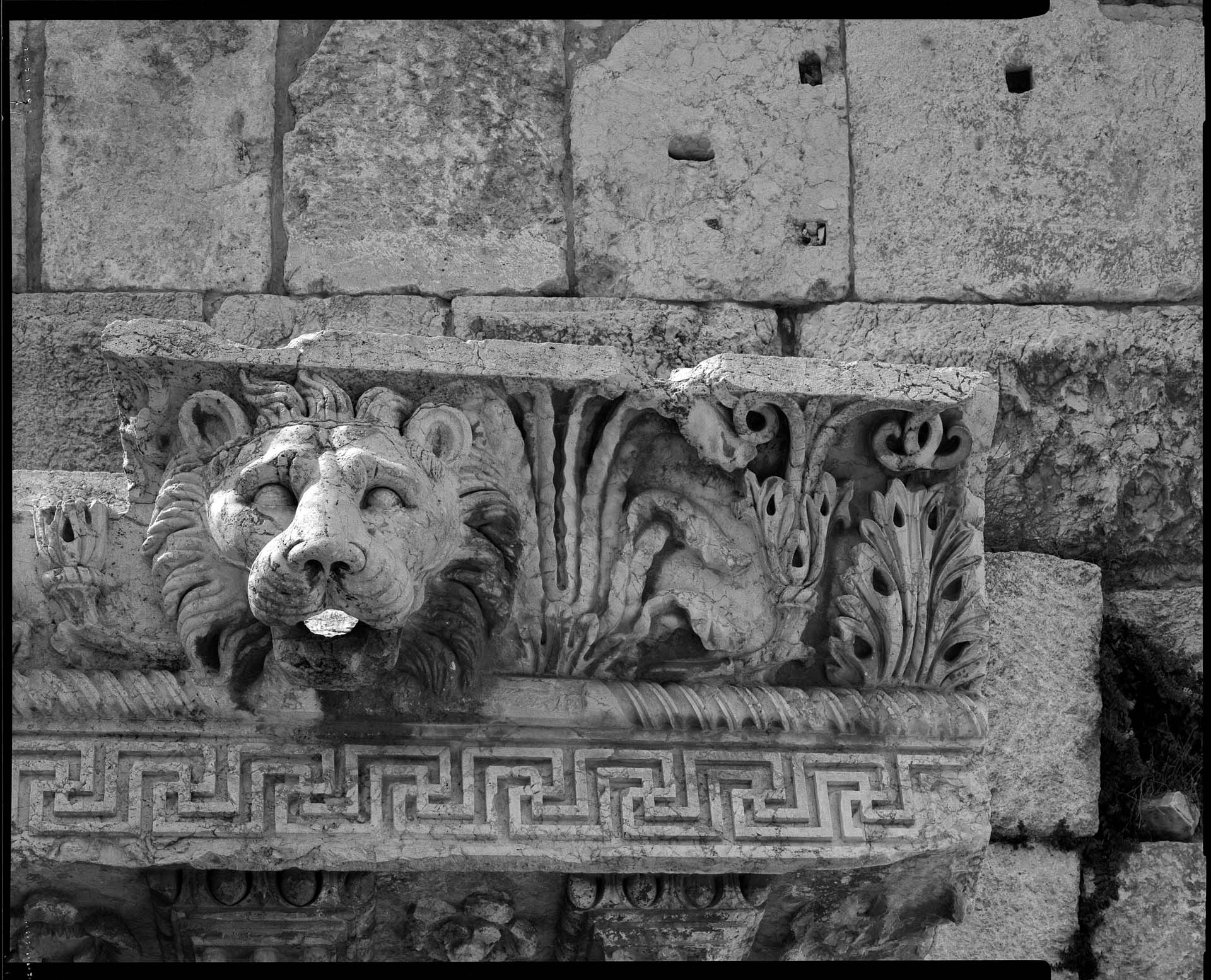
Temple of Jupiter
Baalbek, Lebanon. Piece from the entablature of the Temple of Jupiter, representing a lion’s head. Rainwater drained from the lion’s mouth.
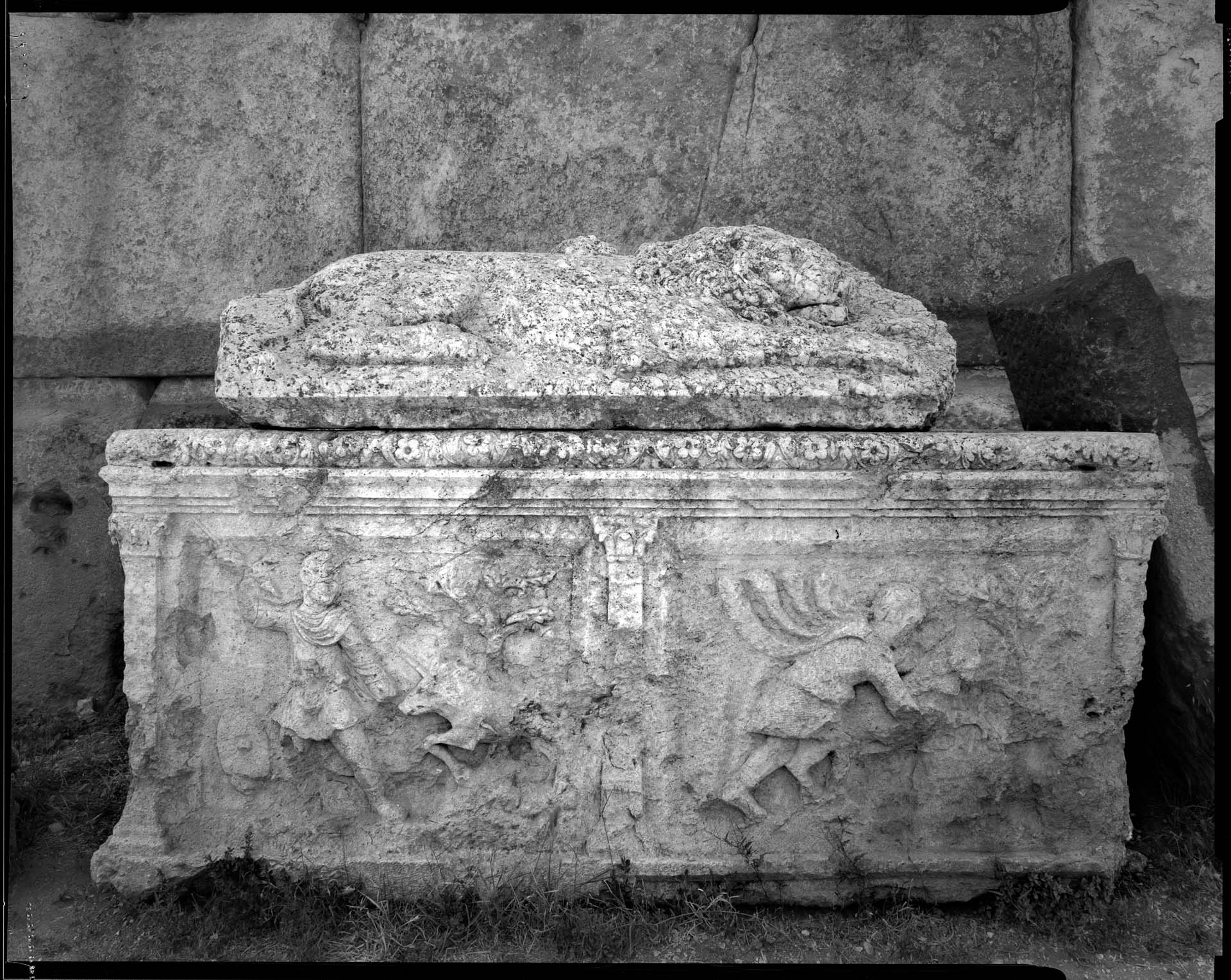
Baalbek
Baalbek, Lebanon. The “sarcophagus of Adonis”.
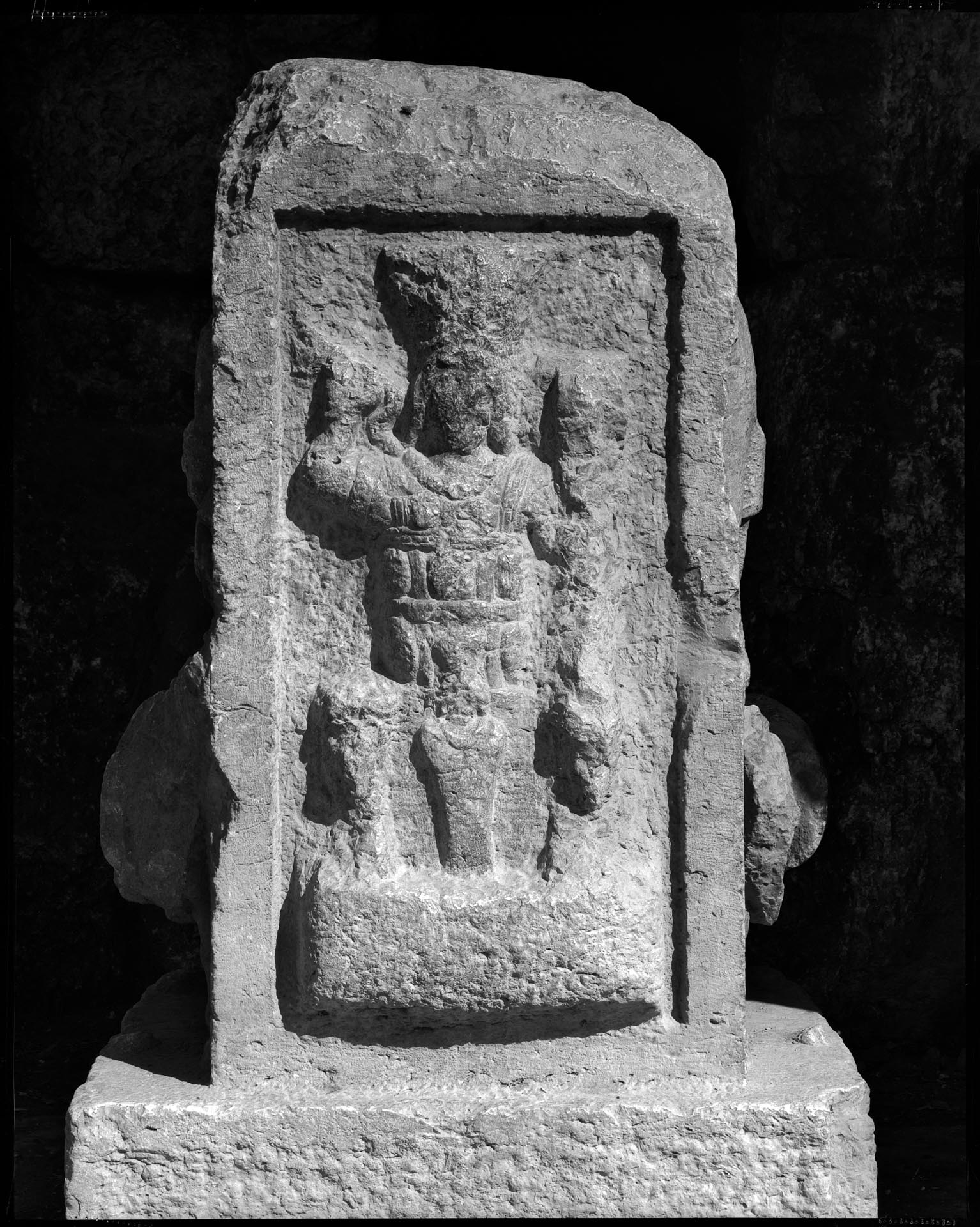
Heliopolitan Jupiter
Baalbek, Lebanon. Altar (or funerary stele according to other sources) in limestone with representation of Jupiter Heliopolitanus from Ain Lejouj in the hexagonal courtyard.
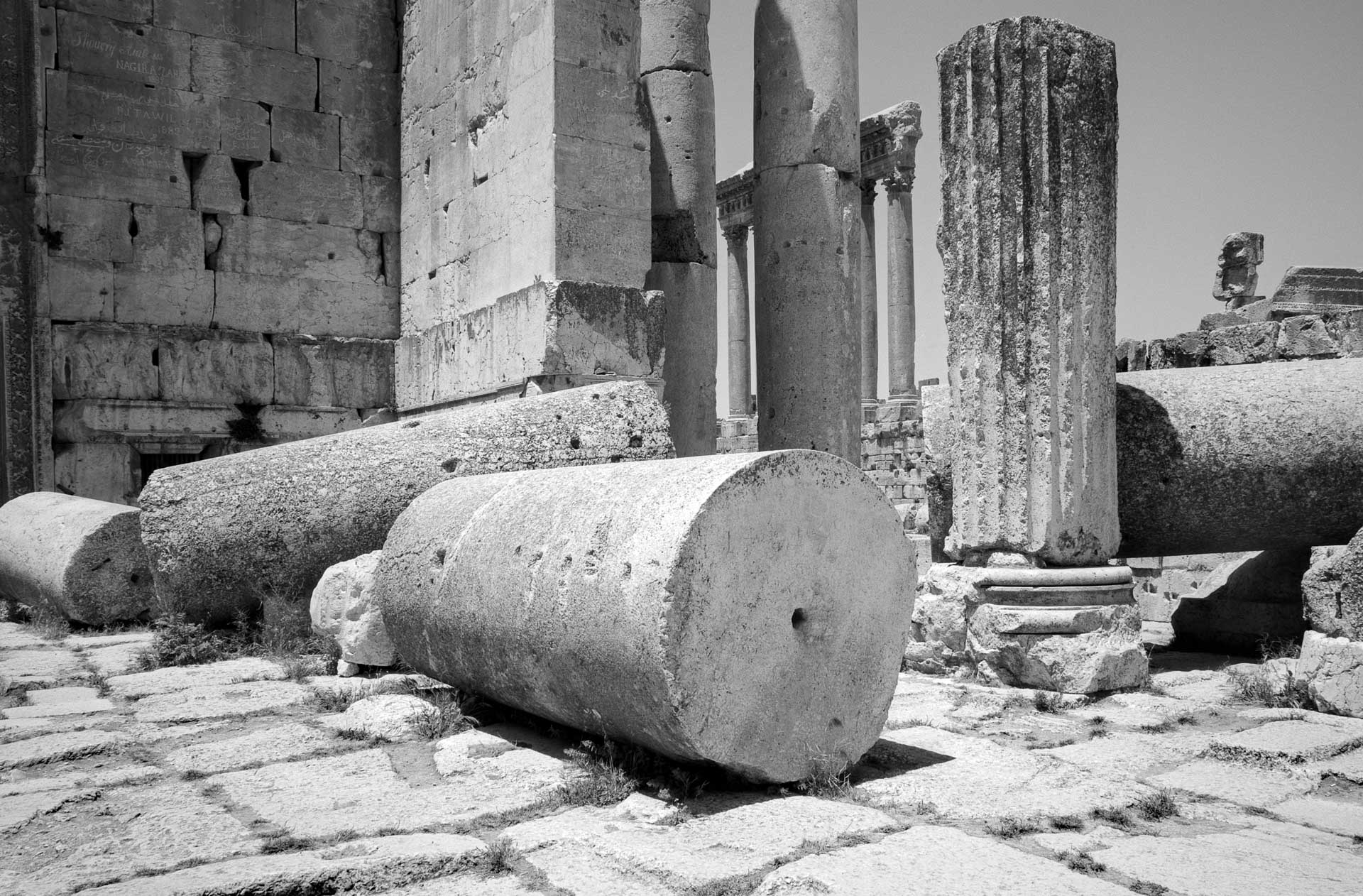
Temple of Bacchus
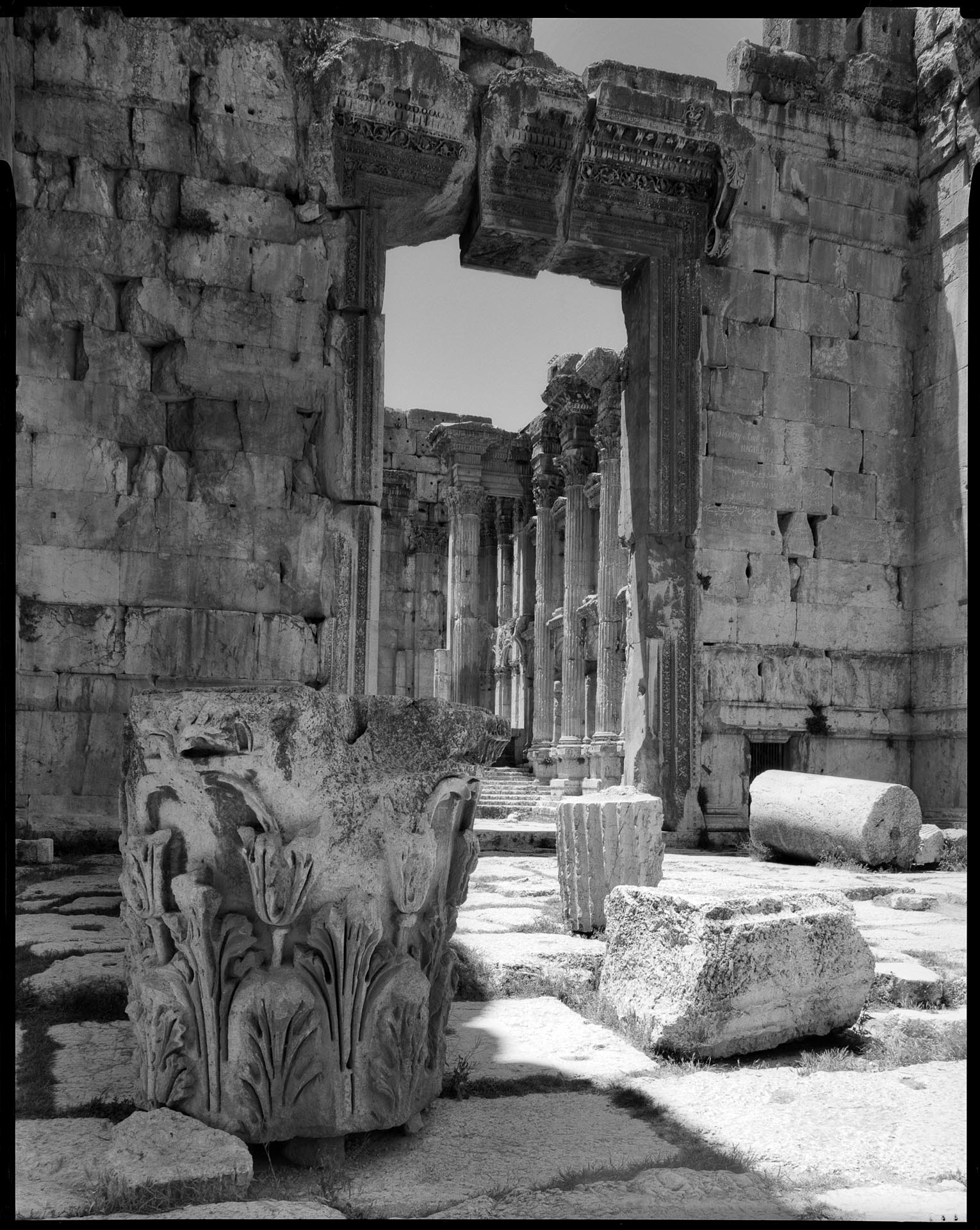
Baalbek, Lebanon. Entrance to the Temple of Bacchus. The Temple of Bacchus. One of the world’s largest and best-preserved Roman temples. It served as an influential model for neo-classical architecture. Commissioned by the Roman emperor Antoninus the Pious, the temple took a hundred years to build (from 150 to 250). Slightly smaller than the Temple of Baal-Jupiter, it nevertheless measures 66 meters long, 35 meters wide and 31 meters high.
Temple of Bacchus
Baalbek, Lebanon. Entrance to the Temple of Bacchus.
Temple of Bacchus
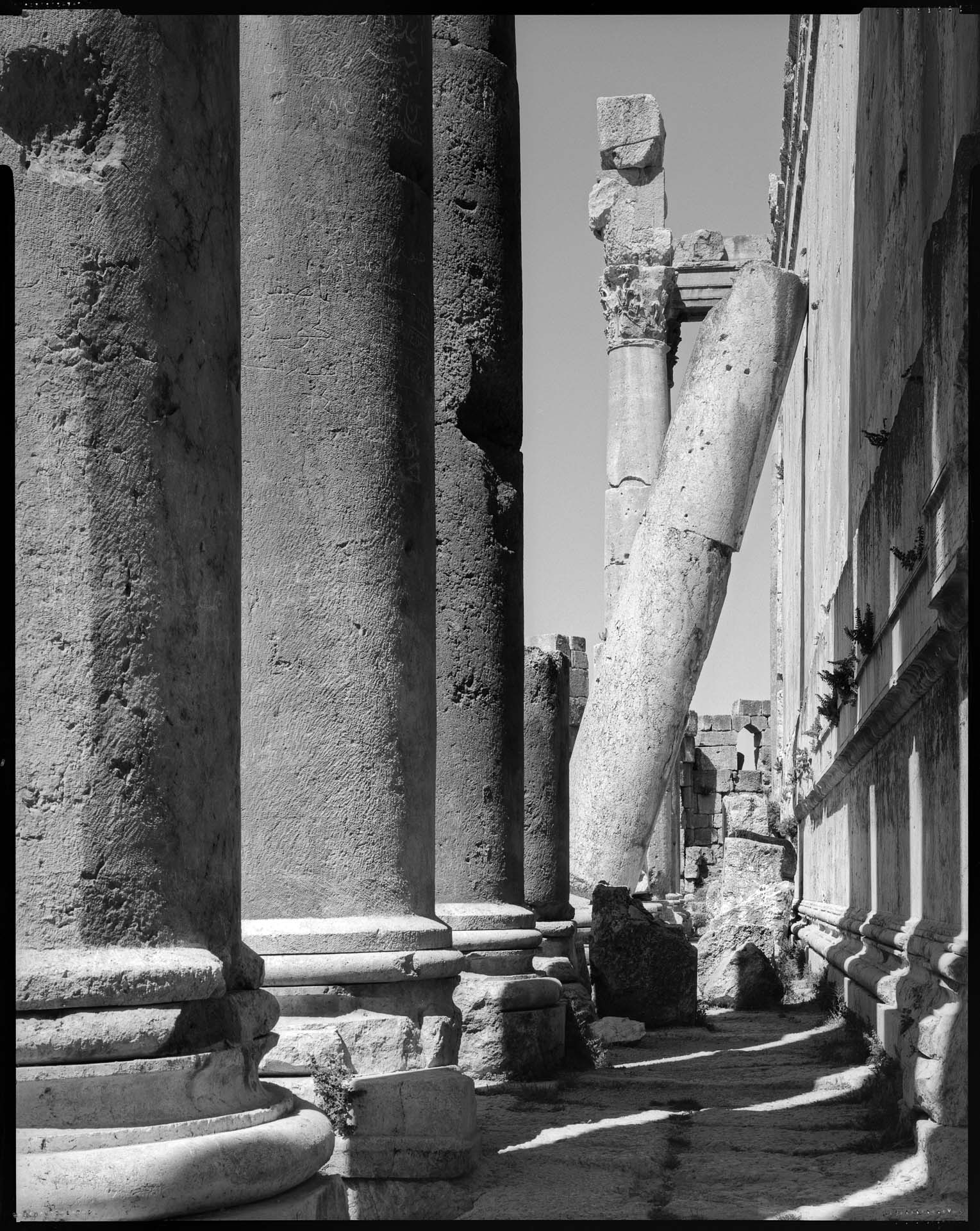
Baalbek, Lebanon. Baalbek, Lebanon. The Temple of Bacchus. One of the world’s largest and best-preserved Roman temples. It served as an influential model for neo-classical architecture. Commissioned by the Roman emperor Antoninus the Pious, the temple took a hundred years to build (from 150 to 250). Slightly smaller than the Temple of Baal-Jupiter, it is nonetheless 66 metres long, 35 metres wide and 31 metres high. The leaning column of the Temple of Bacchus.
Hexagonal courtyard
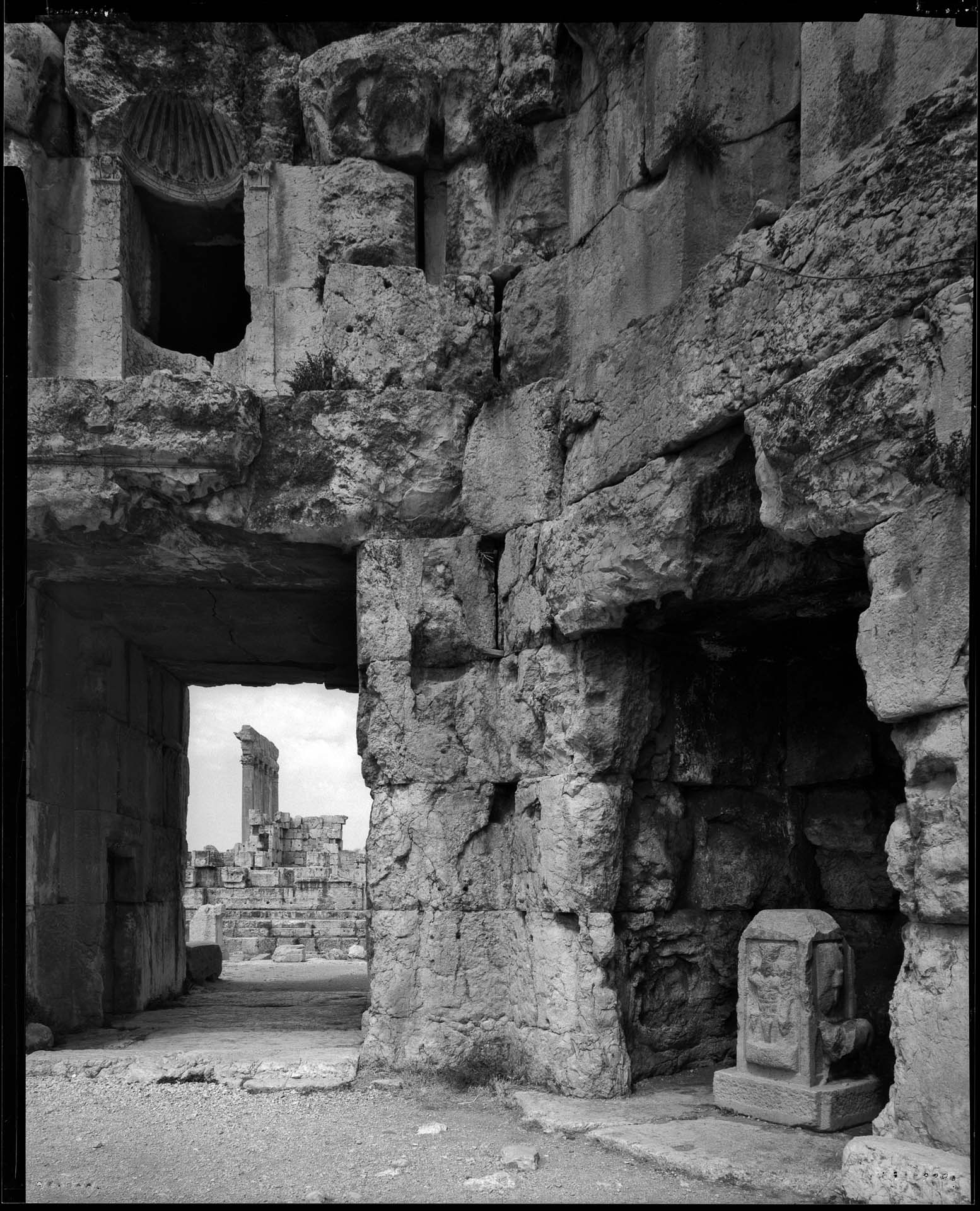
Baalbek, Lebanon. Hexagonal courtyard between the propylaea and the main courtyard of the Temple of Jupiter.
Temple of Jupiter
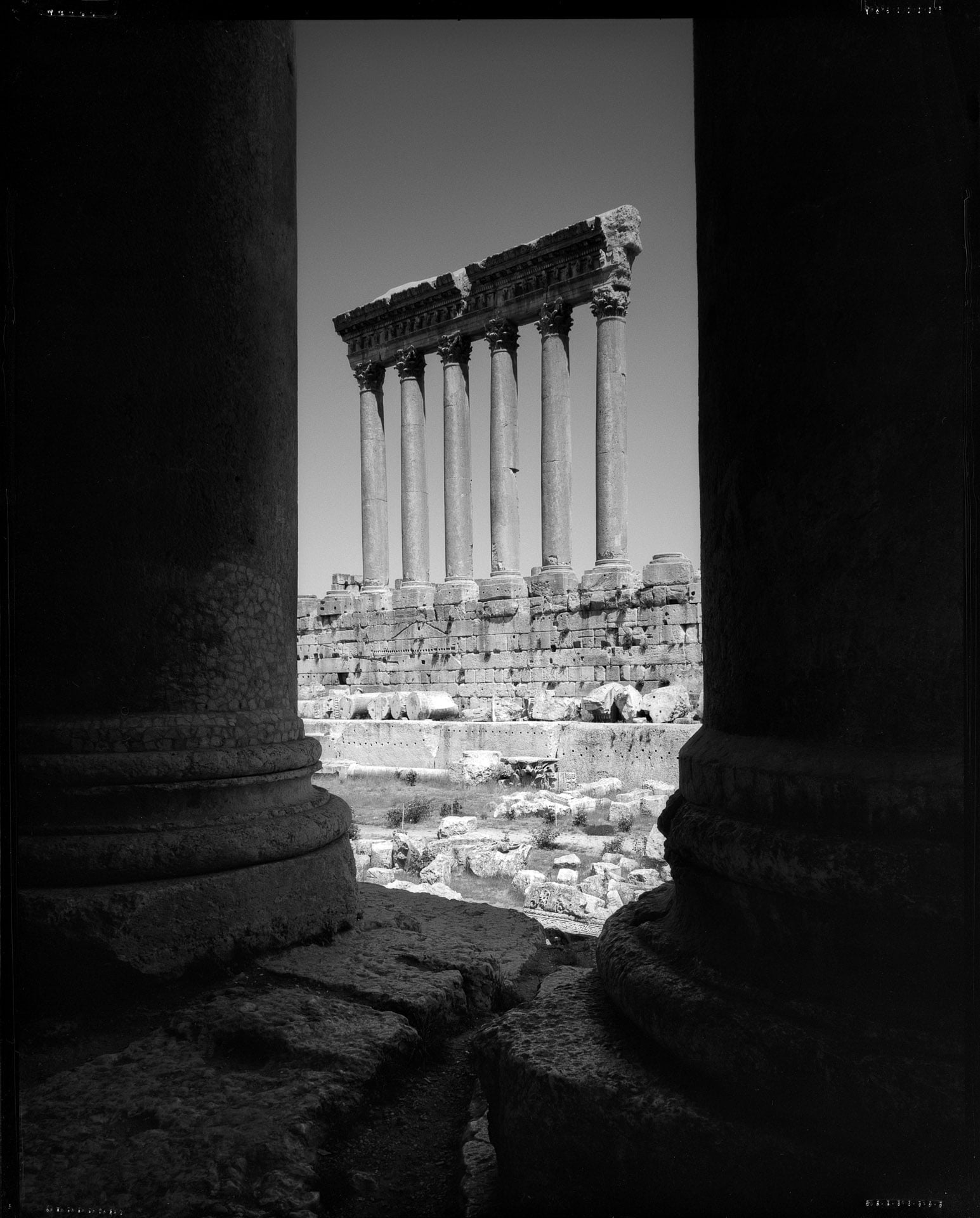
Baalbek, Lebanon. The six columns of the Temple of Jupiter as seen from the Temple of Bacchus.
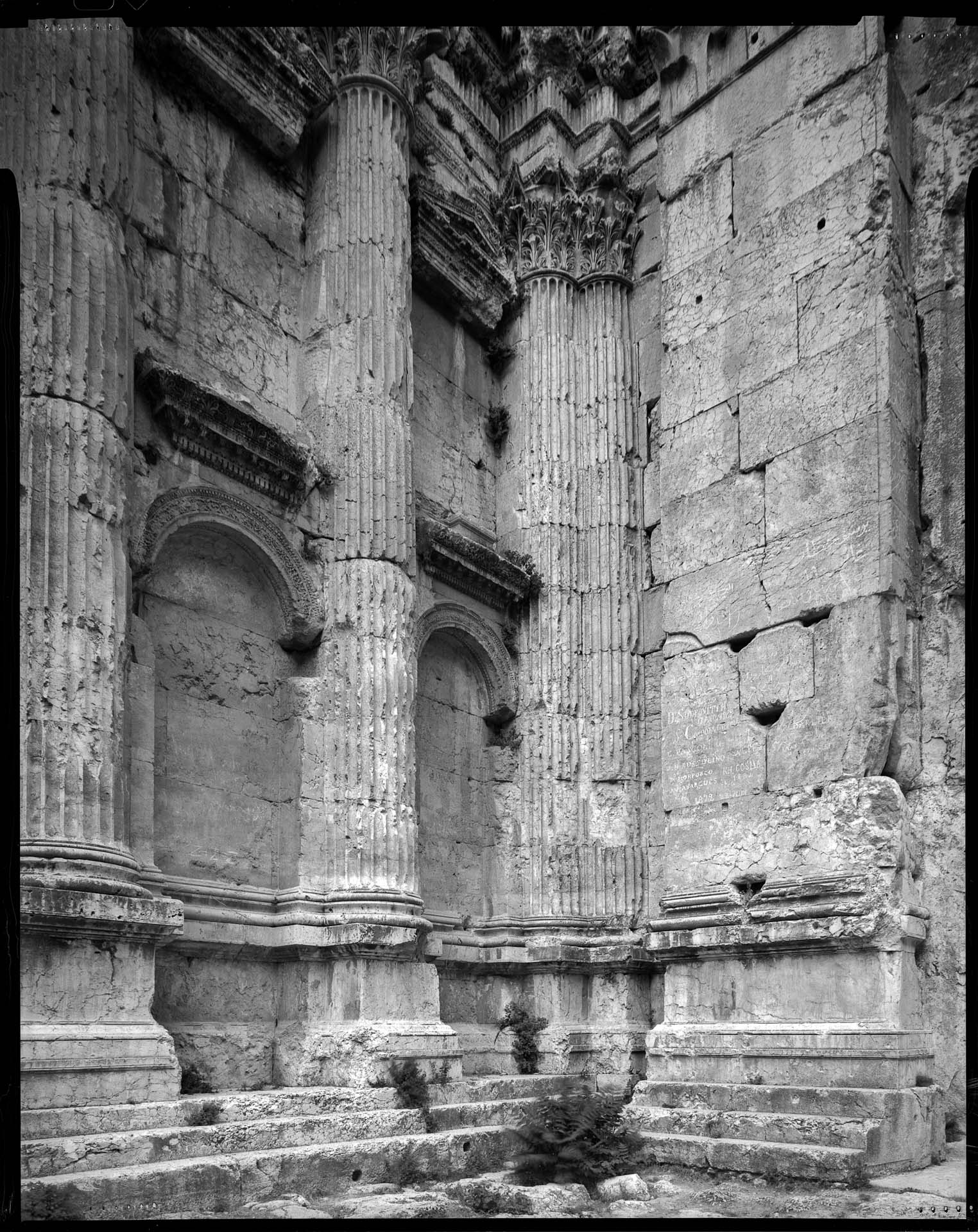
Temple of Bacchus
Baalbek, Lebanon. The interior of the Temple of Bacchus. The Temple of Bacchus. One of the world’s largest and best-preserved Roman temples. It served as an influential model for neo-classical architecture. Commissioned by the Roman emperor Antoninus the Pious, the temple took a hundred years to build (from 150 to 250). Slightly smaller than the Temple of Baal-Jupiter, it nevertheless measures 66 meters long, 35 meters wide and 31 meters high.

Baalbek
Baalbek, Lebanon. The Temple of Bacchus. One of the world’s largest and best-preserved Roman temples. It served as an influential model for neo-classical architecture. Commissioned by the Roman emperor Antoninus the Pious, the temple took a hundred years to build (from 150 to 250). Slightly smaller than the Temple of Baal-Jupiter, it nevertheless measures 66 meters long, 35 meters wide and 31 meters high. Piece of decorated ceiling from the peristyle, fallen to the ground.
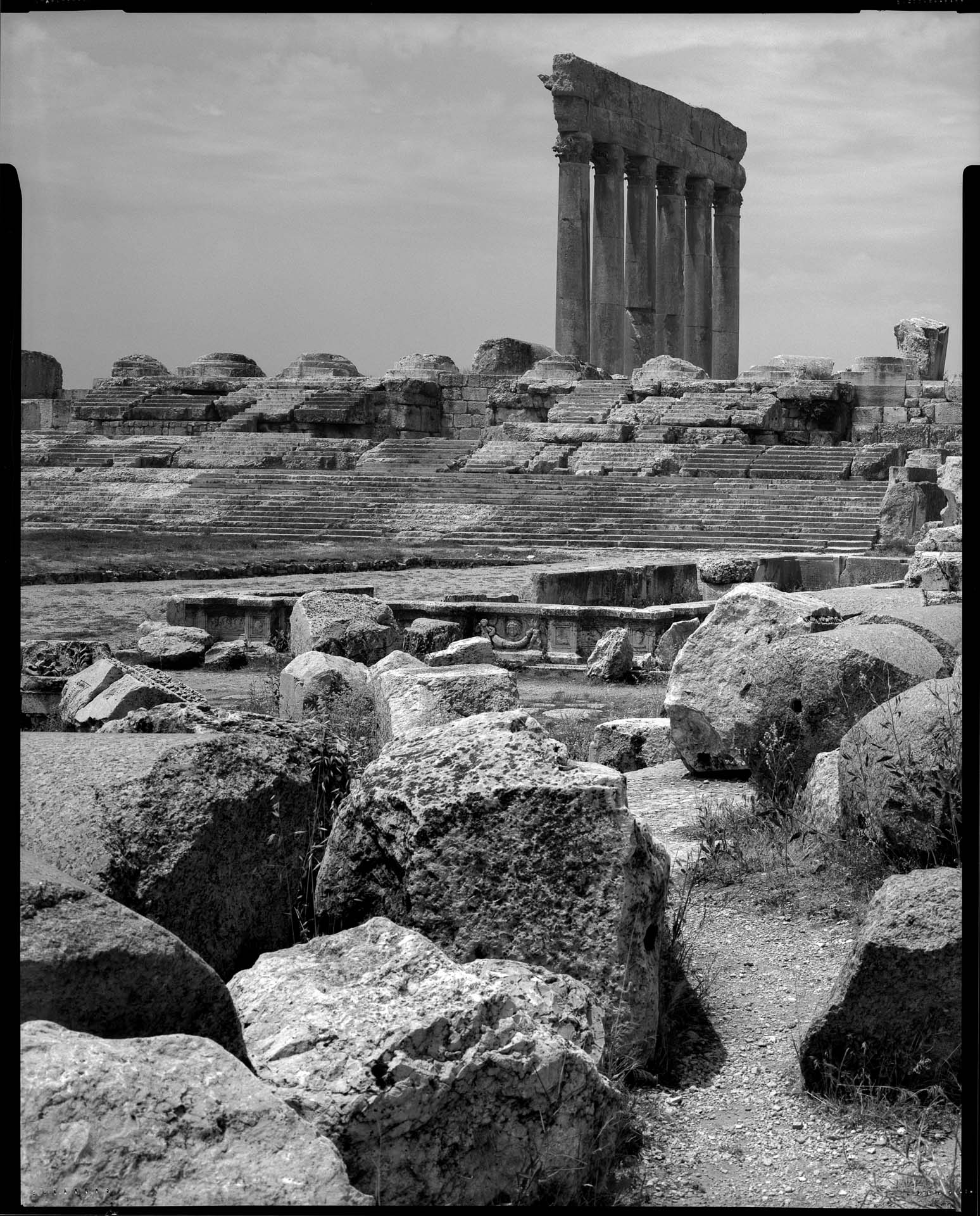
Temple of Jupiter
Baalbek, Lebanon. Temple of Jupiter.
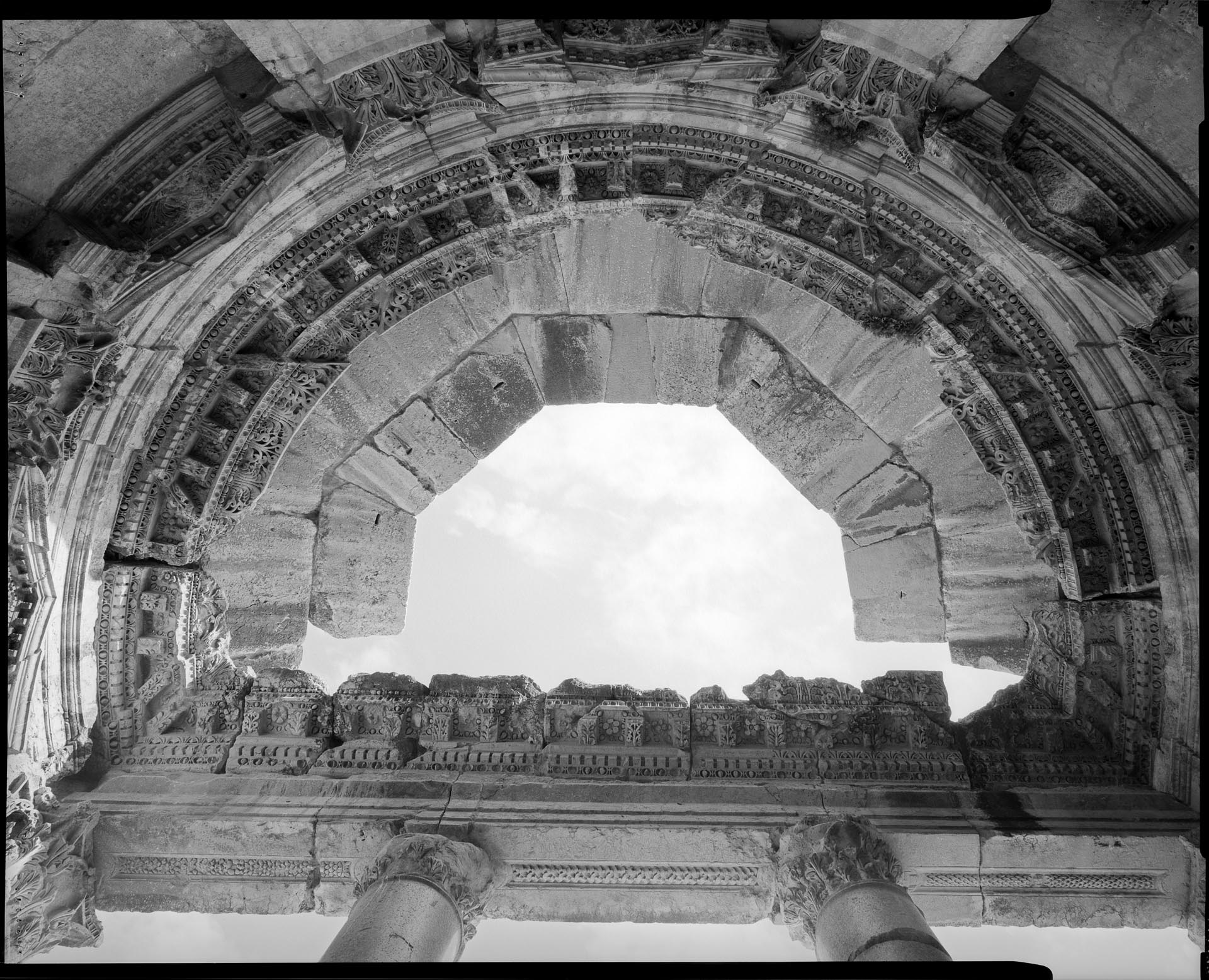
Temple of Jupiter
Baalbek, Lebanon. Semicircular exedra in the great courtyard of the Temple of Jupiter.
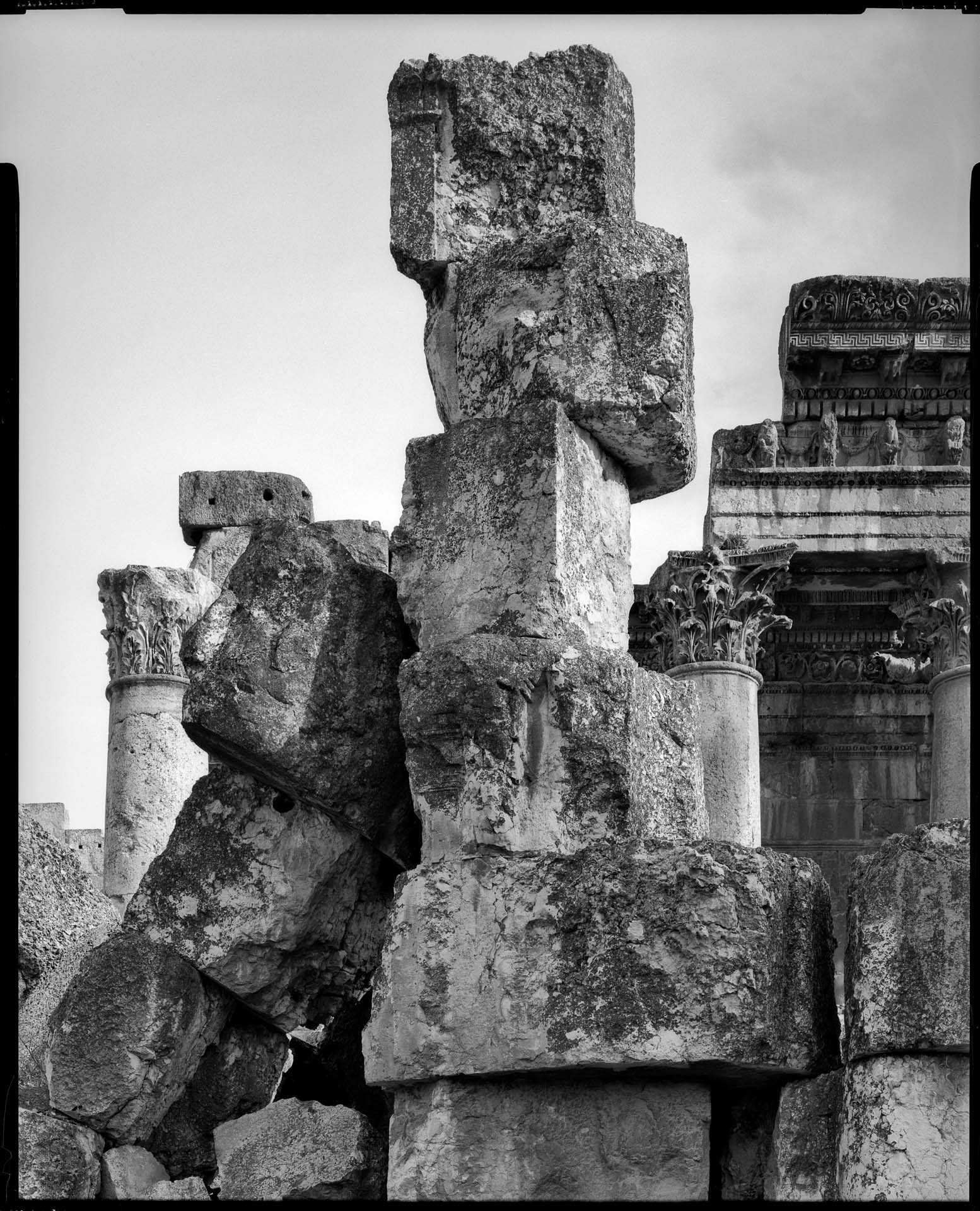
Baalbek

Baalbek
Baalbek, Lebanon. Staircase leading to the Temple of Jupiter.
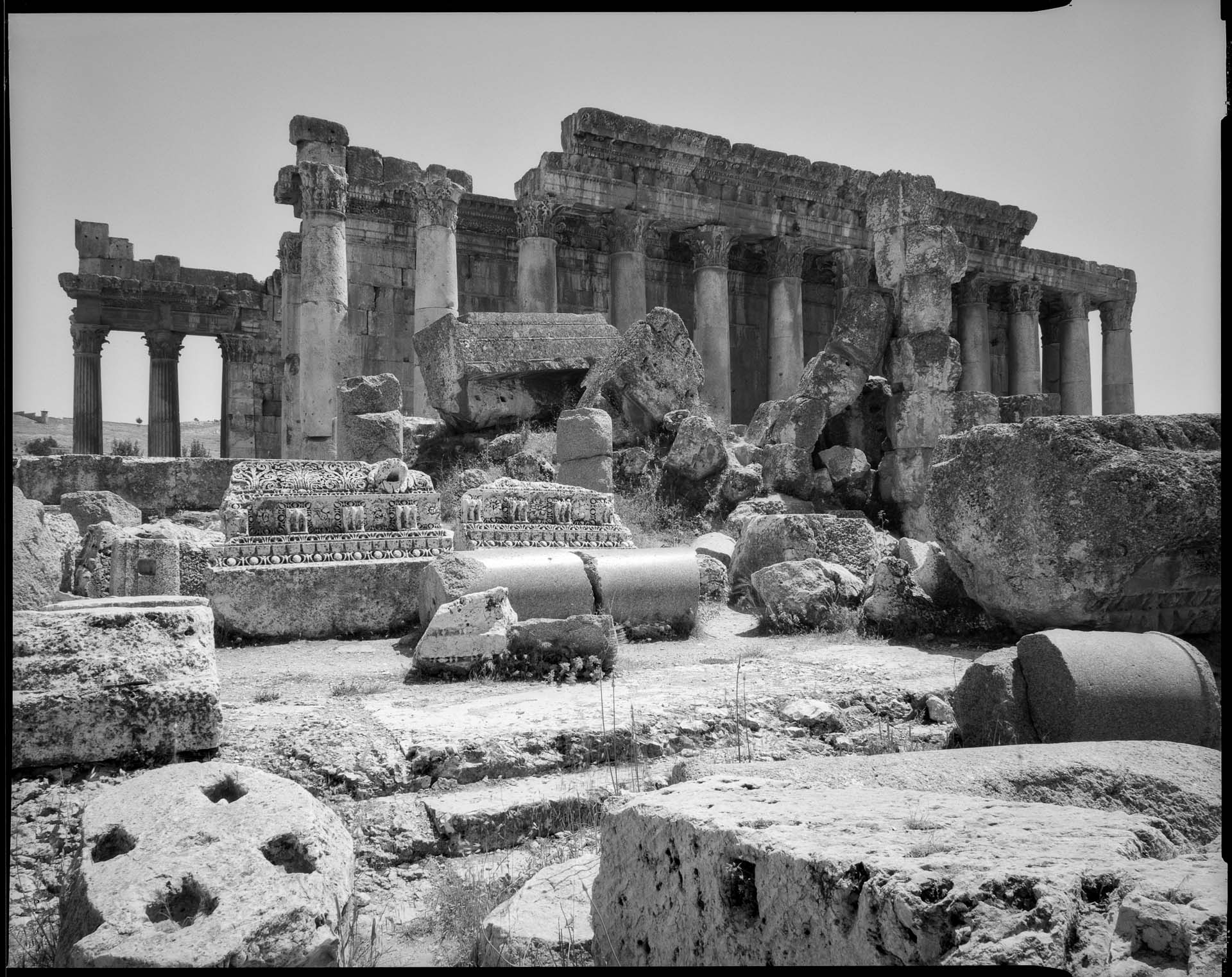
Temple of Bacchus
Baalbek, Lebanon. The Temple of Bacchus seen from the main courtyard. The Temple of Bacchus is one of the largest and best-preserved Roman temples in the world. It served as an influential model for neo-classical architecture. Commissioned by the Roman emperor Antoninus the Pious, the temple took a hundred years to build (150-250). Slightly smaller than the Temple of Baal-Jupiter, it nevertheless measures 66 meters long, 35 meters wide and 31 meters high.

Baalbek
Baalbek, Lebanon. A kind of stele representing two hands, palms facing the observer, carved in stone in bas-relief. In the background is the Temple of Bacchus.

Temple of Jupiter
Baalbek, Lebanon. Temple of Jupiter.