

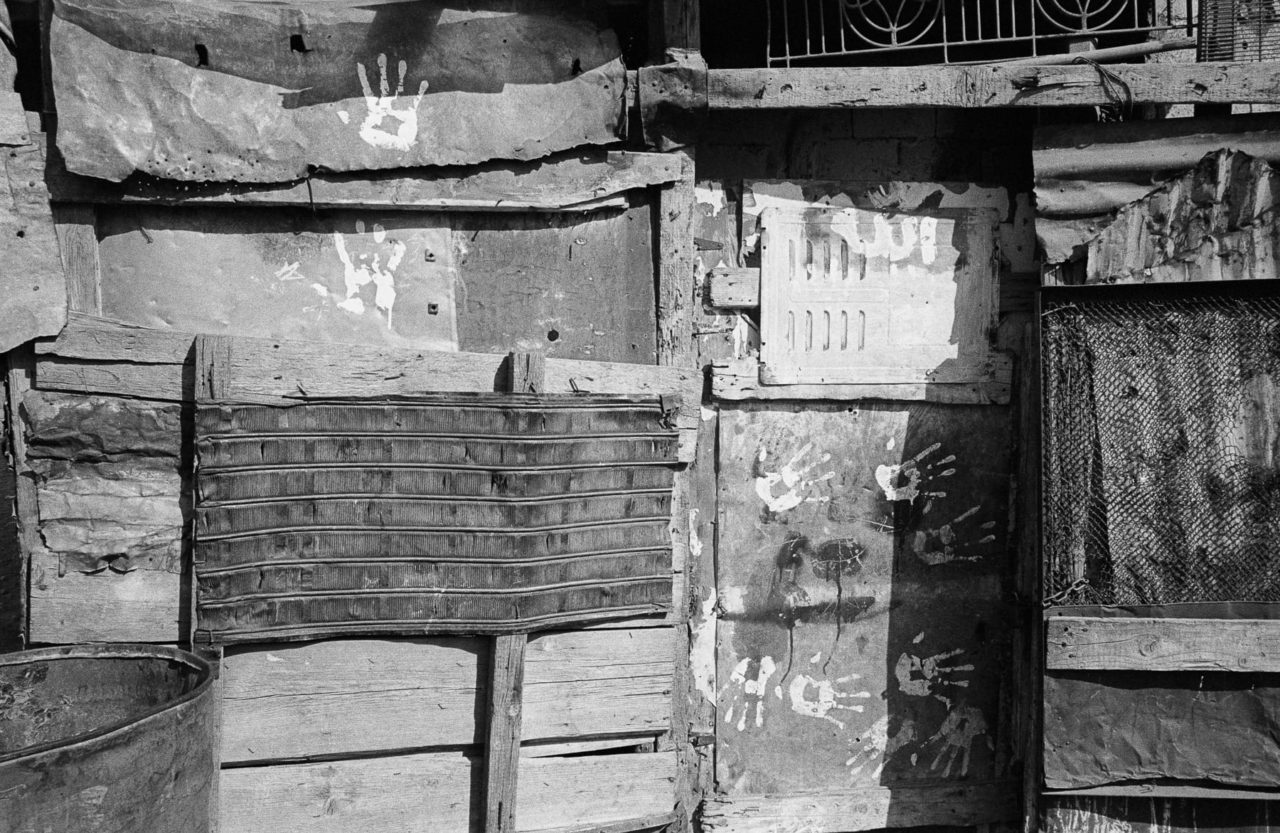
September 16, 2025 marks the 43rd anniversary of the Sabra and Chatila massacres. Forty-three years in which history seems frozen in an eternal restart: the Palestinians remain refugees, landless, stateless, with no prospect of return.
Since 1948, 77 years ago, whole generations of Palestinians have been born, raised and aged in forced exile. What was meant to be temporary has become a permanent condition, creating one of the longest refugee crises in modern history.
For three days in September 1982, so-called “Christian” militias supported by the Israeli army massacred the civilian population of the Sabra and Chatila camps. Estimates range from 1,500 to 3,500 victims. Then, from 1985 to 1988, came the ” war of the camps “. Even today, the survivors and their descendants live in the shadows.
And yet, in the persistent shadow of Chatila, life continues to pulsate with remarkable obstinacy. Children are born and grow up, go to school, do their homework like all the children in the world, and look to the future despite a horizon blighted by ruins. Young people are looking for work, training and organizing themselves, doing “odd jobs” despite their refugee cards, which prohibit them from exercising more than seventy professions in Lebanon and make travel almost impossible. Couples fall in love and start families, which they educate and send to school. The elders ponder their history, comparing the present with the days before their deportation.
77 years of exile: The failure of the international community
No lasting solution has been found to the plight of the Palestinians since their exodus in 1948. UN resolutions go unheeded, peace agreements stall and negotiations fail. In the meantime, refugee camps are being transformed into overcrowded concrete cities, fundamental rights continue to be trampled underfoot, and hopes of a return are dwindling.
This situation challenges the international conscience. How can we accept that, in the 21st century, millions of people remain stateless, deprived of their most basic rights? How can we tolerate children being born as refugees in camps where their grandparents have already lived their entire lives?
The photographic work presented here, the fruit of fifteen years of immersion, bears witness to the lives of Palestinian refugees who resist oblivion. It gives names and faces to a population too often reduced to sterile statistics in the media. More than a simple testimony, it is a cry of alarm in the face of the indifference of a “civilization” that has abandoned these human beings for decades.
As we commemorate the 43rd anniversary of the Sabra and Chatila massacres, it is urgent to remember that behind the numbers and the geopolitical stakes lie human destinies, lives shattered but not resigned, hopes that refuse to be extinguished. The Palestinian question can no longer be relegated to the background. It demands a response commensurate with the injustice it represents.
More images here.
Tarek Charara
——————————————————————————————-
The literature on the subject is vast and extensive. I have done my best to summarize the history of the Palestinian refugees up to the massacres and the war of the camps in my book ” In the shadow of Chatila “, available on this site.
Text and images © Tarek Charara/Kaleidos images.
All rights reserved.
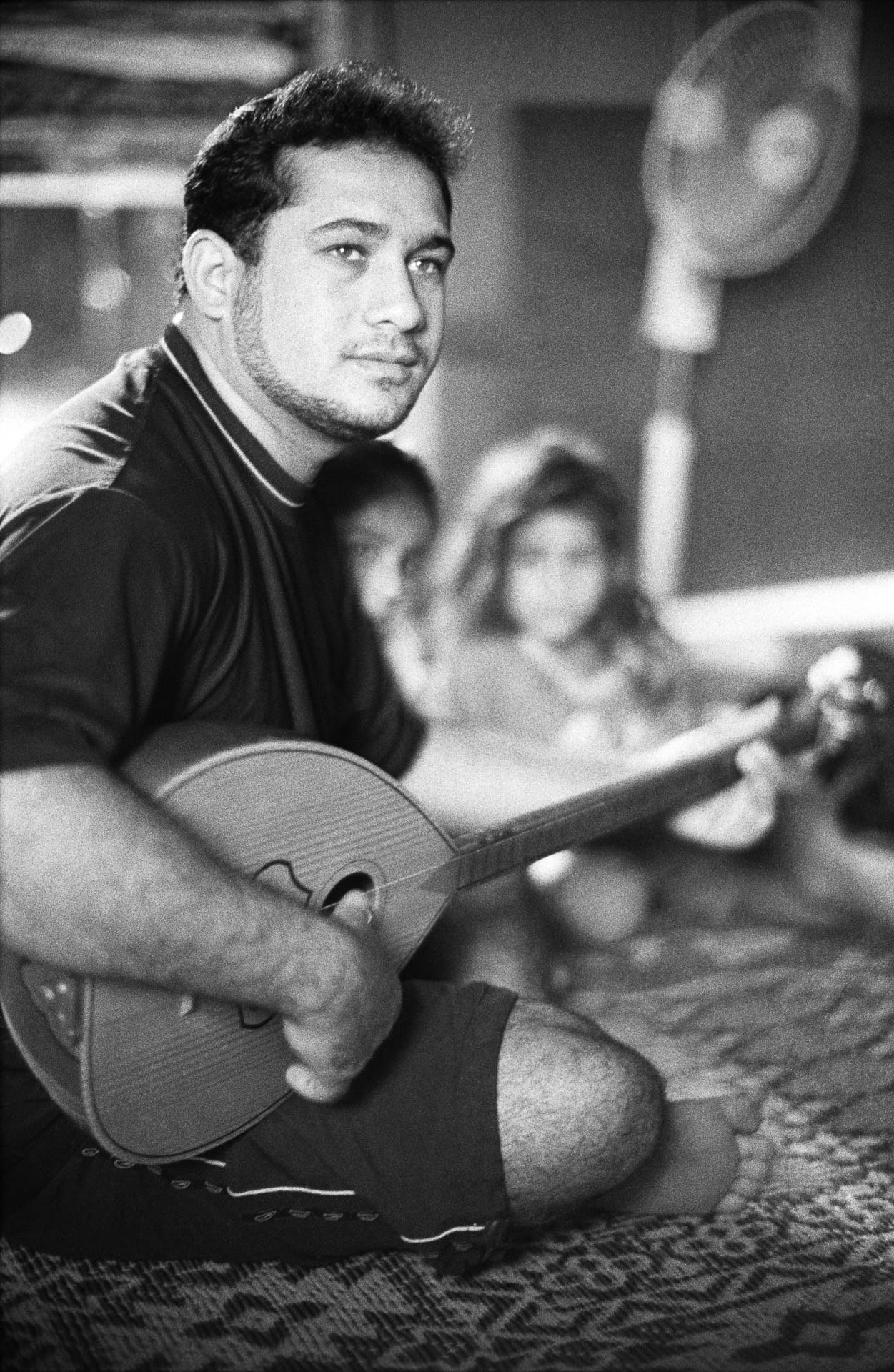
The “Oud” player
Chatila, Camp of the “Nouriyé” (Gypsies). An “Oud” (oriental lute) player gives a free concert to some of the camp’s children. Dwellings made of corrugated iron, bits of wood and plastic sheeting are clean inside.

Blood sampling
Chatila, UNRWA camp. The PRCS (Palestinian Red Crescent Society) clinic in Chatila treats all patients during the day, regardless of their nationality. Here, patients are treated for the token sum of one or two US dollars – vaccinations are free. More serious cases are referred to nearby PRCS hospitals, especially the one in the “Bourj al-Barajneh” camp. Blood sampling.

Oumm Ali
Chatila refugee camp. Samiha Abbas Hijazi, known as “Oumm Ali”, a Lebanese woman from the south married to a Palestinian, lost her husband during the “Tal-el-Zaatar” massacres in 1976. In 1982, during the Sabra and Chatila massacres, she lost her daughter Zeinab, 17 and a young bride, and her son-in-law. Her son Ali, aged 10, was killed a few years later (1985-1987) in the war in the camps. Grief and tears well up every time she recalls her memories, even 30 years later. Today, “Oumm Ali” lives in a room a few dozen meters from the UNRWA camp. There are no toilets or kitchen facilities. She works as a cleaner in a kindergarten, where she also runs a small sweets business for the children. Her two activities earn her 140 dollars a month. Her rent is 65 dollars a month. Here she is with her little daughter, Aya. Aya lives with her mother abroad.

Children’s games
Chatila, UNRWA camp. Beit Atfal Assoumoud. In the kindergarten, two little girls play with their teacher, Mrs. Maryam Shamieh. Beit Atfal Assoumoud is a humanitarian, non-sectarian NGO founded in 1976 after the Tal al Zaatar massacre. Its vocation is to provide services to Palestinian refugees in Lebanon and other disadvantaged people living in or near the camps.
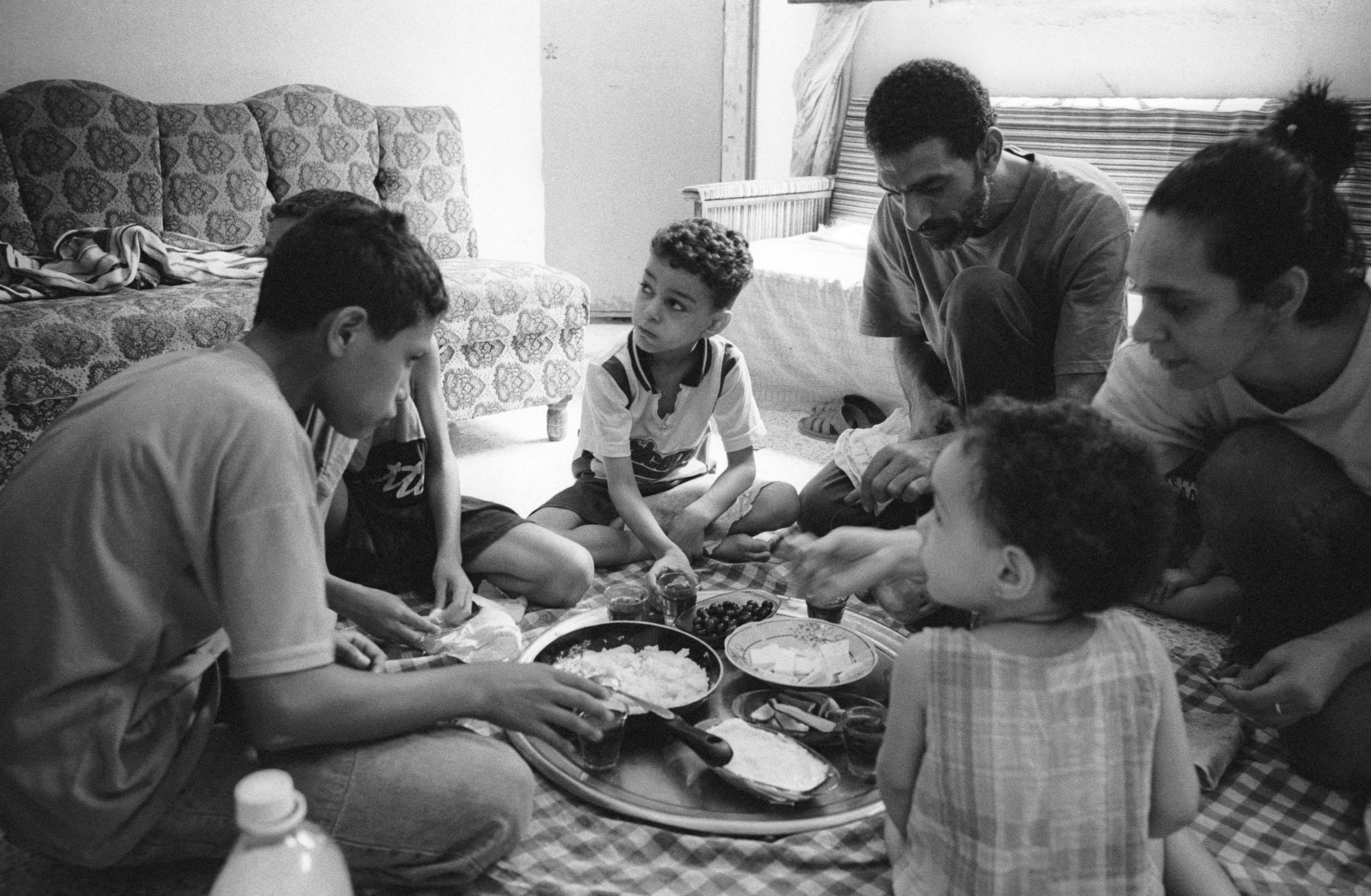
Lunch
Chatila, UNRWA camp. The Al Hindawi family at lunch. From left to right: Ahmad, Jamal’s orphan nephew, Jihad and Nidal, Jamal, twin sisters Farah and Hanan, and on the far right their mother Mona. Jamal is a marble polisher and runs a small grocery store downstairs. Mona has no job and looks after the house.

Afternoon
Chatila, UNRWA camp. With the Hindawi (or Al Hindawi) family. Mona and Jamal Hindawi are originally from Haifa. Jamal is a marble polisher by trade, often unemployed. Mona is a housewife, looking after the 6 children in the household. Every evening, Mona Al Hindawi helps the children with their homework.
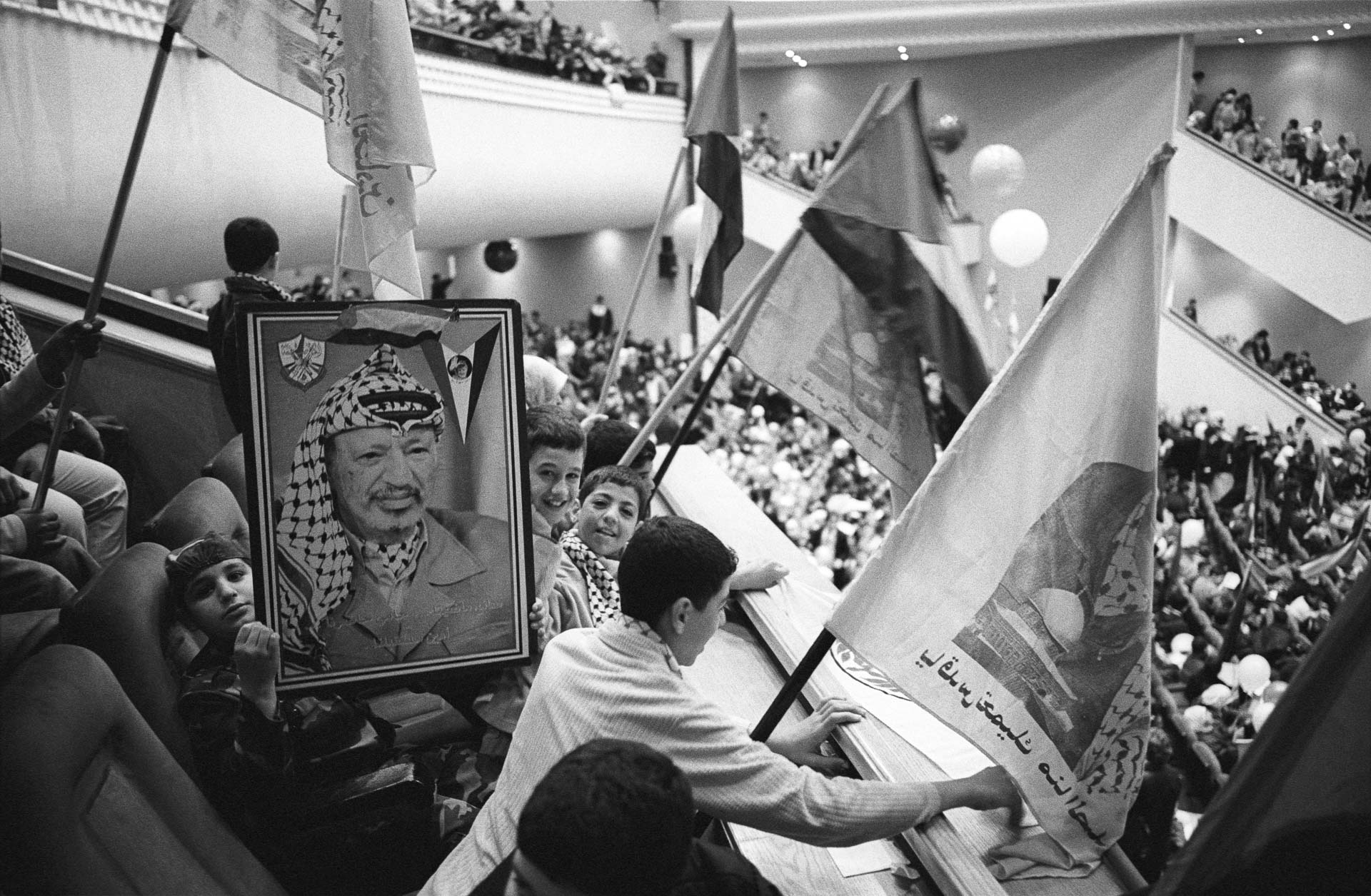
For peace
Beirut, Lebanon. UNESCO Center. The children of Chatila, wearing the Palestinian keffiyeh, demonstrate among other people against the war being prepared against Iraq. One of the boys wears a portrait of President Arafat.
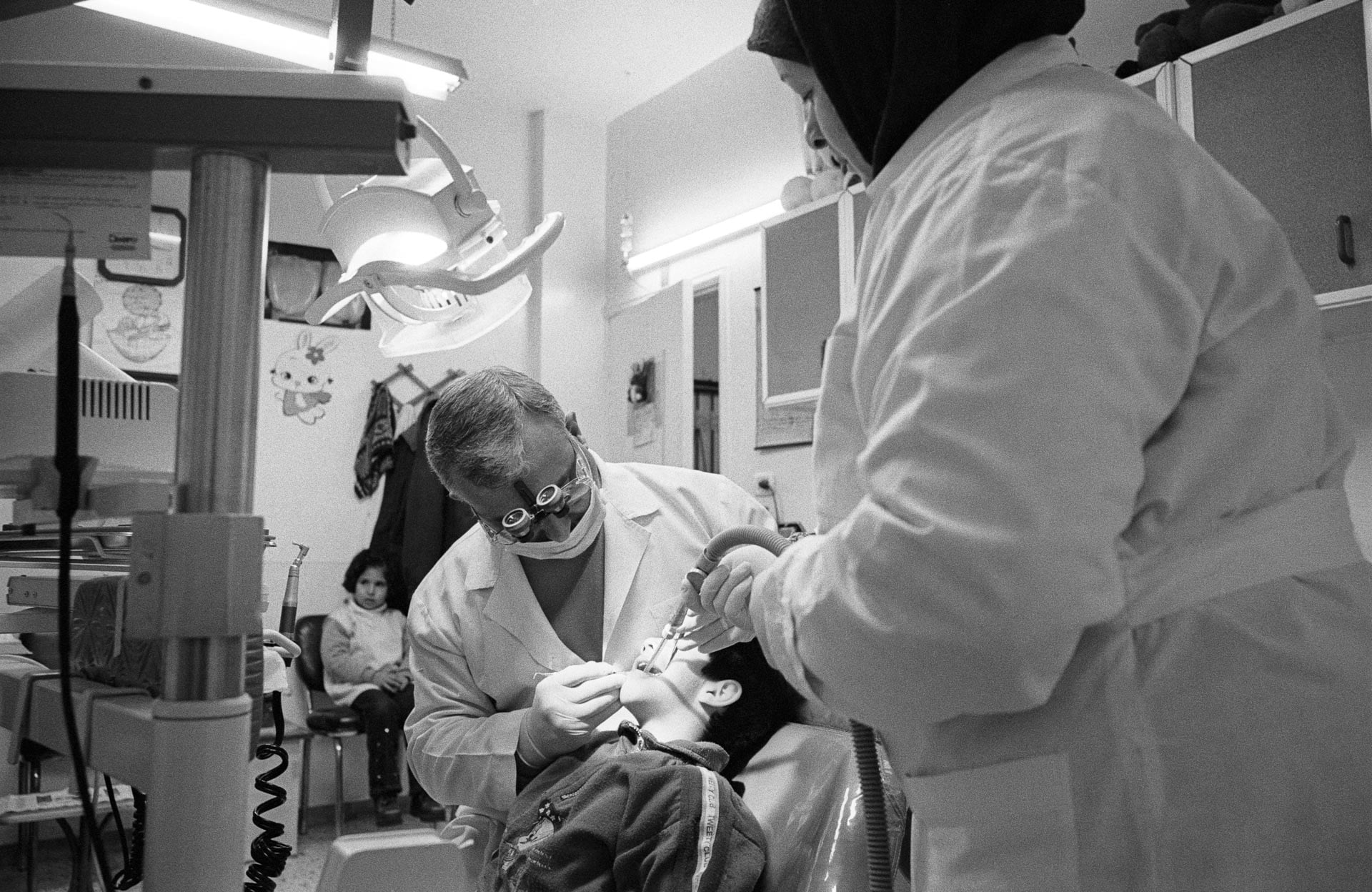
The dentist
Chatila, UNRWA camp. Beit Atfal Assoumoud. Beit Atfal Assoumoud is a humanitarian, non-sectarian NGO founded in 1976 after the Tal al Zaatar massacre. Its vocation is to provide services to Palestinian refugees in Lebanon and other disadvantaged people living in or near the camps. The Chatila center has a kindergarten and a dispensary. Dr. Ahmad Abou Rayya, the center’s dentist, treats Tarek, a kindergarten pupil.

War games
Chatila, UNRWA camp. War games in the alleys of the camp.

Kindergarten
Chatila, UNRWA camp. Beit Atfal Assoumoud. The kindergarten. Beit Atfal Assoumoud is a humanitarian, non-sectarian NGO founded in 1976 after the Tal al Zaatar massacre. Its vocation is to provide services to Palestinian refugees in Lebanon and other disadvantaged people living in or near the camps.

Mohammed Shawqat Abou Roudaina
Chatila, UNRWA camp. Mohammed Shawqat Abou Roudaina, aged 28. At the age of five, he witnessed the massacre of his father, his pregnant sister, his brother-in-law and three other family members. It took Mohammed 22 years to overcome his trauma, regain a taste for life and decide to take his baccalaureate and study. Here we see Mohammed in front of his house.

6:15
Chatila, UNRWA camp. With the Hindawi (or Al Hindawi) family. Mona and Jamal Hindawi are originally from Haifa. Jamal is a marble polisher by trade, often unemployed. Mona is a housewife and looks after the 6 children in the household. It’s 6:15 and Jihad and Nidal Al Hindawi are getting ready for school. Their little sister, Farah, is still asleep.
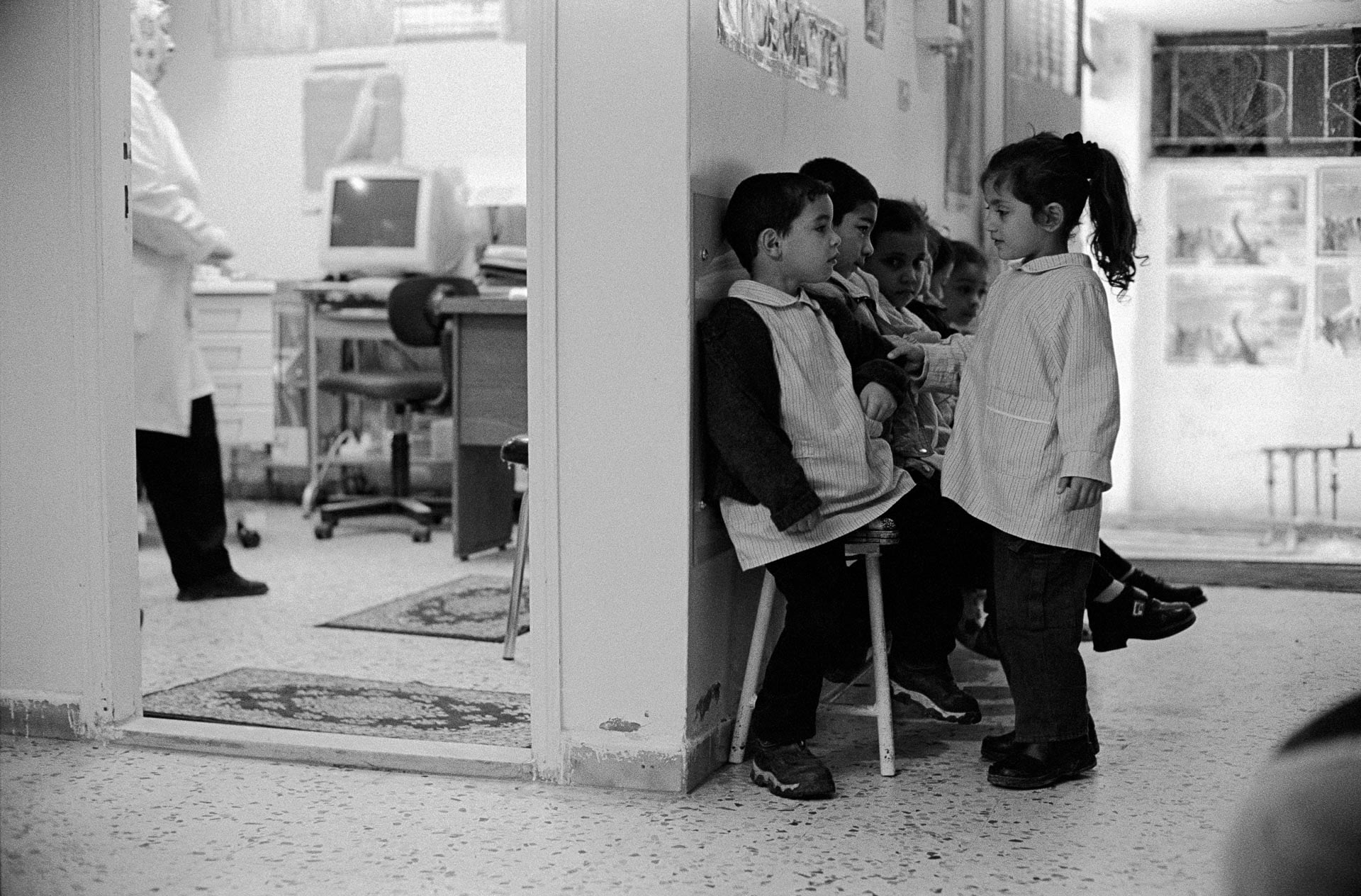
Beit Atfal Assoumoud
Chatila, UNRWA camp. Beit Atfal al Soumoud. Beit Atfal Assoumoud is a humanitarian, non-sectarian NGO founded in 1976 after the Tal al Zaatar massacre. Its vocation is to provide services to Palestinian refugees in Lebanon and other disadvantaged people living in or near the camps. The Chatila center has a kindergarten and a dispensary. The children wait their turn to see the center’s dentist, Dr. Ahmad Abou Rayya.

The elders
Beirut, Lebanon. Sabra. Senior men sometimes get together in a café to smoke hookah. Here at the “Abou Nader Al Salhan” café in Sabra.

The route
Chatila, UNRWA camp. A father takes his daughters to school.

Teaching
Chatila, UNRWA camp. With the Hindawi (or Al Hindawi) family. Mona and Jamal Hindawi are originally from Haifa. Jamal is a marble polisher by trade, often unemployed. Mona is a housewife, looking after the household’s six children. Three years ago, Jamal al Hindawi became interested in computers. Since then, he has assembled two computers from second- and third-hand spare parts, taught himself computer science and made it his mission to familiarize primary school children with this tool of the future. With great patience, Jamal Al Hindawi gives free one-hour lessons in one of the UNRWA schools.

The “Oud” player
Chatila, Camp of the “Nouriyé” (Gypsies). An “Oud” (oriental lute) player gives a free concert to some of the camp’s children. Dwellings made of corrugated iron, bits of wood and plastic sheeting are clean inside.

Mohammed Shawqat Abou Roudaina
Chatila, UNRWA camp. Mohammed Shawqat Abou Roudaina, aged 28. At the age of five, he witnessed the massacre of his father, his pregnant sister, his brother-in-law and three other family members. It took Mohammed 28 years to regain a taste for life and decide to take his baccalaureate and study. Here Mohammed shows us the Red Cross document attesting to his father’s death during the Sabra and Chatila massacres in 1982.

Chatila, “Nourié” (Gypsy) camp
Chatila, camp of the “Nourieh” (Gypsies) in the “Hayy el Gharbi”, below the sports complex. The dwellings are made of corrugated iron, bits of wood and plastic sheeting. Sometimes it’s an old sofa that holds up the improvised roof, but more often it’s old tires that act as weights.

Oumm Ali
Chatila refugee camp. Samiha Abbas Hijazi, known as “Oumm Ali”, a Lebanese woman from the south married to a Palestinian, lost her husband during the “Tal-el-Zaatar” massacres in 1976. In 1982, during the Sabra and Chatila massacres, she lost her daughter Zeinab, 17 and a young bride, and her son-in-law. Her son Ali, aged 10, was killed a few years later (1985-1987) in the war in the camps. Grief and tears well up every time she recalls her memories, even 30 years later. Today, “Oumm Ali” lives in a room a few dozen meters from the UNRWA camp. There are no toilets or kitchen facilities. She works as a cleaner in a kindergarten, where she also runs a small sweets business for the children. Her two activities earn her 140 dollars a month. Her rent is 65 dollars a month. Here she prepares a Turkish coffee on a gas stove. Her granddaughter, Aya, and a friend watch her through the front door. Aya lives with her mother abroad.

Children
Chatila, main street. Two little girls are having fun.

Children
Chatila, UNRWA camp. Boys in the alleys of the camp. How many fingers until victory?

Homework
Chatila, UNRWA camp. With the Hindawi (or Al Hindawi) family. Mona and Jamal Hindawi are originally from Haifa. Jamal is a marble polisher by trade, often unemployed. Mona is a housewife, looking after the 6 children in the household. Every evening, Mona Al Hindawi helps the children with their homework.
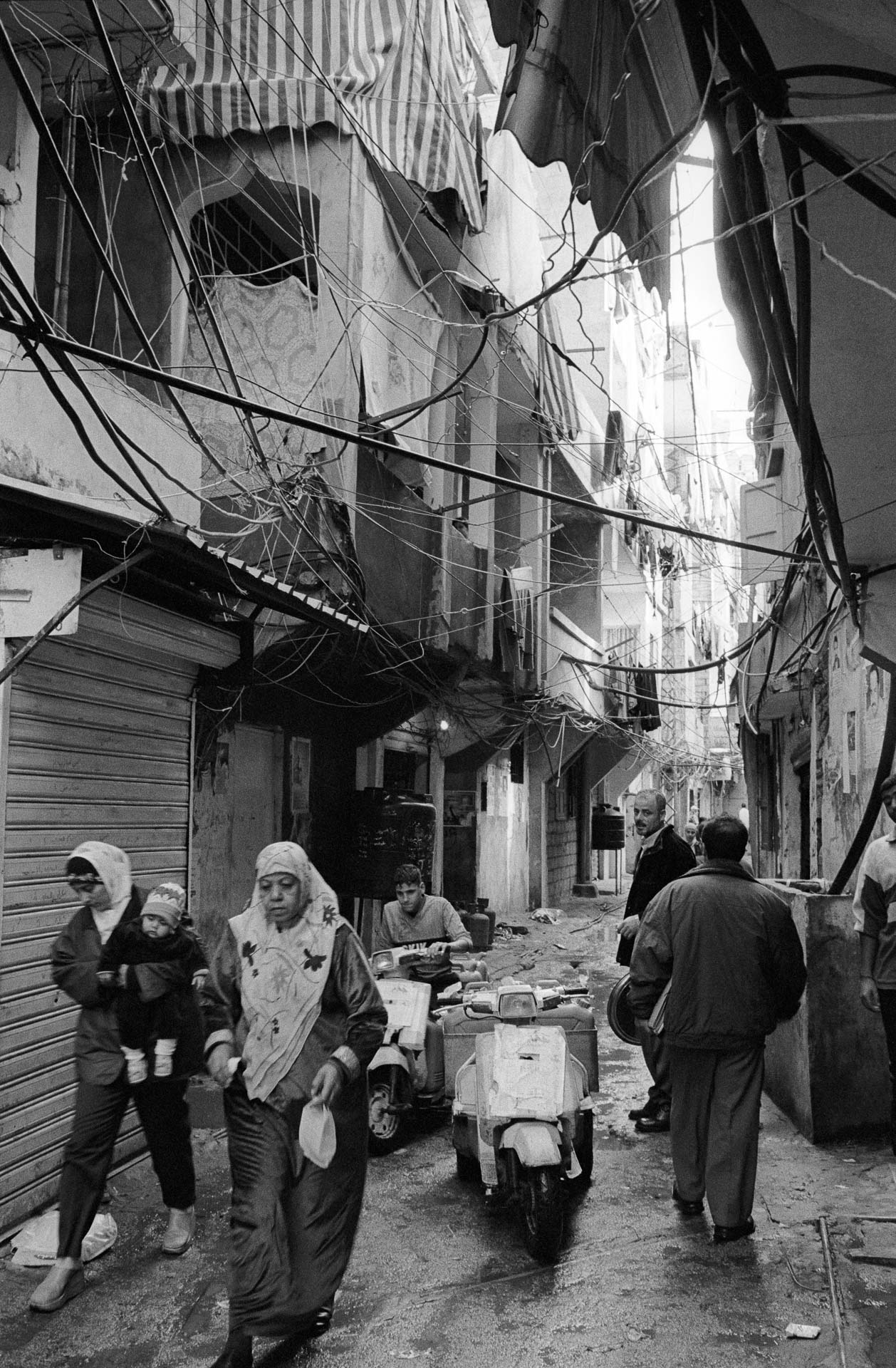
One of the main streets
Chatila, UNRWA camp. One of the camp’s main streets.
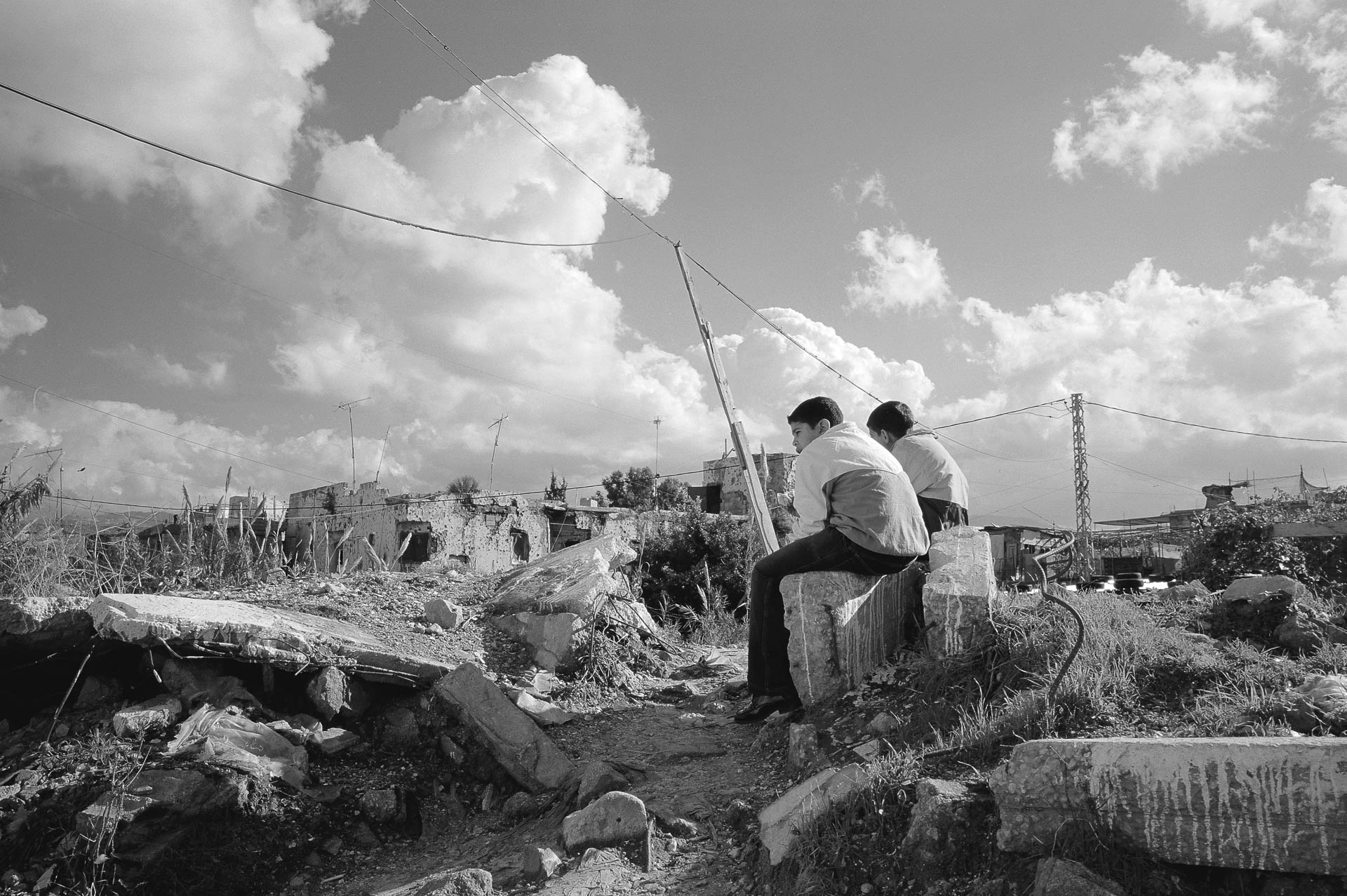
A hopeless horizon
Chatila, UNRWA camp. The children’s horizon is clouded by ruins.

Lunch
Chatila, UNRWA camp. With the Hindawi (or Al Hindawi) family. Mona and Jamal Hindawi are originally from Haifa. Jamal is a marble polisher by trade, often unemployed. Mona is a housewife, looking after the 6 children in the household. 15:20. The Al Hindawi family lunch on the living room floor. From left to right: Ahmed, Mona, Farah, Ilham and Jamal. Ahmed and Ilham are the children of Jamal’s brother. Their mother died young and their father in a work accident. Mona and Jamal naturally adopted them.

War games
Chatila, UNRWA camp. Little boys play war.

Alleys of Chatila
Chatila, UNRWA camp. In the streets of Chatila camp, in front of the Al Hindawi family home. Early evening.

Games
Chatila, UNRWA camp. After or before school, the boys gather in the camp’s many playrooms. The “Ramallah” school for boys becomes the “Hama” school for girls in the afternoon. Every month, the order is changed…Here, the boys are playing table soccer in one of the playrooms.

Bird sales
Chatila, near the sports city. A Syrian of Palestinian origin survives by selling birds caught in the wild.
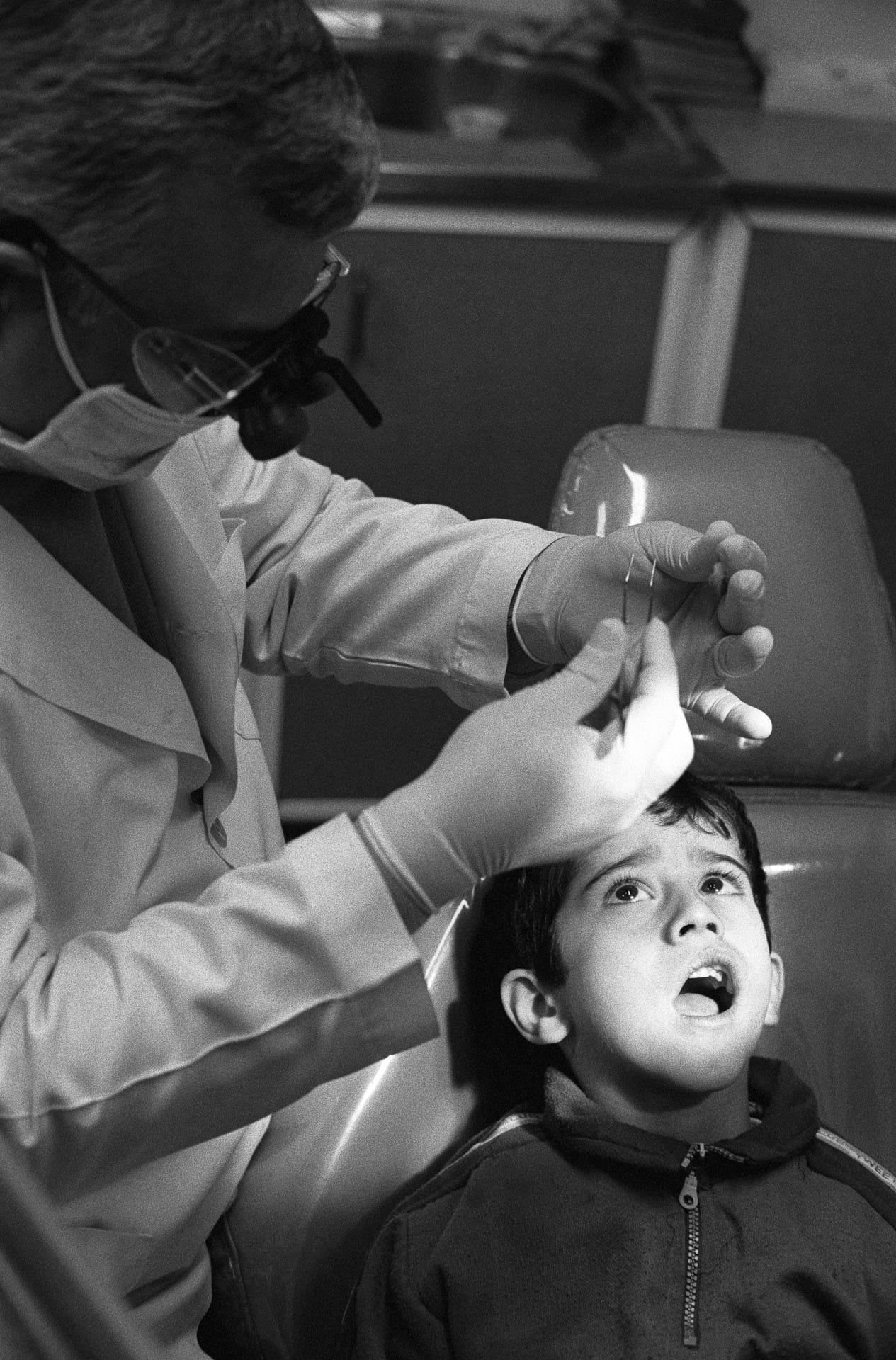
The dentist
Chatila, UNRWA camp. Beit Atfal Assoumoud. Beit Atfal Assoumoud is a humanitarian, non-sectarian NGO founded in 1976 after the Tal al Zaatar massacre. Its vocation is to provide services to Palestinian refugees in Lebanon and other disadvantaged people living in or near the camps. The Chatila center has a kindergarten and a dispensary. Dr. Ahmad Abou Rayya, the center’s dentist, treats Tarek, a kindergarten pupil.
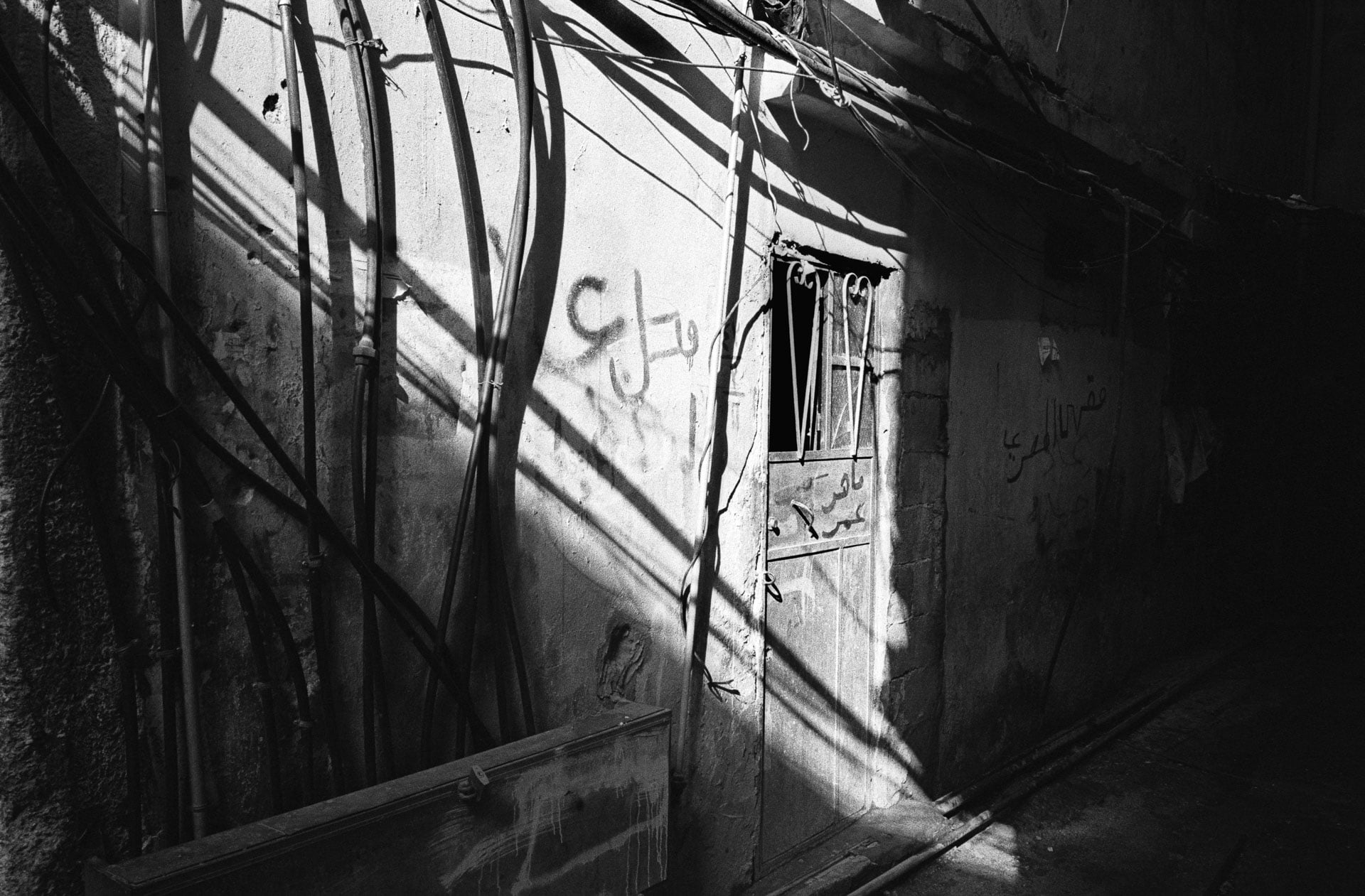
Shadow play
Chatila, UNRWA camp. One of the streets leading into the camp.
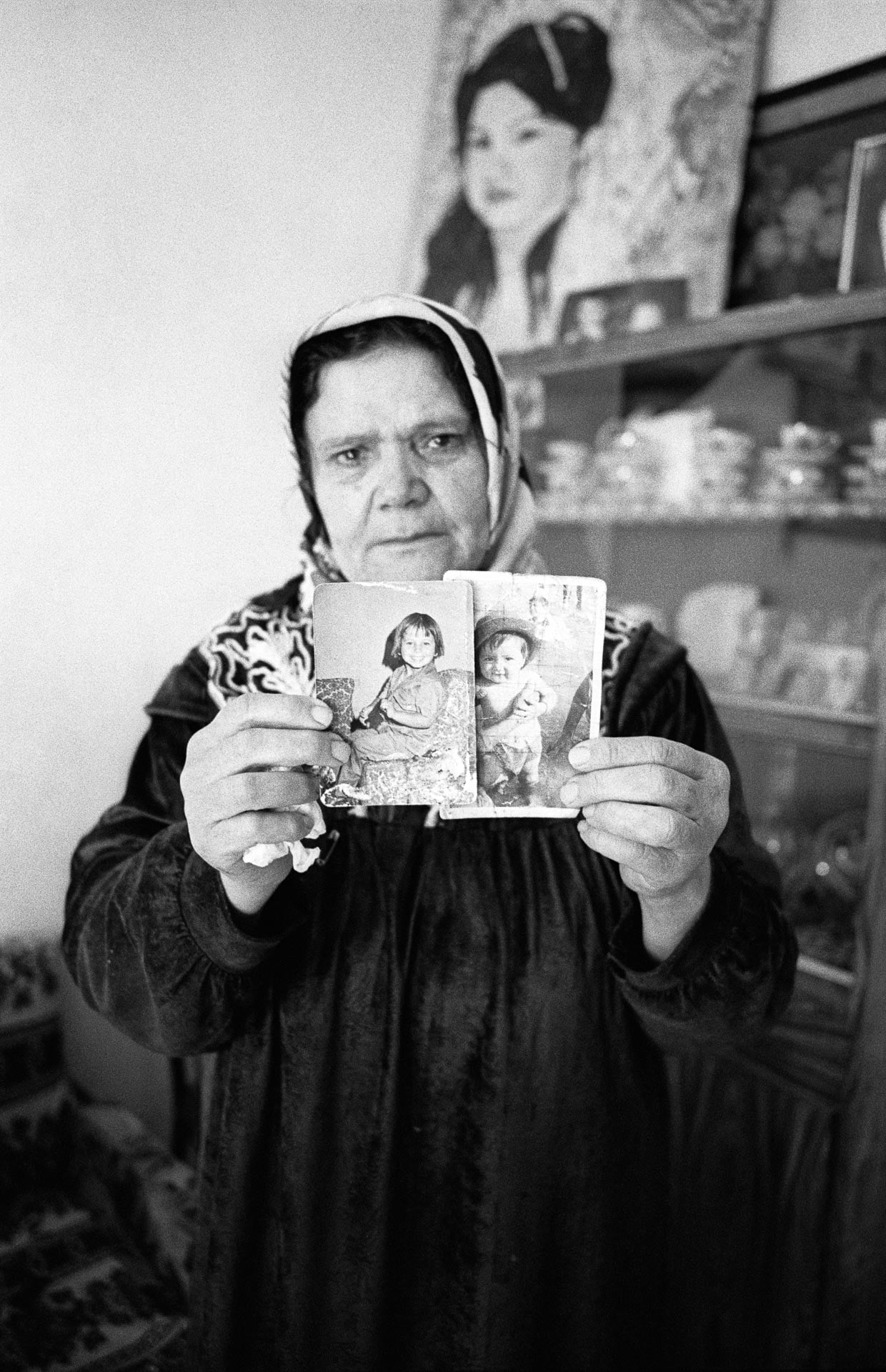
Oumm Ali
Chatila refugee camp. Samiha Abbas Hijazi, known as “Oumm Ali”, a Lebanese woman from the south married to a Palestinian, lost her husband during the “Tal-el-Zaatar” massacres in 1976. In 1982, during the Sabra and Chatila massacres, she lost her daughter Zeinab, 17 and a young bride, and her son-in-law. Her son Ali, aged 10, was killed a few years later (1985-1987) in the war in the camps. Grief and tears arise every time she recalls her memories, even 30 years later. These are Ali and Zeinab in these photos. Today, “Ummm Ali” lives in a room a few dozen meters from the UNRWA camp. There are no toilets or kitchen facilities. She works as a cleaner in a kindergarten, where she also runs a small sweets business for the children. Her two activities earn her 140 dollars a month. Her rent is 65 dollars a month.
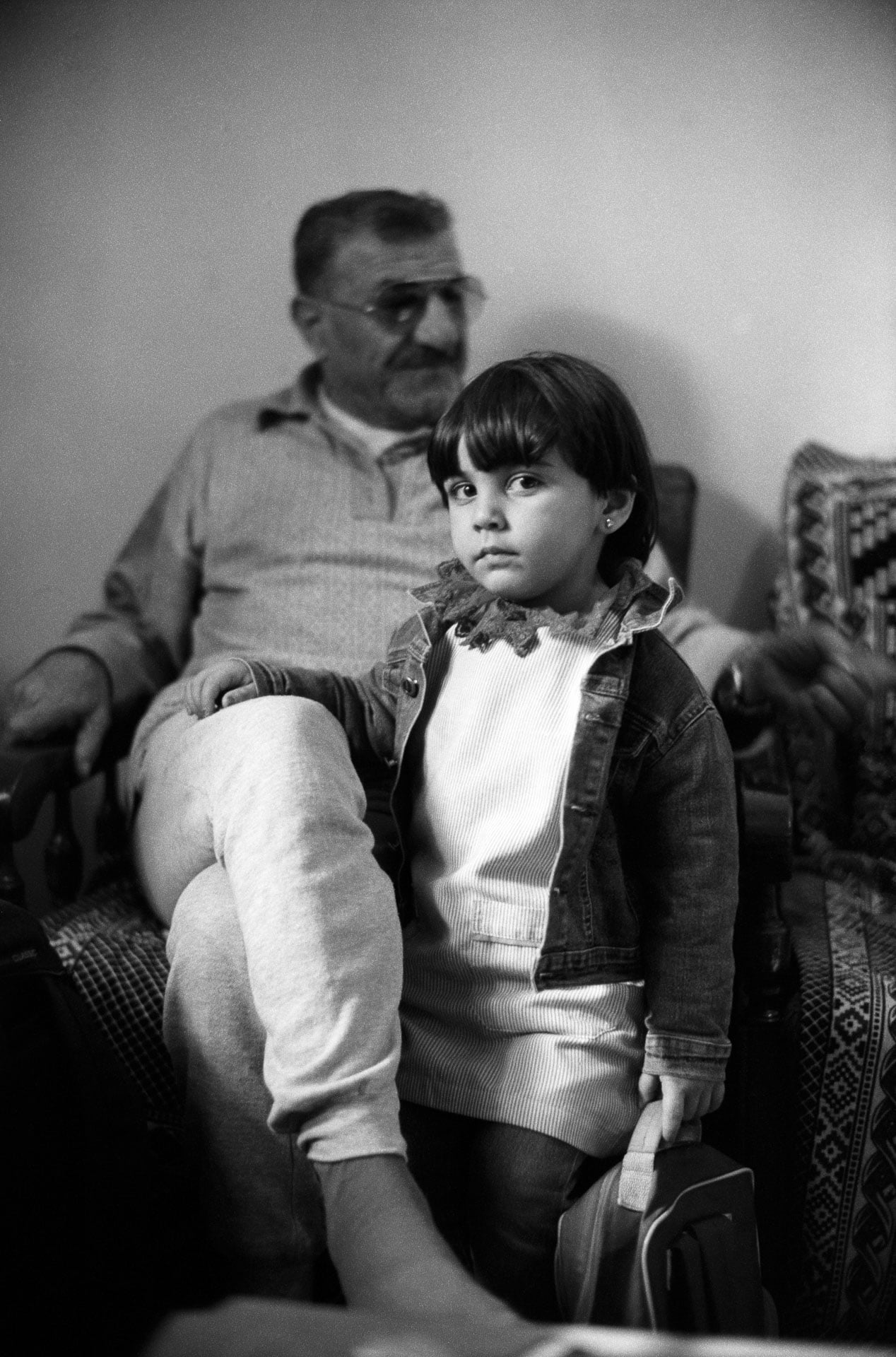
3rd generation
Chatila, UNRWA camp. Youssef Majzoub and his granddaughter Roseanne. Youssef was born in Palestine and Roseanne in the Chatila camp.

Searching for water
Chatila. Camp of the “Nouriyé”, the Gypsies. There’s no running water here, so you have to fetch it in cans…

Chatila, the UNRWA camp
Chatila. The UNRWA camp is built “en dur” on 40,000m2. Due to lack of space, the buildings are up to 6 storeys high. In the foreground, the shantytown of the “Nouriyé” (Gypsy) camp.

Beirut’s “sports city
Chatila is just outside Beirut’s “sports city”.
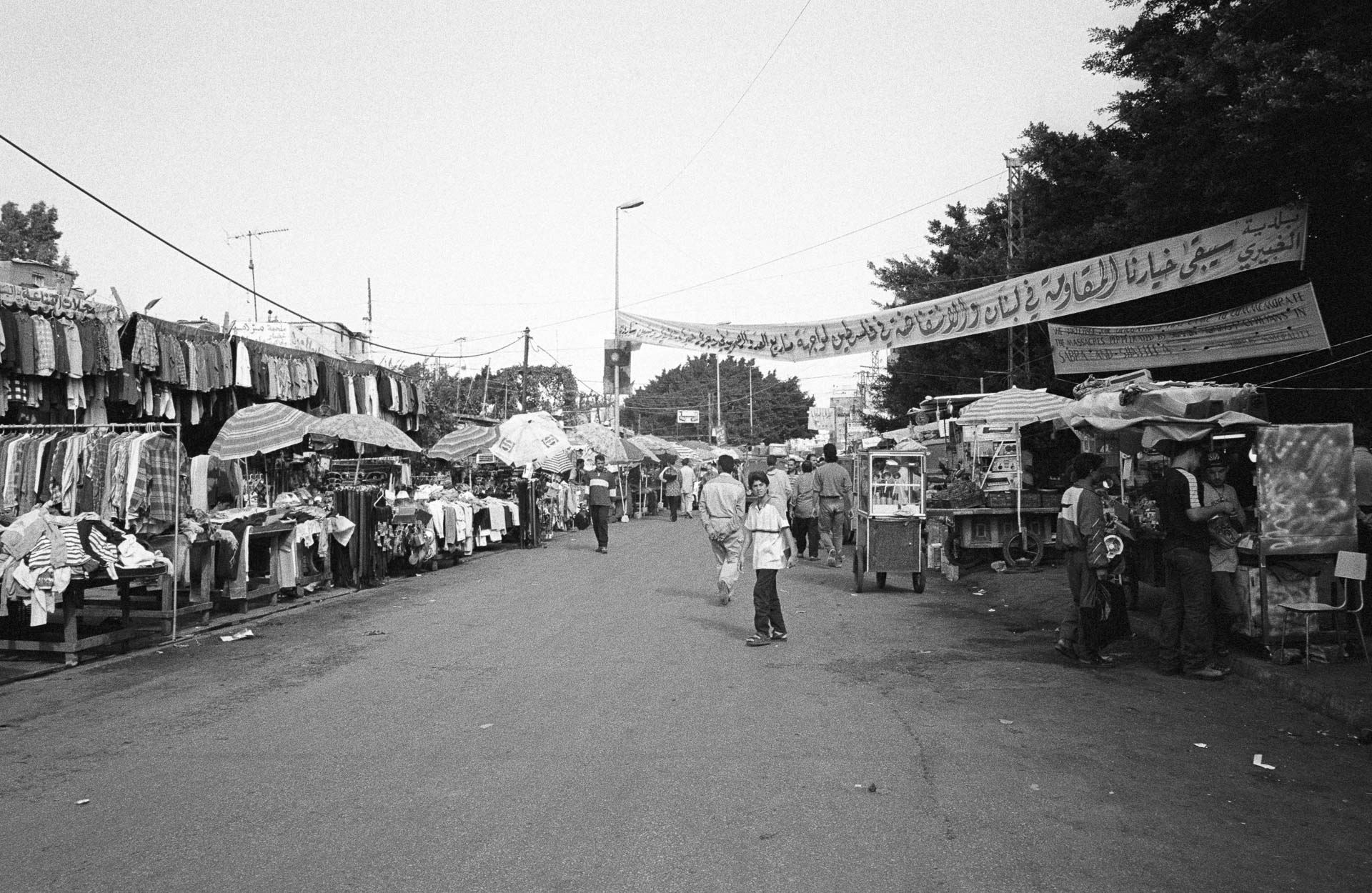
The road to the UNRWA camp
Chatila. The entrance to the camp is lined with merchants of all kinds. Everything is for sale here: from second-hand clothes to counterfeit goods and 4th or 5th hand electronics. Pirate copies of the latest records sit alongside pirate copies of the latest films – including pornos.
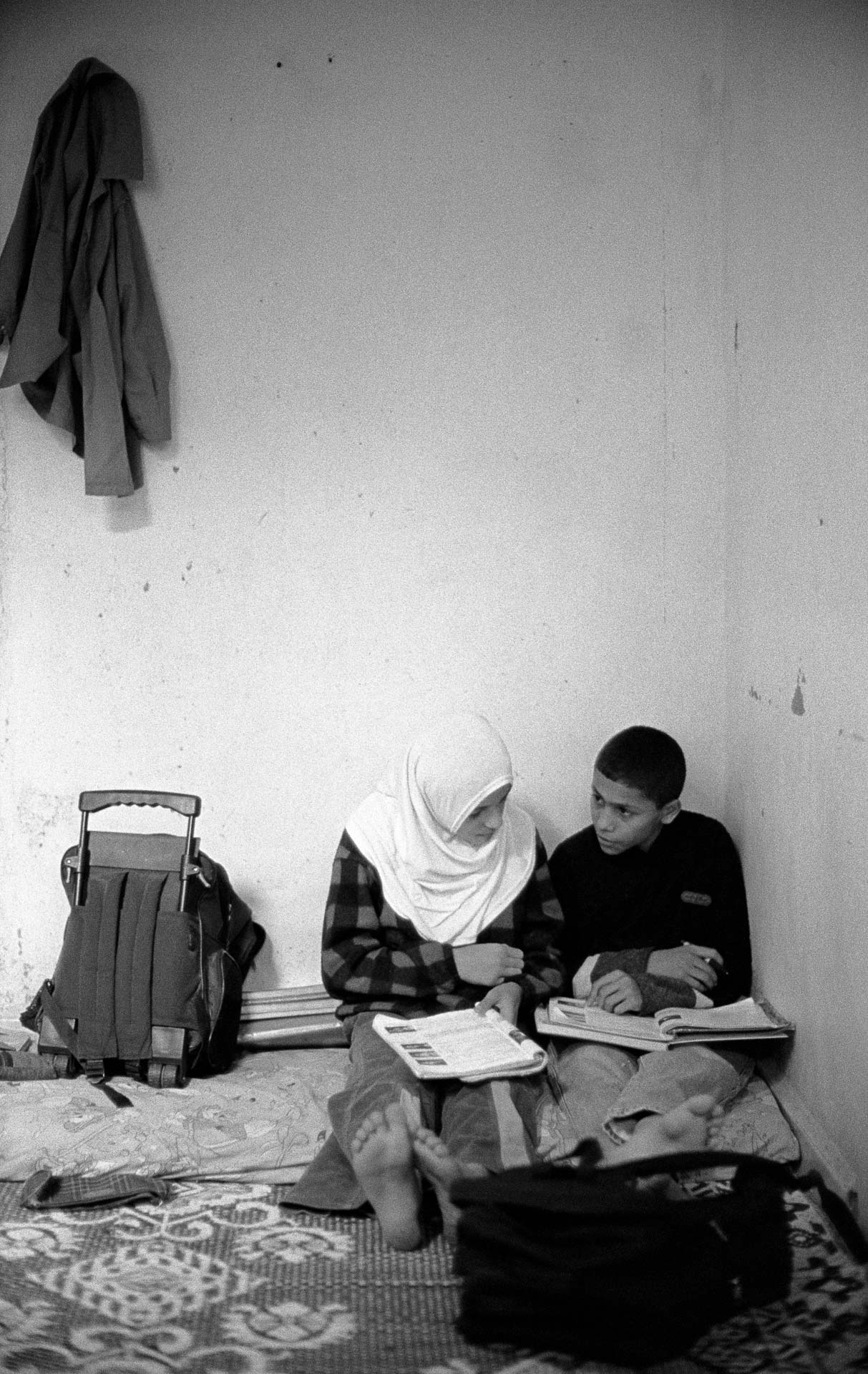
Homework
Chatila, UNRWA camp. With the Hindawi (or Al Hindawi) family. Mona and Jamal Hindawi are originally from Haifa. Jamal is a marble polisher by trade, often unemployed. Mona is a housewife, looking after the household’s six children. Ilham and Ahmad al Hindawi do their homework. Ahmad, who is in 5th grade at the “Ariha” (Jericho) secondary school, wants to become a lawyer for his country. He knows it’s a dream and that in Lebanon he won’t be able to practice this profession.
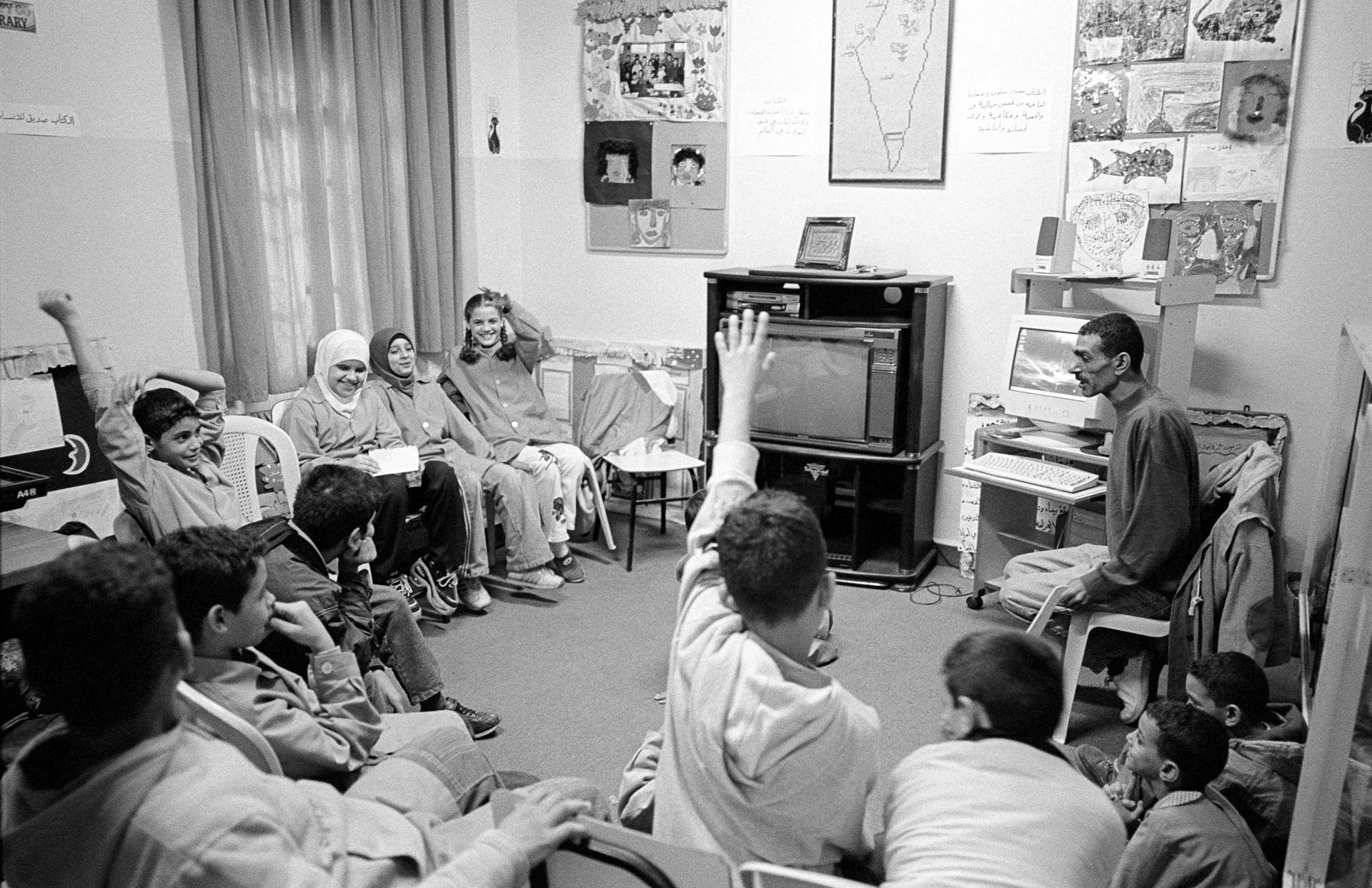
Teaching
Chatila, UNRWA camp. With the Hindawi (or Al Hindawi) family. Mona and Jamal Hindawi are originally from Haifa. Jamal is a marble polisher by trade, often unemployed. Mona is a housewife, looking after the household’s six children. Three years ago, Jamal al Hindawi became interested in computers. Since then, he has assembled two computers from second- and third-hand spare parts, taught himself computer science and set himself the task of familiarizing primary school children with this tool of the future.

Jamal wakes up
Chatila, UNRWA camp. With the Hindawi (or Al Hindawi) family. Mona and Jamal Hindawi are originally from Haifa. Jamal is a marble polisher by trade, often unemployed. Mona is a housewife, looking after the 6 children in the household. Jamal Al Hindawi wakes up. Coffee (Turkish) and first cigarette. The TV is already on. While Mona takes the boys to school, Jamal looks after Farah and Hanan.
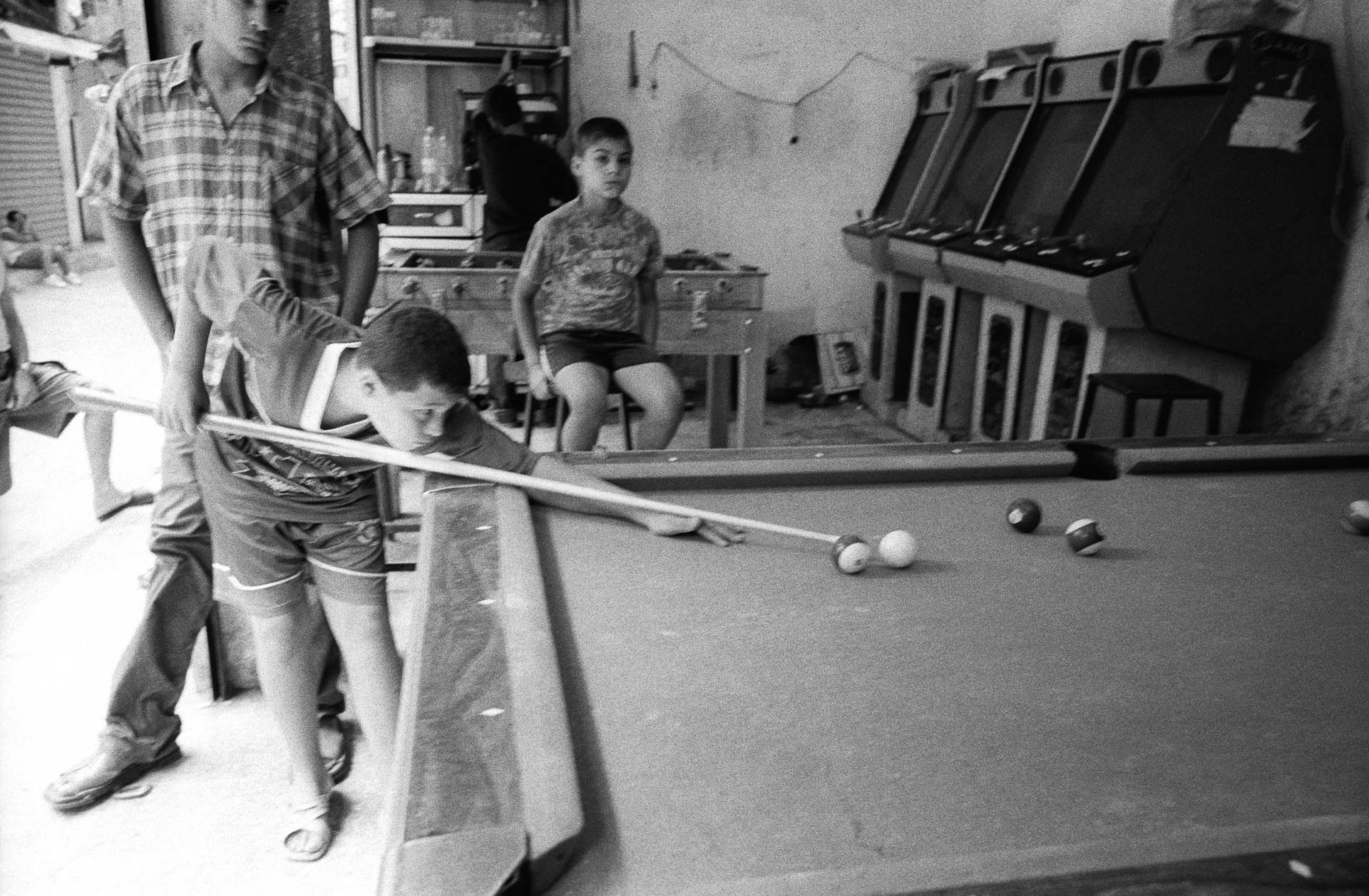
Games
Chatila, UNRWA camp. After or before school, the boys gather in the camp’s many playrooms. The “Ramallah” school for boys becomes the “Hama” school for girls in the afternoon. Every month, the order is changed…Here, the boys are playing billiards in one of the games rooms.
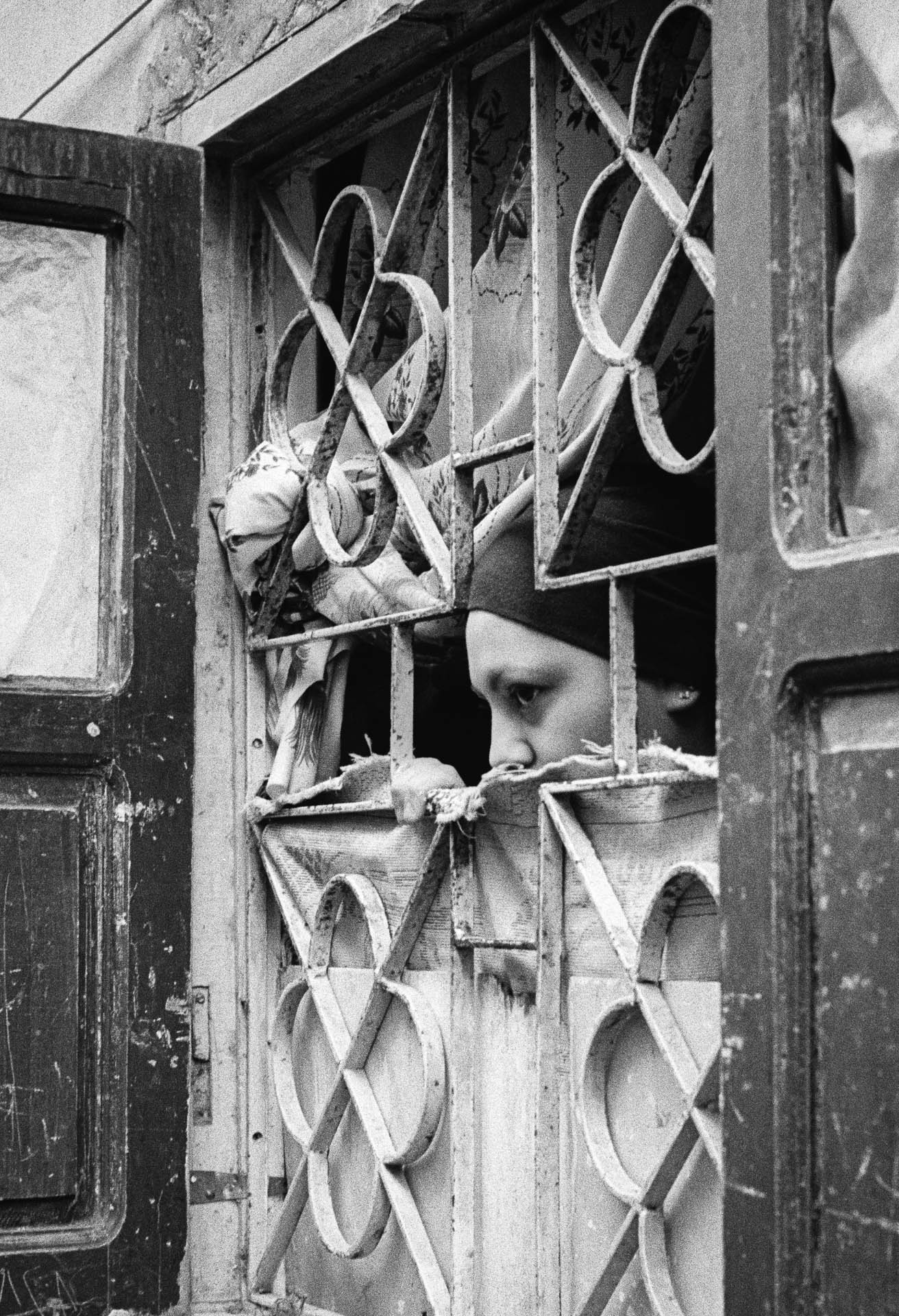
Future?
Chatila, UNRWA camp. A young woman at her window.

Dispensary
Chatila, UNRWA camp. Dr. Saleh Maalouf, head of the PRCS (Palestinian Red Crescent Society) dispensary, welcomes patients. The Chatila dispensary treats all patients during the day, regardless of their nationality. Here, patients are treated for the token sum of one or two US dollars – vaccinations are free. More serious cases are referred to nearby PRCS hospitals, especially the one in the “Bourj al-Barajneh” camp. Blood sampling.

Kindergarten
Chatila, UNRWA camp. Beit Atfal Assoumoud. The kindergarten. Beit Atfal Assoumoud is a humanitarian, non-sectarian NGO founded in 1976 after the Tal al Zaatar massacre. Its vocation is to provide services to Palestinian refugees in Lebanon and other disadvantaged people living in or near the camps.
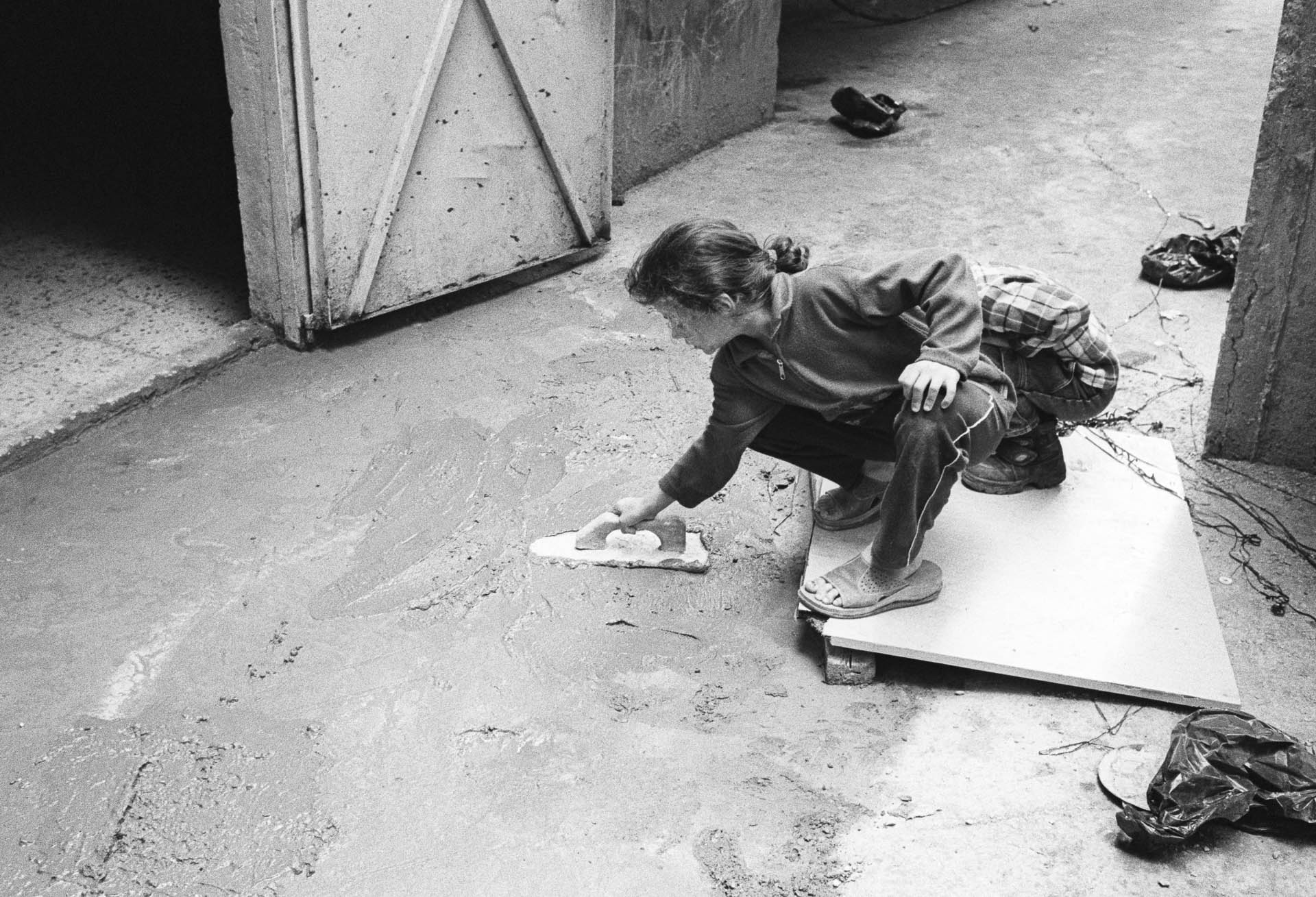
Children help
Chatila, UNRWA camp. A little girl levels the freshly poured concrete slab in front of her house.

Good grades
Chatila, UNRWA camp. With the Hindawi (or Al Hindawi) family. Mona and Jamal Hindawi are originally from Haifa. Jamal is a marble polisher by trade, often unemployed. Mona is a housewife, looking after the 6 children in the household. Jihad and Nidal are back from school in the afternoon. While waiting for a snack, they watch a little TV with their parents. Mona looks at the quarterly report cards, Jihad and Nidal are among the best in their class.

Construction signs
Chatila, UNRWA camp. Signs of construction.
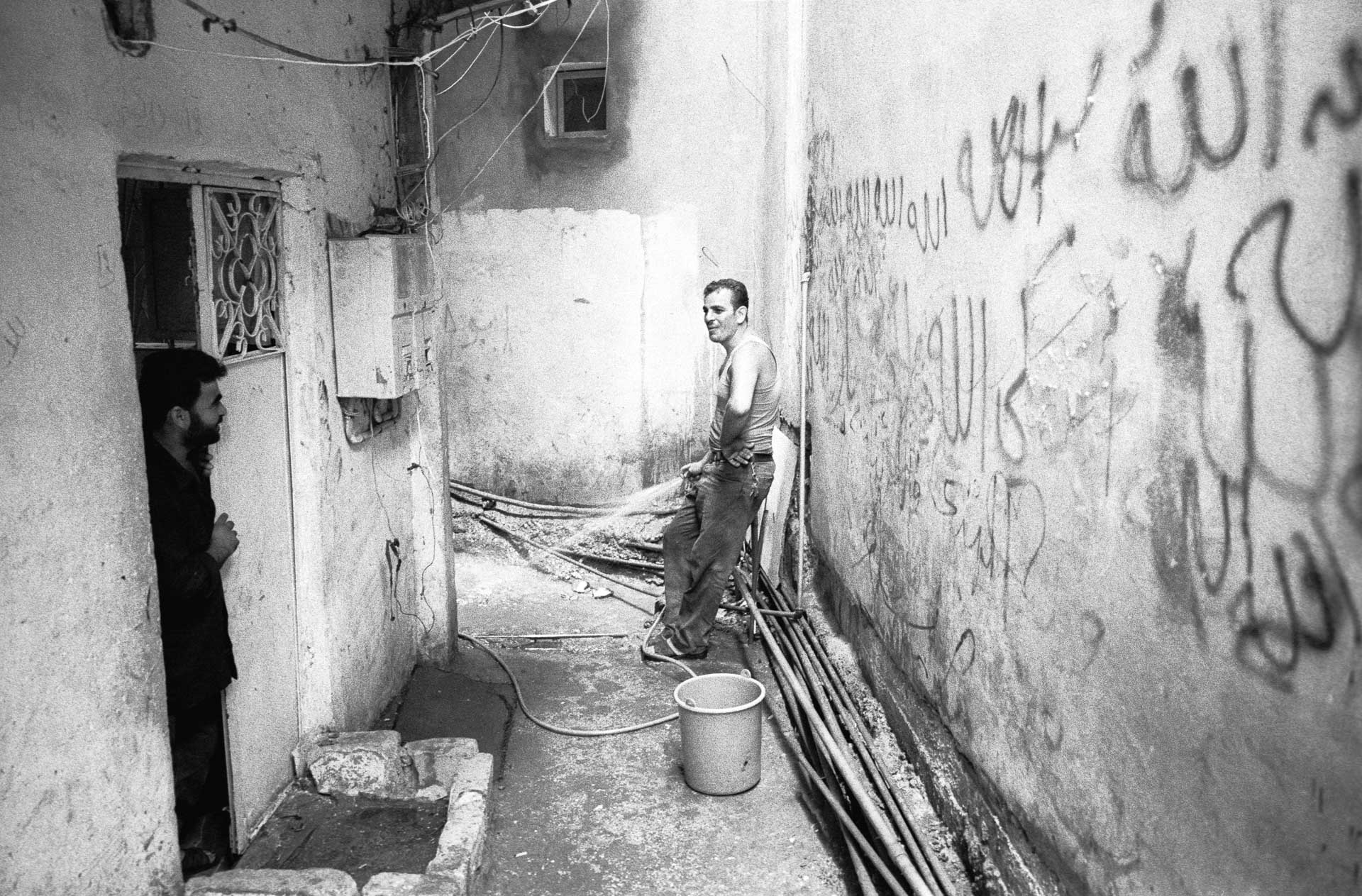
Cleaning
Chatila, UNRWA camp. Cleaning of the camp by an UNRWA service. All the camp’s main thoroughfares are cleaned daily, while the smaller alleyways are cleaned every other day.

Alleys of Chatila
Chatila, UNRWA camp. In the streets of the camp. A schoolboy goes to class.

The dentist
Chatila, UNRWA camp. Beit Atfal Assoumoud. Beit Atfal Assoumoud is a humanitarian, non-sectarian NGO founded in 1976 after the Tal al Zaatar massacre. Its vocation is to provide services to Palestinian refugees in Lebanon and other disadvantaged people living in or near the camps. The Chatila center has a kindergarten and a dispensary. Dr. Ahmad Abou Rayya, the center’s dentist, treats Tarek, a kindergarten pupil.