

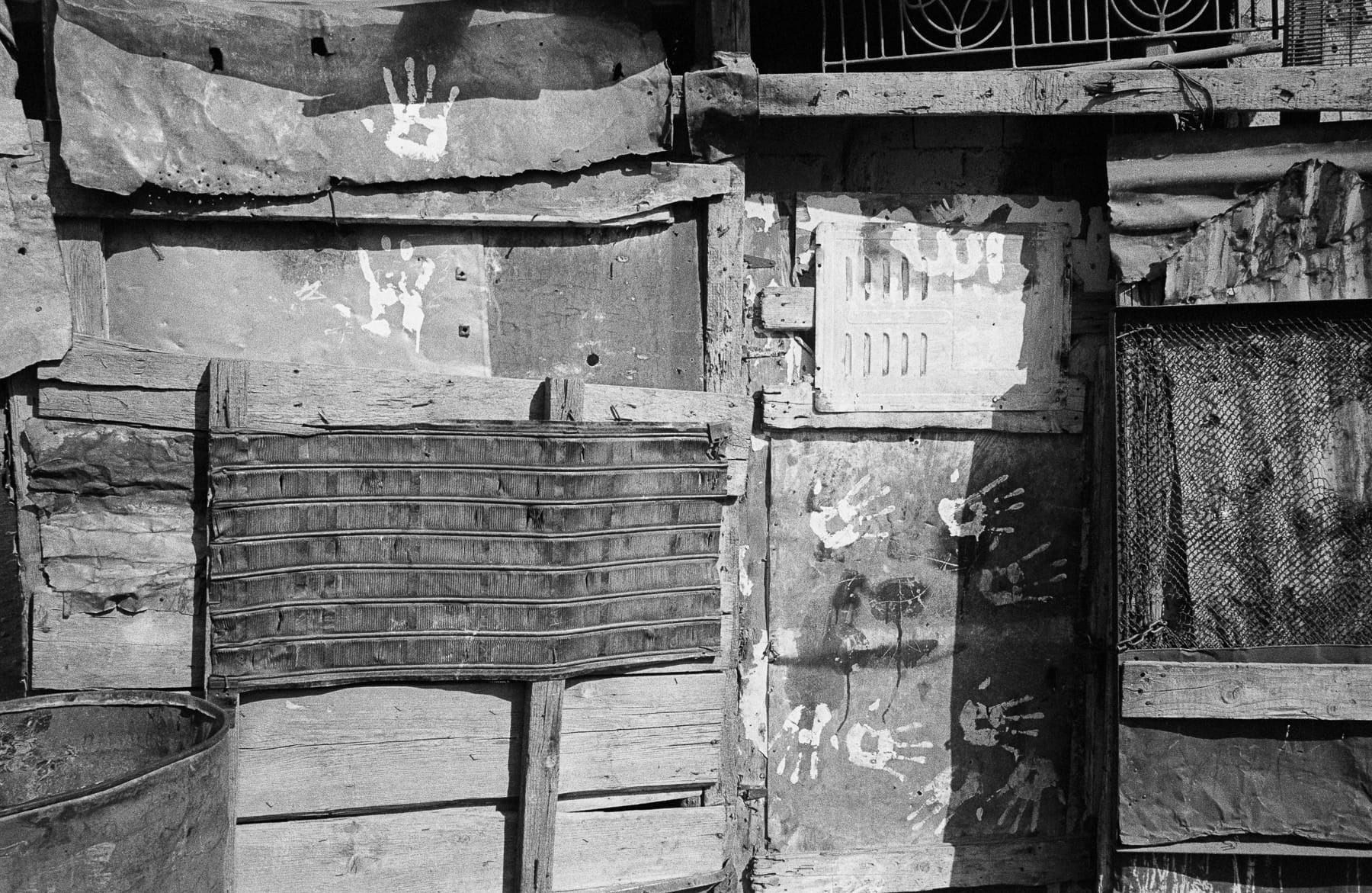
September 16, 2025 marks the 43rd anniversary of the Sabra and Chatila massacres. Forty-three years in which history seems frozen in an eternal restart: the Palestinians remain refugees, landless, stateless, with no prospect of return.
Since 1948, 77 years ago, whole generations of Palestinians have been born, raised and aged in forced exile. What was meant to be temporary has become a permanent condition, creating one of the longest refugee crises in modern history.
For three days in September 1982, so-called “Christian” militias supported by the Israeli army massacred the civilian population of the Sabra and Chatila camps. Estimates range from 1,500 to 3,500 victims. Then, from 1985 to 1988, came the ” war of the camps “. Even today, the survivors and their descendants live in the shadows.
And yet, in the persistent shadow of Chatila, life continues to pulsate with remarkable obstinacy. Children are born and grow up, go to school, do their homework like all the children in the world, and look to the future despite a horizon blighted by ruins. Young people are looking for work, training and organizing themselves, doing “odd jobs” despite their refugee cards, which prohibit them from exercising more than seventy professions in Lebanon and make travel almost impossible. Couples fall in love and start families, which they educate and send to school. The elders ponder their history, comparing the present with the days before their deportation.
77 years of exile: The failure of the international community
No lasting solution has been found to the plight of the Palestinians since their exodus in 1948. UN resolutions go unheeded, peace agreements stall and negotiations fail. In the meantime, refugee camps are being transformed into overcrowded concrete cities, fundamental rights continue to be trampled underfoot, and hopes of a return are dwindling.
This situation challenges the international conscience. How can we accept that, in the 21st century, millions of people remain stateless, deprived of their most basic rights? How can we tolerate children being born as refugees in camps where their grandparents have already lived their entire lives?
The photographic work presented here, the fruit of fifteen years of immersion, bears witness to the lives of Palestinian refugees who resist oblivion. It gives names and faces to a population too often reduced to sterile statistics in the media. More than a simple testimony, it is a cry of alarm in the face of the indifference of a “civilization” that has abandoned these human beings for decades.
As we commemorate the 43rd anniversary of the Sabra and Chatila massacres, it is urgent to remember that behind the numbers and the geopolitical stakes lie human destinies, lives shattered but not resigned, hopes that refuse to be extinguished. The Palestinian question can no longer be relegated to the background. It demands a response commensurate with the injustice it represents.
More images here.
Tarek Charara
——————————————————————————————-
The literature on the subject is vast and extensive. I have done my best to summarize the history of the Palestinian refugees up to the massacres and the war of the camps in my book ” In the shadow of Chatila “, available on this site.
Text and images © Tarek Charara/Kaleidos images.
All rights reserved.
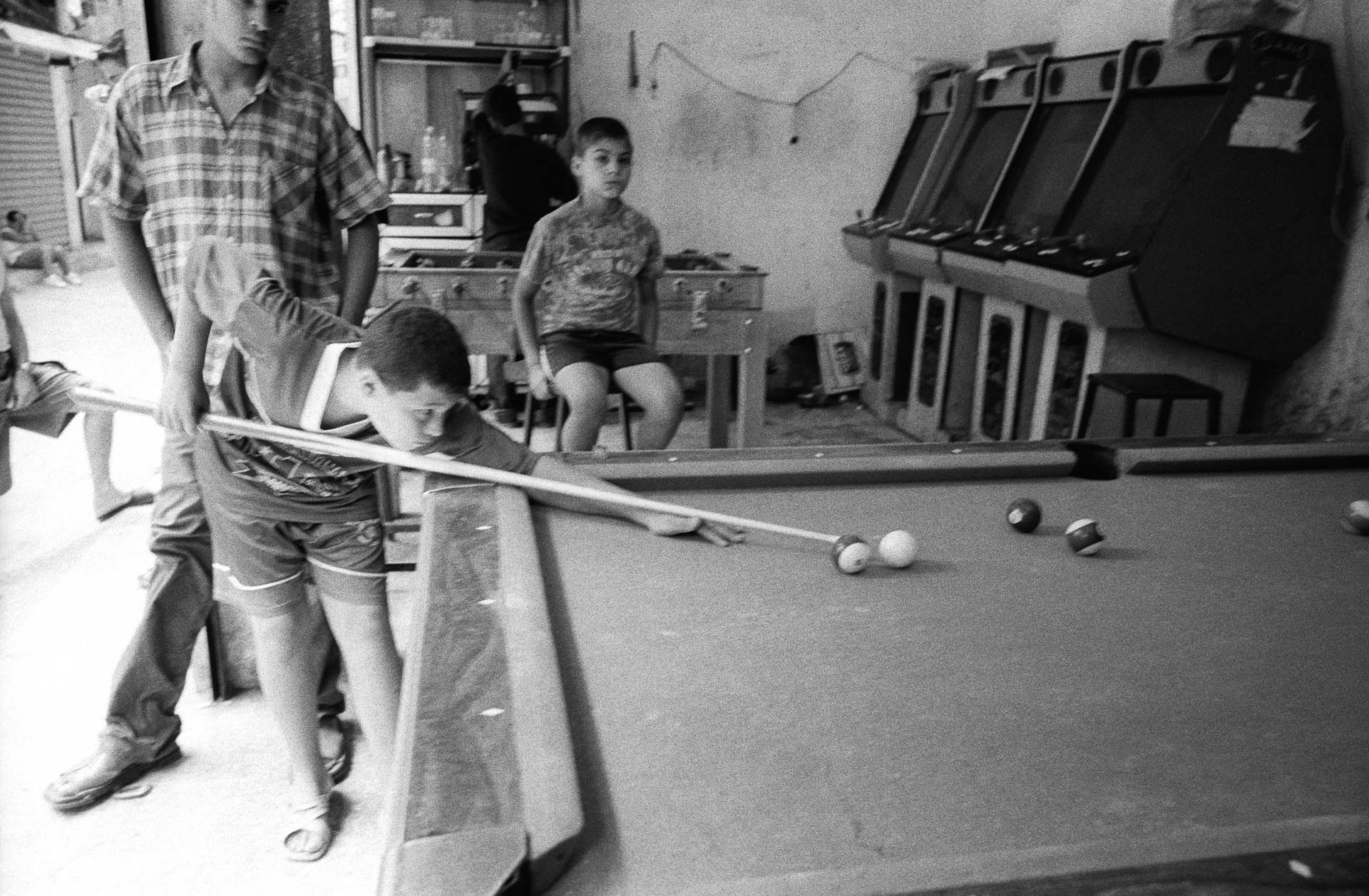
Games
Shatila, UNRWA camp. Before or after school, the boys get together in one of the many game rooms in the camp. The “Ramallah“ school for boys becomes the “Hama“ school for girls in the afternoon. The order is changed every month. Here the boys are in one of the game rooms playing pool.
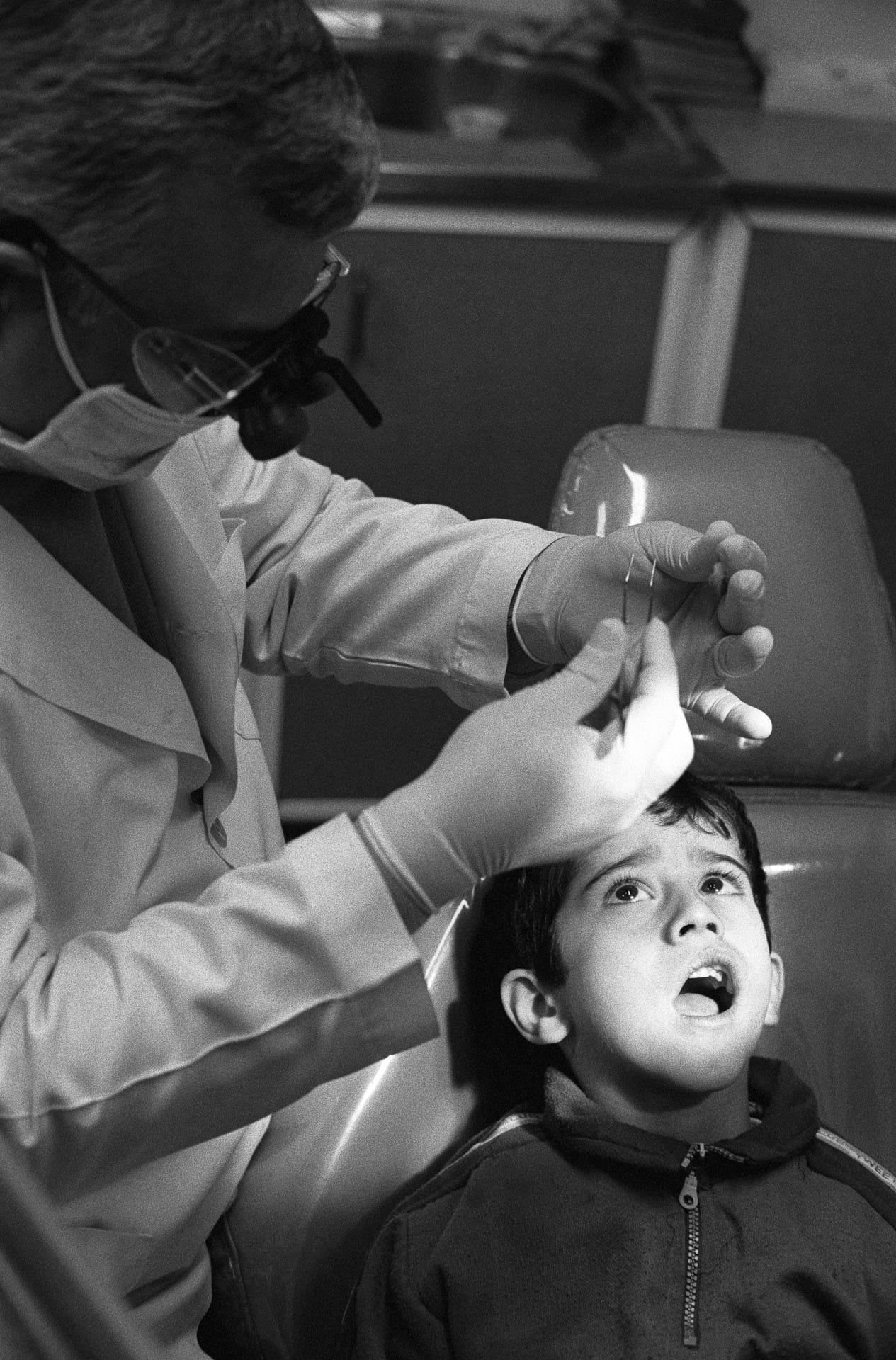
The dentist
Shatila, UNRWA camp. Beit Atfal Assumood. The kindergarten. Beit Atfal Assumood a humanitarian, non-sectarian and non-governmental organization was established in 1976 after the Tal Al Zaatar massacre. It provides services for Palestinian refugees in Lebanon and other disadvantaged people with other nationalities living in the camps or close to them. The Shatila center has kindergarden classes and a dispensary. Dr. Ahmad Abu Rayya, the NGO’s dentist, treats Tarek, a pupil of the kindergarden.

Homework
Shatila, UNRWA camp. With the (AL) Hindawi family. Mona and Jamal Hindawi are originally from Jaffa. Jamal is a marble polisher by profession, but often unemployed. Mona is a housewife and takes care of the six children that live with them. Every evening, Mona Al Hindawi helps her children with homework.

Fetching water
Shatila. Camp of the ‘Nouriyyeh’, the Gypsies. There is no running water here, you have to fetch it in jerry cans…

6:15 AM
Shatila, UNRWA camp. With the (AL) Hindawi family. Mona and Jamal Hindawi are originally from Jaffa. Jamal is a marble polisher by profession, but often unemployed. Mona is a housewife and takes care of the six children that live with them. It’s 6:15 AM, Jihad and Nidal are getting ready for school. Their little sister, Farah, is still asleep.

Signs of construction
Shatila, UNRWA camp. Signs of construction.
Umm Ali
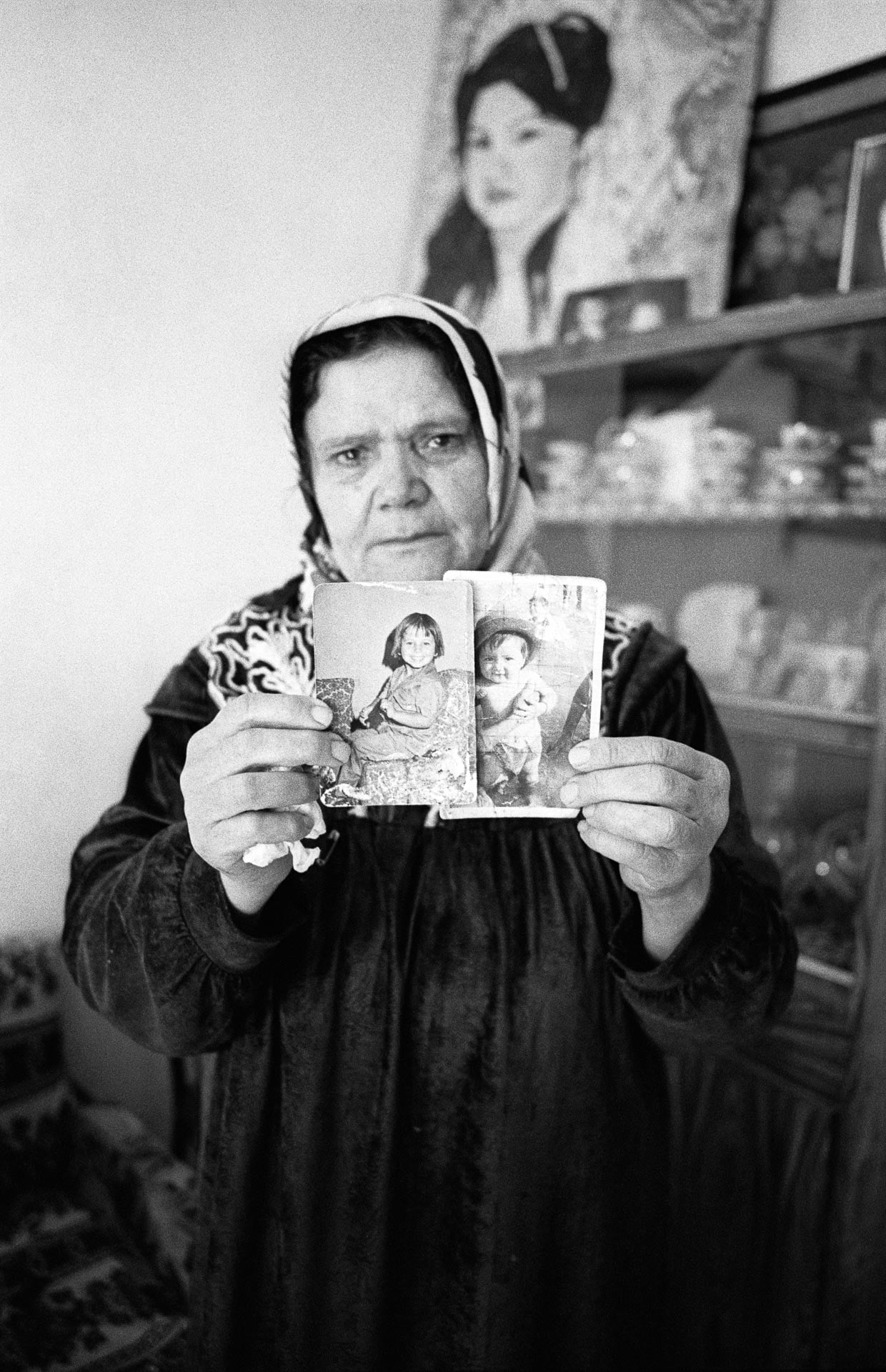
Shatila refugee camp. Samira Abbas Hijazi, aka “Umm Ali“, is Lebanese and comes from the south of Lebanon. She was married to a Palestinian whom she lost during the “Tel el Zaatar“ massacres in 1978. Her daughter Zeinab, a young 17 year old newly wed, and her son-in-law are assassinated in 1982 during the Sabra & Shatila massacres. During the “Camp wars“ a few years later (1985-1987) she loses her son Ali, 10 years of age. Every time she talks about her memories, a surge of pain and tears appears, even 30 years after the events. Here one can see photographs of Zeinab and Ali. Today “Umm Ali“ lives alone in a one room apartment on the outskirts of the Shatila refugee camp, just a few meters from the UNRWA camp. She has no toilets or bathroom, nor kitchen. She earns her money as a cleaning woman in a kindergarten where she also has a small shop with sweets for the children. She earns 140 US$ a month. Her rent is 65 US$ a month.

Teaching
Shatila, UNRWA camp. With the (AL) Hindawi family. Mona and Jamal Hindawi are originally from Jaffa. Jamal is a marble polisher by profession, but often unemployed. Mona is a housewife and takes care of the six children that live with them. Three years ago, Jamal Al Hindawi started to learn about computers. He managed, since then, to build computers from second or third hand pieces found at the flea market and tought himself how to use them. He has given himself the mission to teach the kids in the camp the basics of computers – the tool of the future according to Jamal. With a lot of patience and free of charge, Jamal gives one hour lessons in one of the UNRWA schools.
The “Oud” player
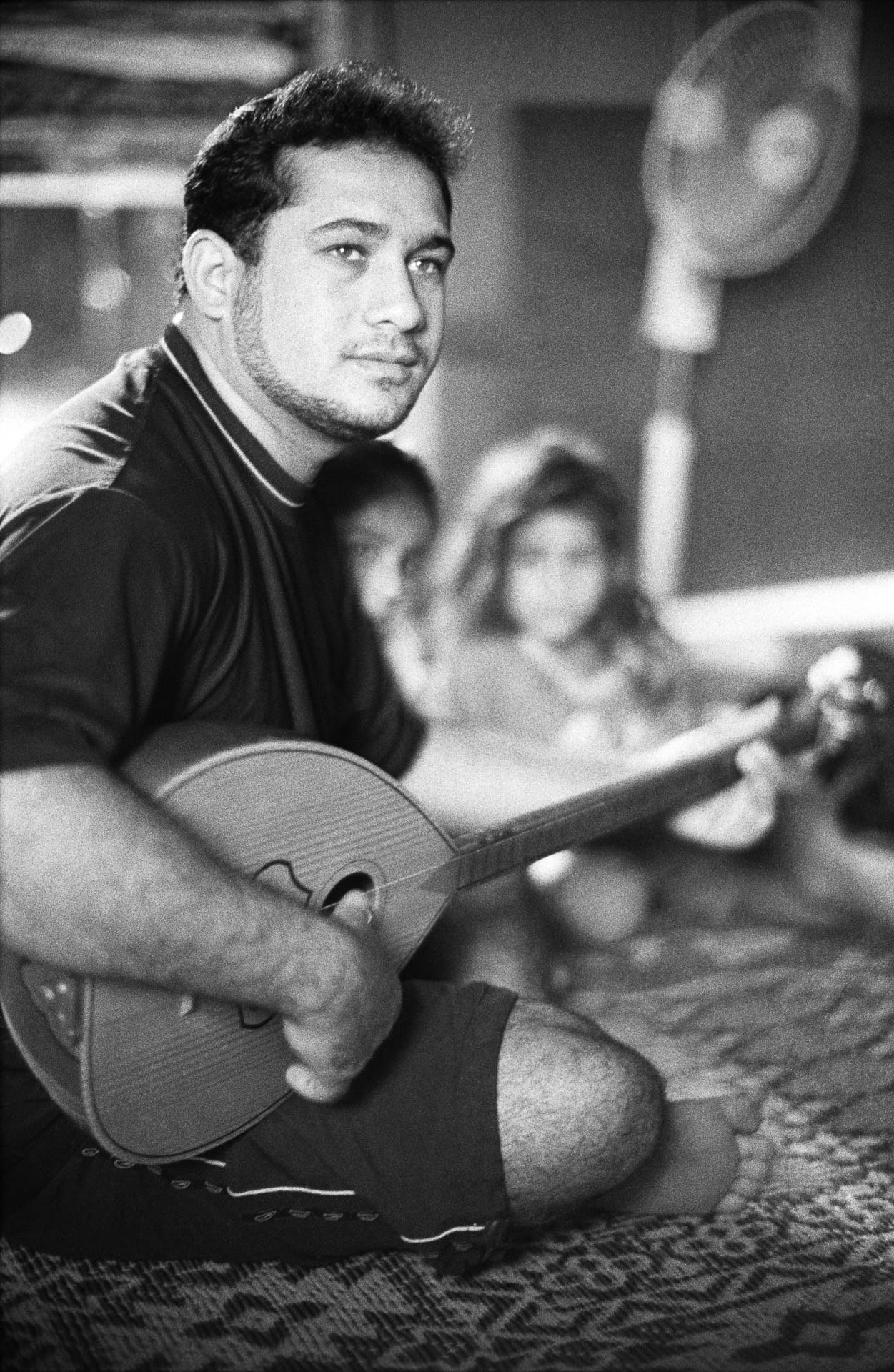
Shatila, the “gipsy camp”. A “oud” player (oriental lute) entertains a few kids from the camp. The dewellings, made of corrugated iron, scrap wood and plastic sheets, are clean inside.

The ride
Shatila, UNRWA camp. A father drives his girls to school.

Mohammed Shawqat Abu Rudaina
Shatila, UNRWA camp. Mohammed Shawqat Abu Rudaina at age 28. When Mohammed was five years old, he witnessed the massacre of his father, his pregnant sister and her husband, and three other members of his family. It took him 22 years to overcome the traumas and regain his taste for life. He now wants to finish school and study. Mohammed is showing us the document from the Red Cross attesting the death of his father during the massacres of Sabra and Shatila in 1982.
For peace
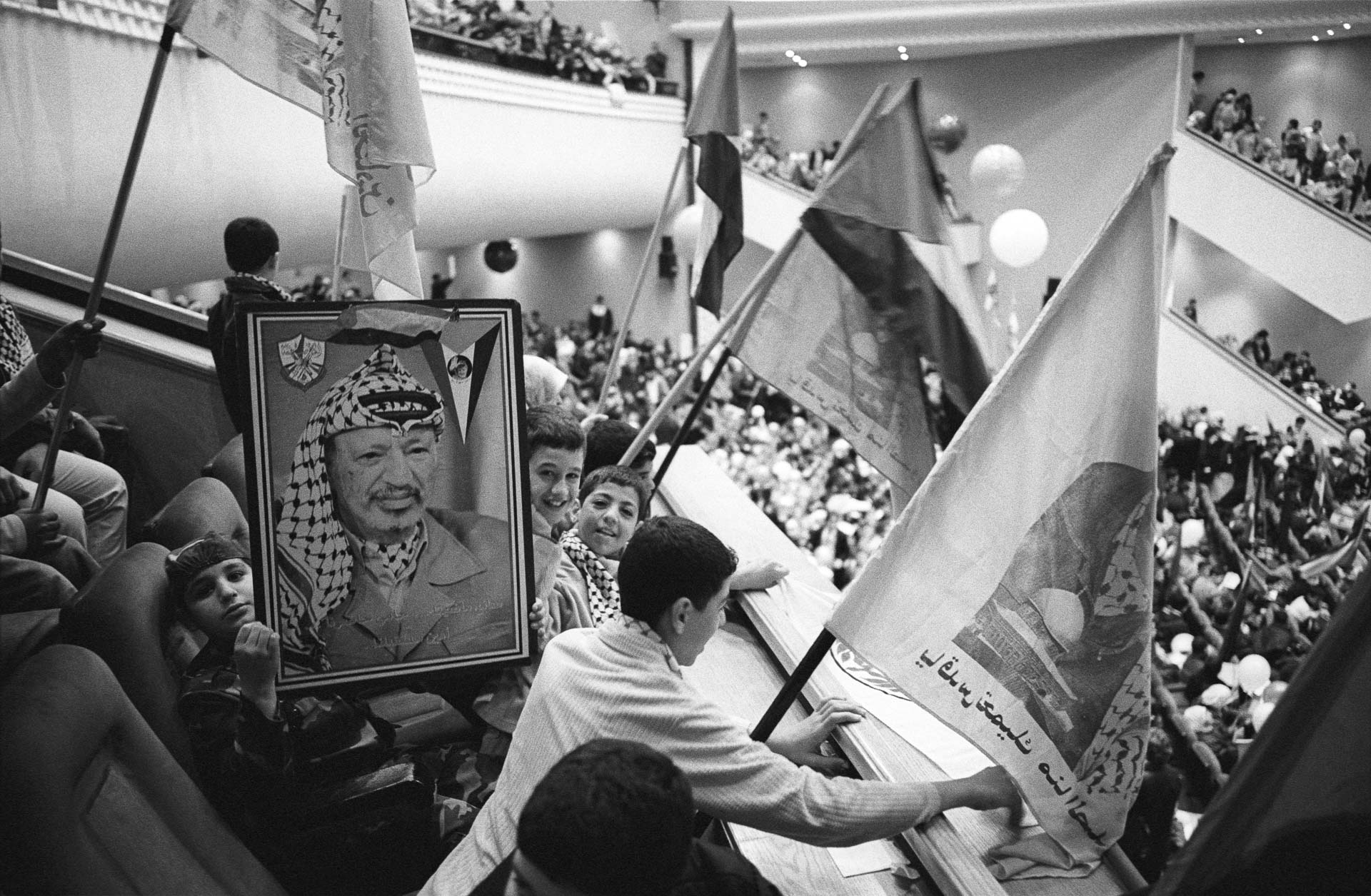
Beirut, Lebanon. UNESCO center. The children of Shatila, wearing Palestinian keffiyehs, demonstrate against the foreboding war against Irak. One of the boys is holding a framed picture of president Arafat.
The road leading to the UNRWA camp
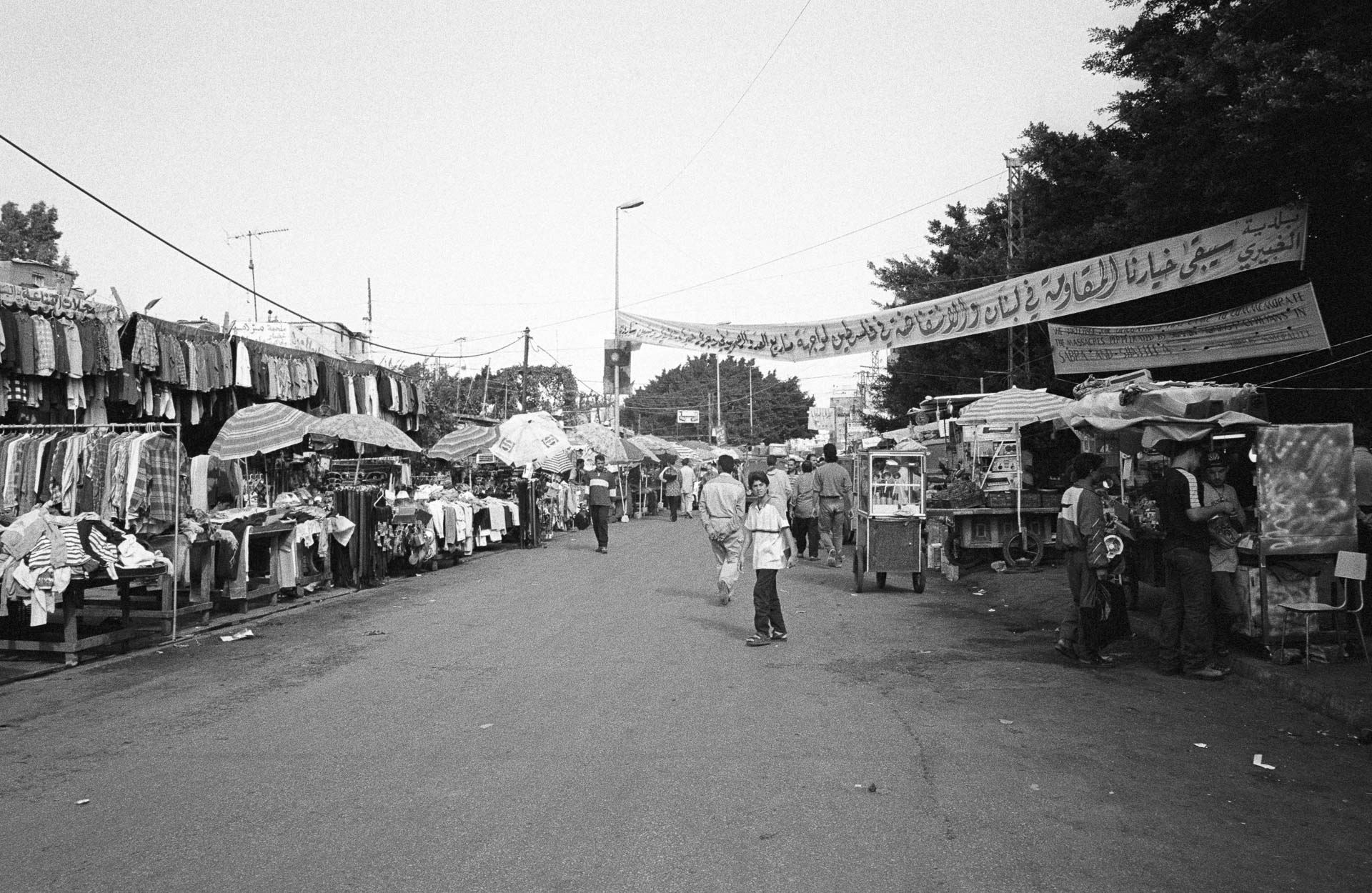
Shatila. All kinds of vendors occupy both sides of the entrance of the camp. Everything can be bought here: old & new clothes, 3rd or 4th hand electronic devices, pirated CD’s of all the latest hits and DVD’s of the latest movies can be found here.

The UNRWA camp
Shatila, The UNRWA camp is constructed on 40000 square meters. Because of the limited space, constructions have grown up to 6 storeys high. In the foreground, just below the Sports City, in the Hayy al Gharbi area, is the shantytown of the “Nouriyeh” (gipsies) camp.
The dentist
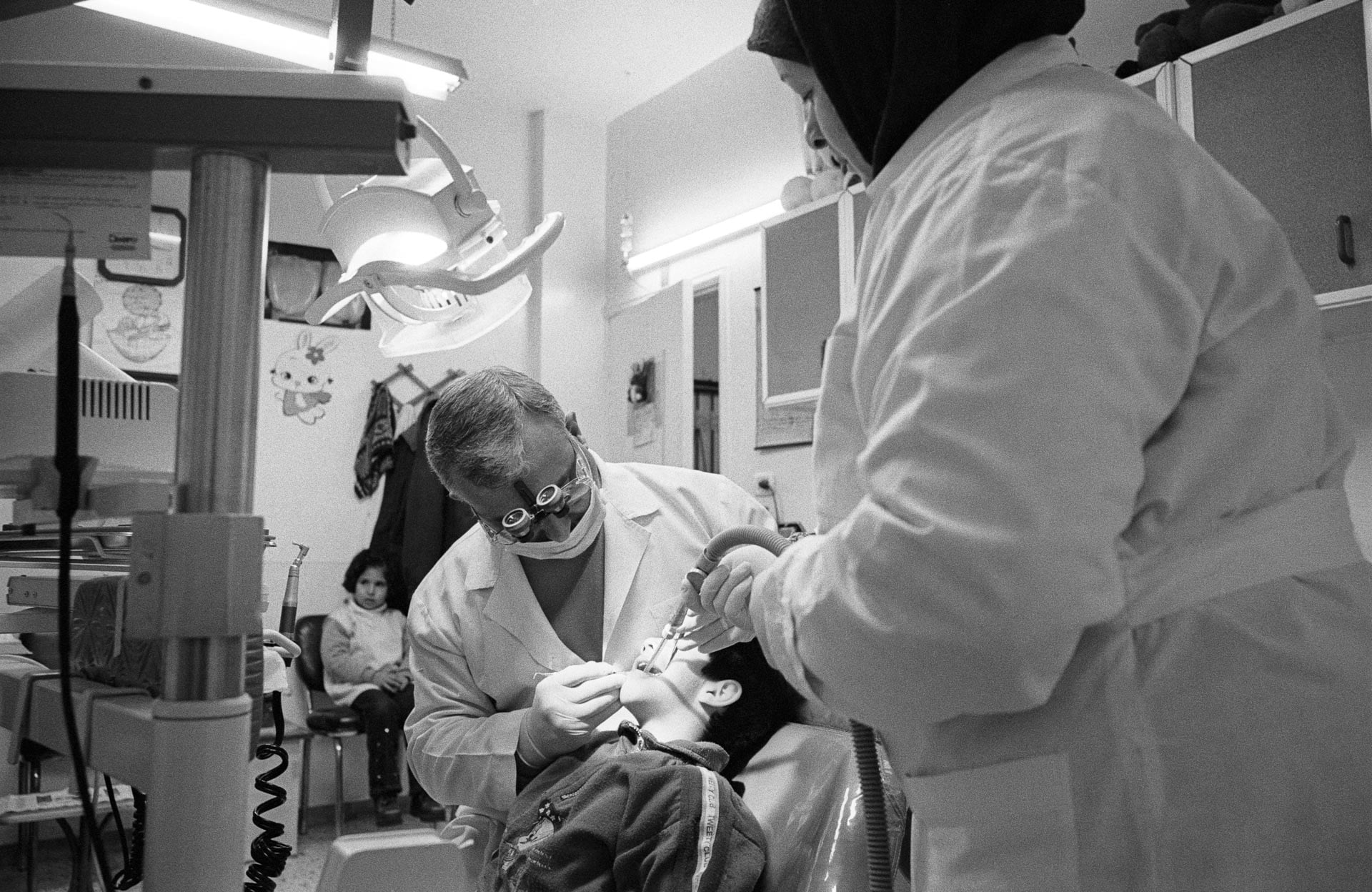
Shatila, UNRWA camp. Beit Atfal Assumood. The kindergarten. Beit Atfal Assumood a humanitarian, non-sectarian and non-governmental organization was established in 1976 after the Tal Al Zaatar massacre. It provides services for Palestinian refugees in Lebanon and other disadvantaged people with other nationalities living in the camps or close to them. The Shatila center has kindergarden classes and a dispensary. Dr. Ahmad Abu Rayya, the NGO’s dentist, treats Tarek, a pupil of the kindergarden.
Third generation
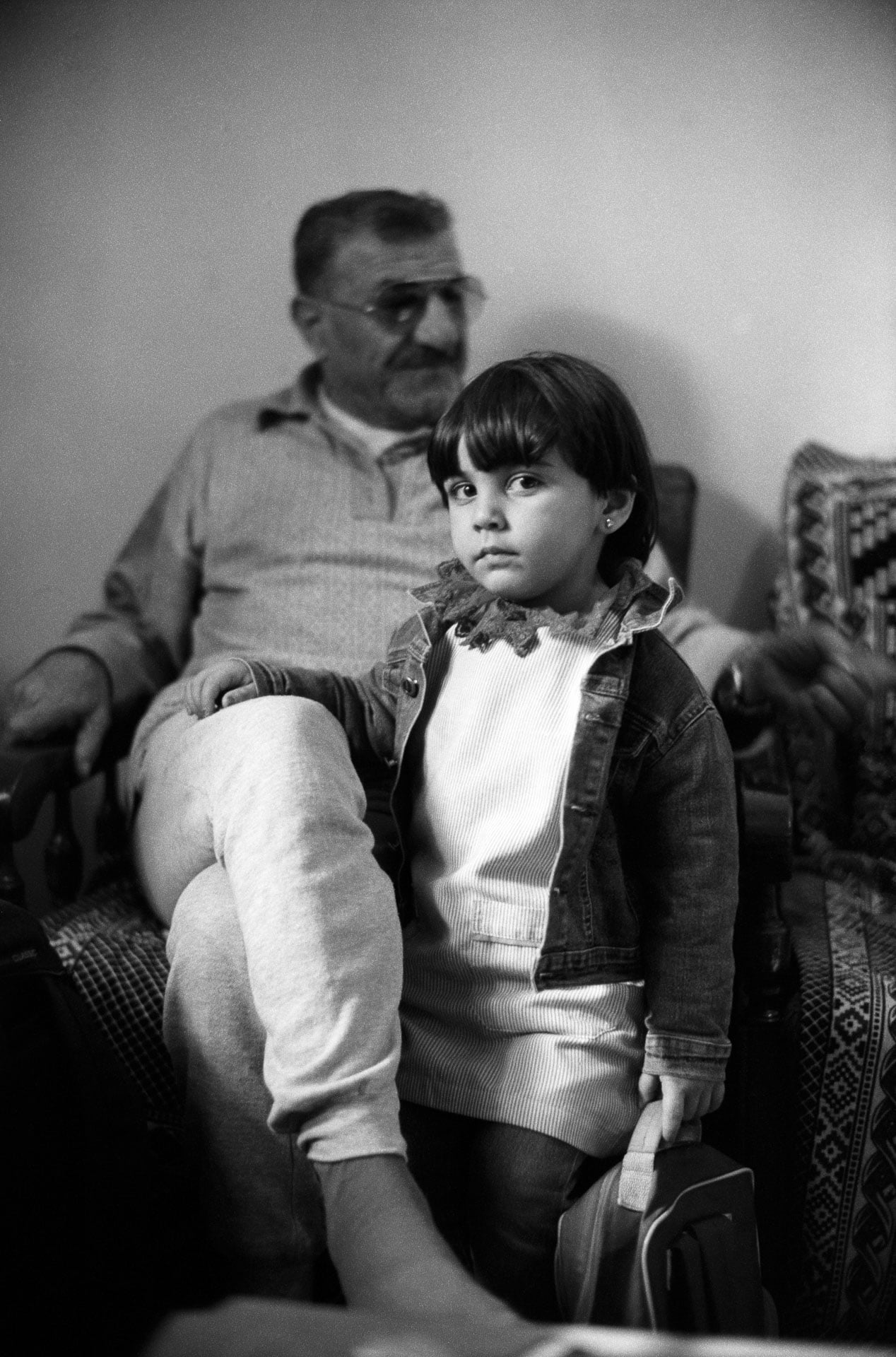
Ghobeiri, Liban. Camp de réfugiés Palestiniens Chatila. Youssef Majzoub et sa petite fille Roseanne. Youssef est né en Palestine et Roseanne au camp de Chatila. Shatila, UNRWA camp. Yussef Majzub and his grand-daughter Roseanne. Yussef was born in Palestine and Roseanne in the Shatila camp.
Teaching
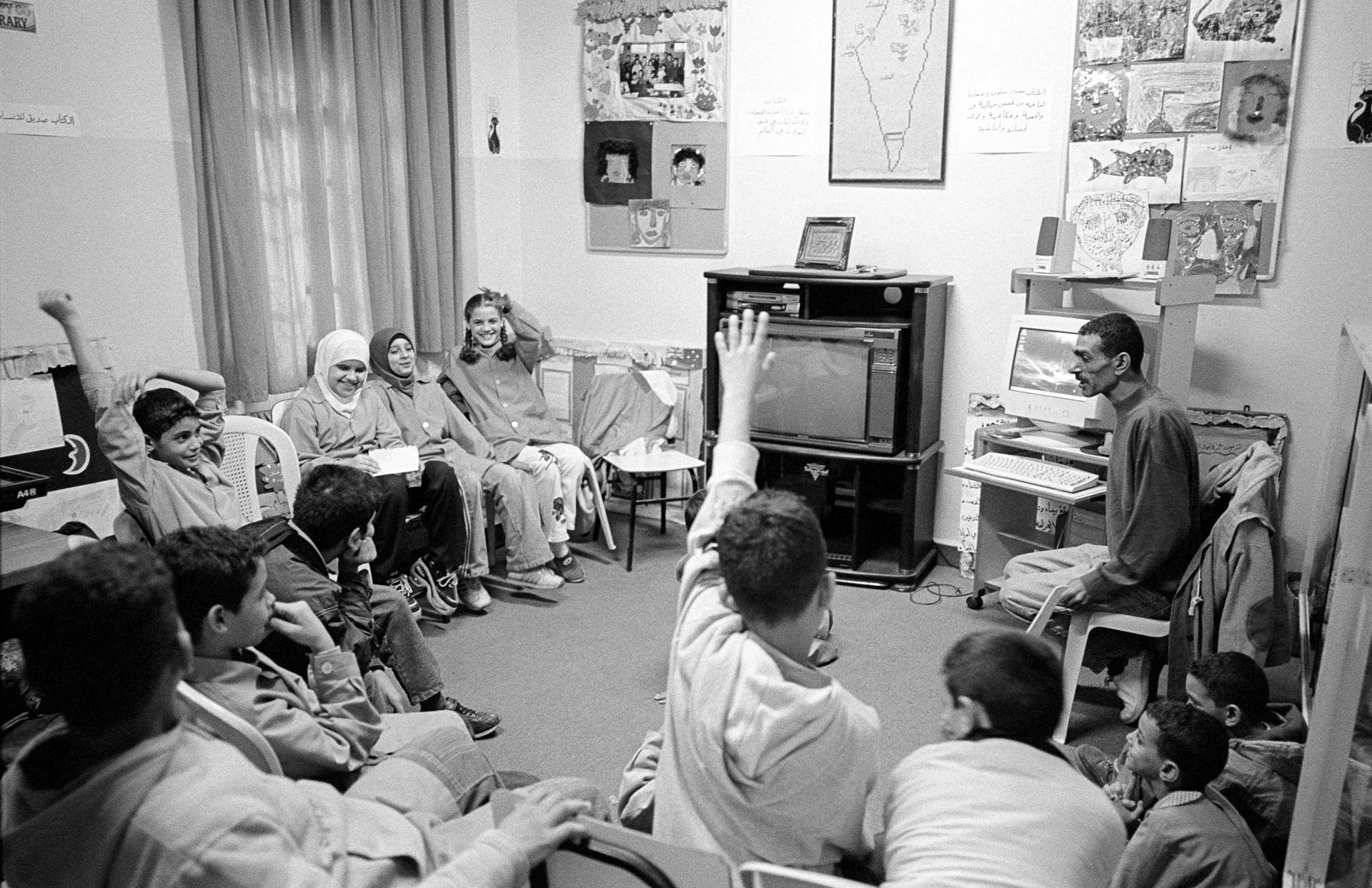
Shatila, UNRWA camp. With the (AL) Hindawi family. Mona and Jamal Hindawi are originally from Jaffa. Jamal is a marble polisher by profession, but often unemployed. Mona is a housewife and takes care of the six children that live with them. Three years ago, Jamal Al Hindawi started to learn about computers. He managed, since then, to build computers from second or third hand pieces found at the flea market and tought himself how to use them. He has given himself the mission to teach the kids in the camp the basics of computers – the tool of the future according to Jamal.

Umm Ali
Shatila refugee camp. Samira Abbas Hijazi, aka “Umm Ali“, is Lebanese and comes from the south of Lebanon. She was married to a Palestinian whom she lost during the “Tel el Zaatar“ massacres in 1978. Her daughter Zeinab, a young 17 year old newly wed, and her son-in-law are assassinated in 1982 during the Sabra & Shatila massacres. During the “Camp wars“ a few years later (1985-1987) she loses her son Ali, 10 years of age. Every time she talks about her memories, a surge of pain and tears appears, even 30 years after the events. Today “Umm Ali“ lives alone in a one room apartment on the outskirts of the Shatila refugee camp, just a few meters from the UNRWA camp. She has no toilets or bathroom, nor kitchen. She earns her money as a cleaning woman in a kindergarten where she also has a small shop with sweets for the children. She earns 140 US$ a month. Her rent is 65 US$ a mo
Beit Atfal Assumood.
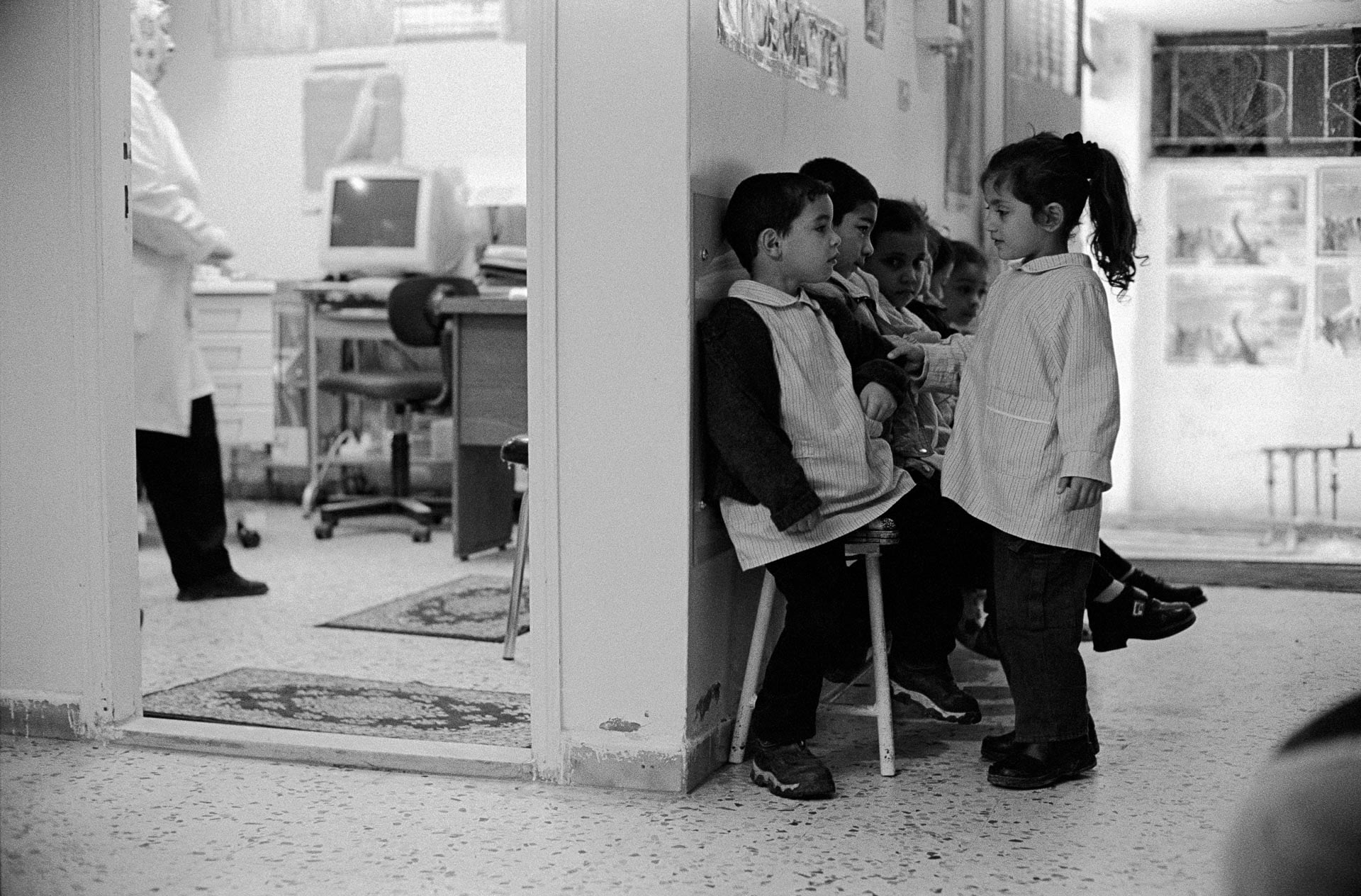
Shatila, Beit Atfal Assumood. The kindergarten. Beit Atfal Assumood a humanitarian, non-sectarian and non-governmental organization was established in 1976 after the Tal Al Zaatar massacre. It provides services for Palestinian refugees in Lebanon and other disadvantaged people with other nationalities living in the camps or close to them. The Shatila center has kindergarden classes and a dispensary. The children are waiting for their turn to see the dentist of the center, Dr. Ahmad Abu Rayya, the NGO’s dentist.
Lunch
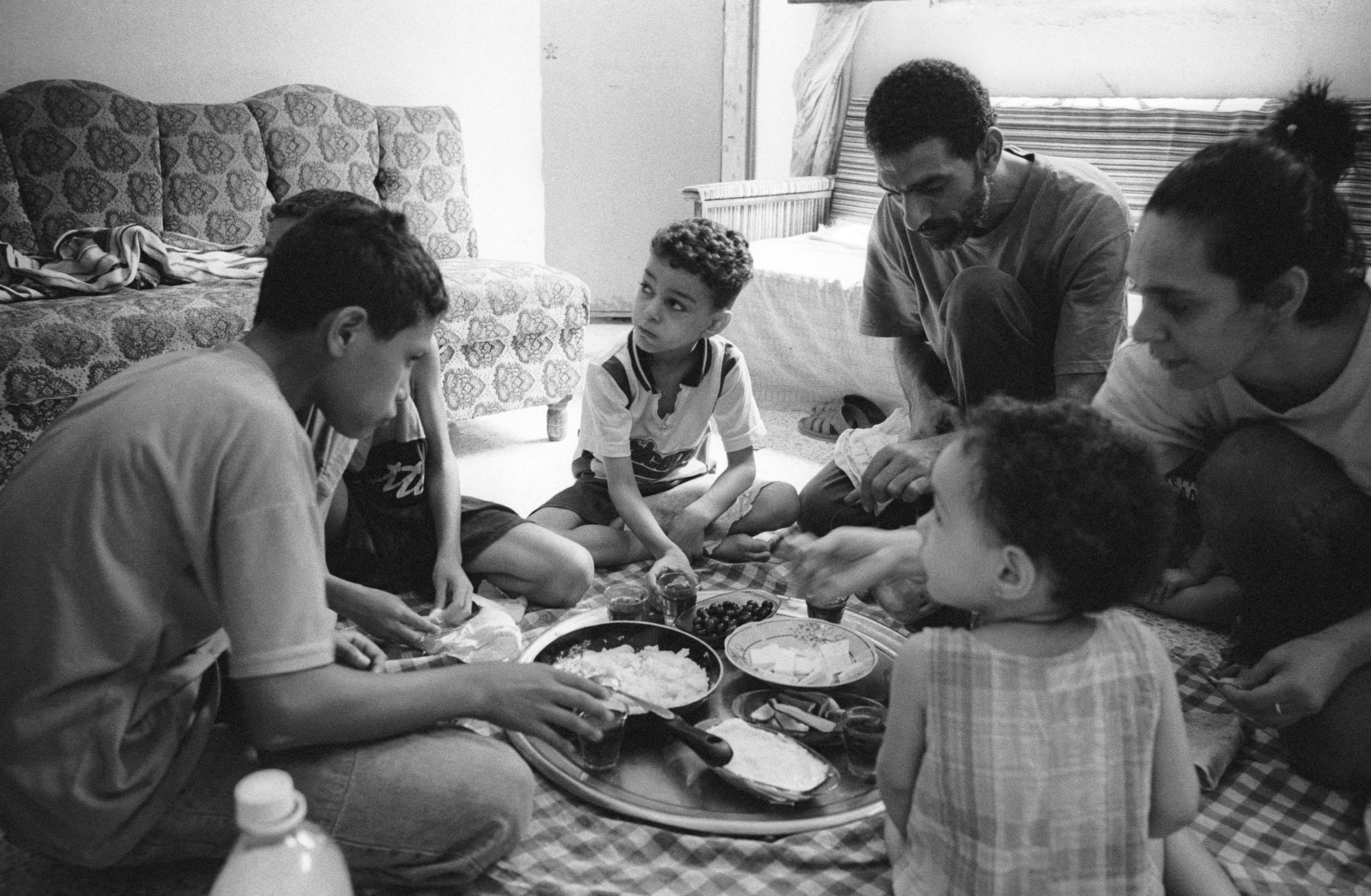
Shatila, UNRWA camp. The (Al) Hindawi family at lunch. From left to right: Ahmad, Jamal’s orphan nephew, Jihad and Nidal, Jamal, twin sisters Farah and Hanan and their mother Mona on the far right. Jamal is a marble polisher and runs a small food shop downstairs. Mona has no work and looks after the house.

The “Oud” player
Shatila, the “gipsy camp”. A “oud” player (oriental lute) entertains a few kids from the camp. The dewellings, made of corrugated iron, scrap wood and plastic sheets, are clean inside.

Games
Shatila, UNRWA camp. Before or after school, the boys get together in one of the many game rooms in the camp. The “Ramallah“ school for boys becomes the “Hama“ school for girls in the afternoon. The order is changed every month. Here the boys are in one of the game rooms playing table soccer.
A hopeless horizon
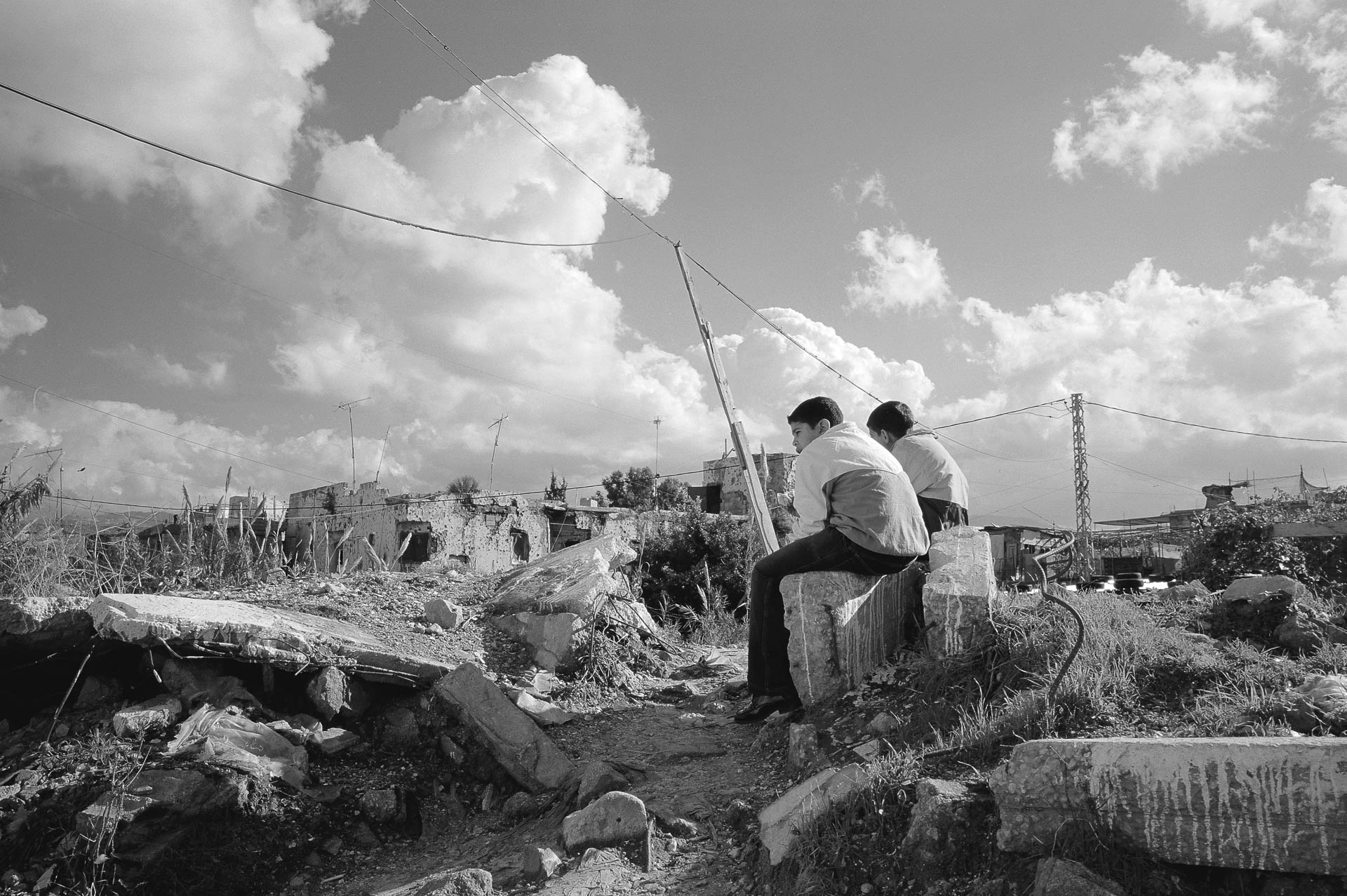
Shatila. The UNRWA camp. The kid’s horizon is filled with ruins.

War games
Shatila, UNRWA camp. The little boys and their war games.

Dispensary
Shatila, UNRWA camp. Doctor Saleh Maalouf, head of the PRCS Health Center (PRCS = Palestinian Red Crescent Society) is welcoming patients. Here at the Shatila health center all day patients are treated regardless of their nationalities. The patient is treated for symbolic sums, one or two US$ – vaccinations are done for free. Serious cases are sent to one of the nearby PRCS hospitals, mainly the one in the “Bourj al-Barajneh“ camp. Blood sampling.
Future?
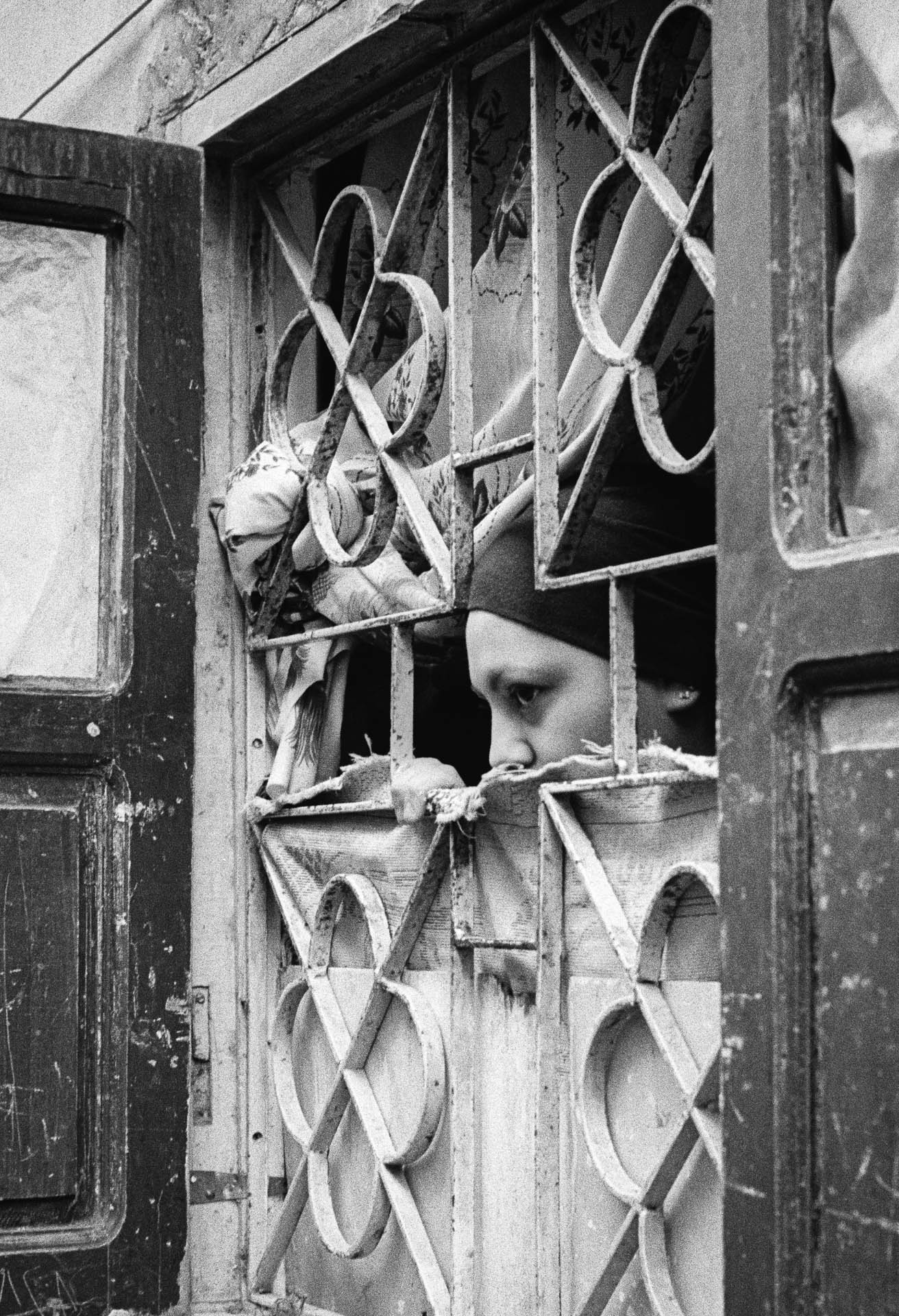
Shatila, UNRWA Camp. A young woman at her window.

Shatila, the “Nourieh” (Gypsies) camp.
Shatila, the “gipsy camp” below the Sports city of Beirut. The dwellings are made of pieces of corrugated iron, scrap wood and sheets of plastic. Sometimes an old sofa is used to keep the improvised roofs in place, but most of the time old tires and stones are used as weights.

Mohammed Shawqat Abu Rudaina
Shatila, UNRWA camp. Mohammed Shawqat Abu Rudaina at age 28. When Mohammed was five years old, he witnessed the massacre of his father, his pregnant sister and her husband, and three other members of his family. It took him 22 years to overcome the traumas and regain his taste for life. He now wants to finish school and study. Here we see Mohammed outside of his home.

Narrow streets of Chatila
Shatila, UNRWA camp. The streets of the camp. A boy is going to school.

Kindergarden
Shatila, UNRWA camp. Beit Atfal Assumood. The kindergarten. Beit Atfal Assumood a humanitarian, non-sectarian and non-governmental organization was established in 1976 after the Tal Al Zaatar massacre. It provides services for Palestinian refugees in Lebanon and other disadvantaged people with other nationalities living in the camps or close to them.

Lunch
Shatila, UNRWA camp. With the (AL) Hindawi family. Mona and Jamal Hindawi are originally from Jaffa. Jamal is a marble polisher by profession, but often unemployed. Mona is a housewife and takes care of the six children that live with them. 15:20. Lunch of the Al Hindawi family on the living room floor. From left to right: Ahmad, Mona, Farah, Ilham and Jamal. Ilham and Ahmad are Jamal’s niece and nephew. Their mother died early and their father succumbed to a work accident. They were naturally adopted by Mona and Jamal.

Good grades
Shatila, UNRWA camp. With the (AL) Hindawi family. Mona and Jamal Hindawi are originally from Jaffa. Jamal is a marble polisher by profession, but often unemployed. Mona is a housewife and takes care of the six children that live with them. The after-noon. Jihad and Nidal are back from school. A bit of TV time with their parents before an afternoon snack. Mona is looking at the trimestrial grades. Jihad and Nidal are among the best students of their class.
Shadows
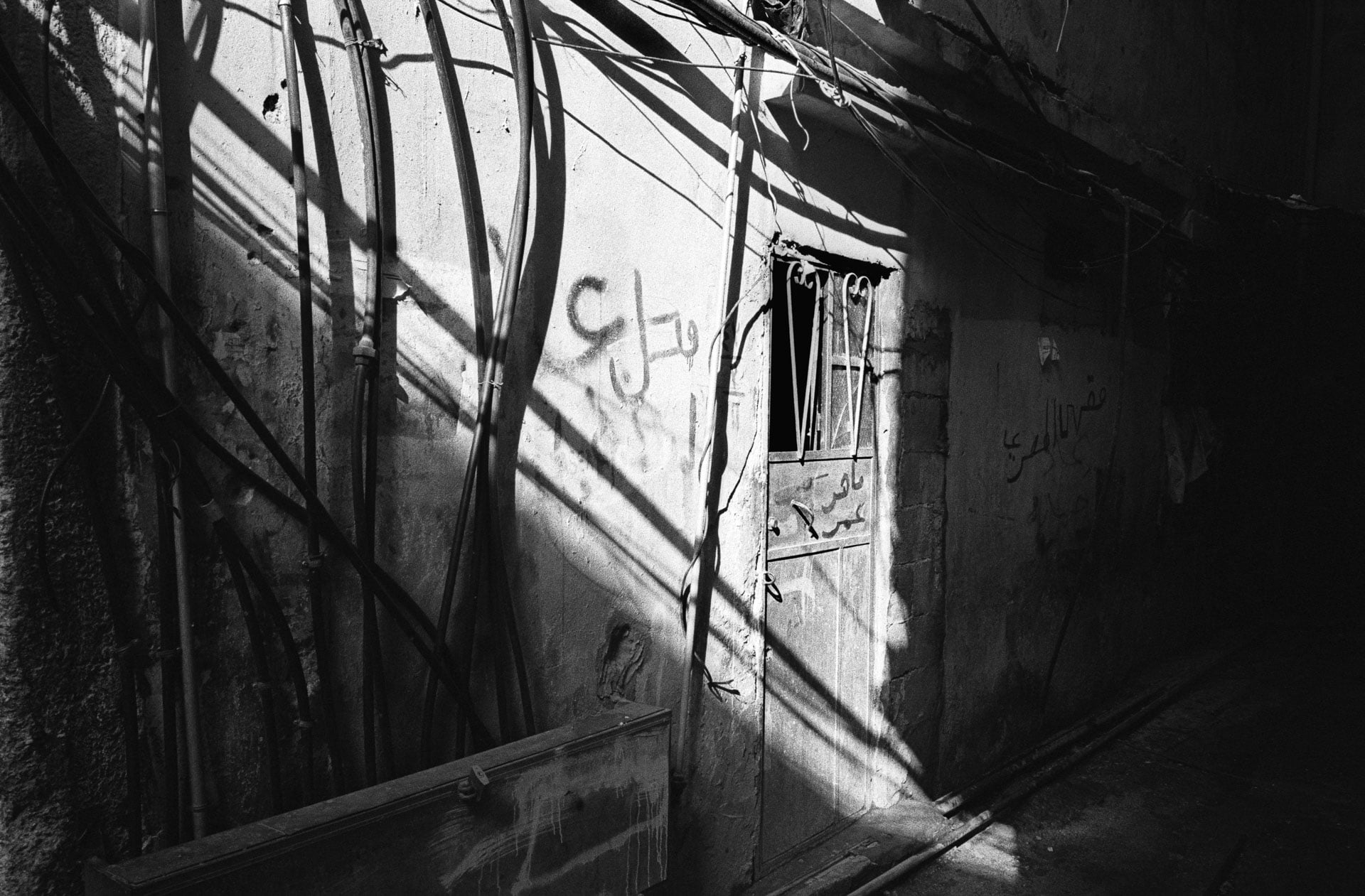
Shatila, UNRWA camp. One of the streets that lead inside the camp.

Narrow streets of Chatila
Shatila, UNRWA camp. In the streets of the Shatila camp, in front of the Al Hindawi family house. Early evening.

Selling birds
Shatila, near the sports city of Beirut. A Syrian of palestinian origin survives by selling birds captured in the wild.

Jamal just woke up
Shatila, UNRWA camp. With the (AL) Hindawi family. Mona and Jamal Hindawi are originally from Jaffa. Jamal is a marble polisher by profession, but often unemployed. Mona is a housewife and takes care of the six children that live with them. Jamal Al Hindawi slowly emerges from sleep. (Turkish) coffee and first cigarette. The TV is already on. While Mona brings the boys to school, Jamal takes care of the twins, Farah and Hanan.
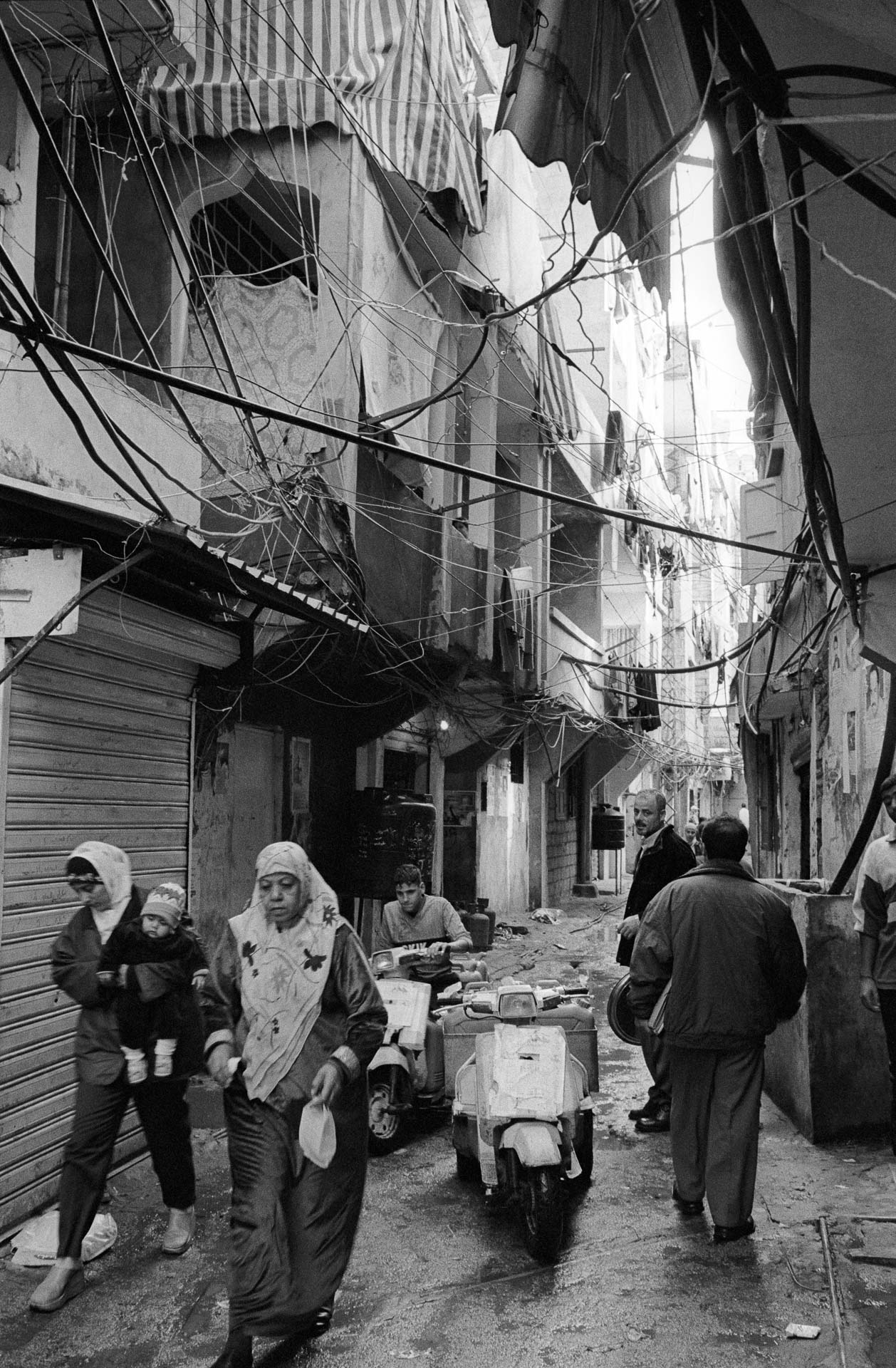
One of the main arteries
Shatila, UNRWA camp. One of the main streets of the camp.

Umm Ali
Shatila refugee camp. Samira Abbas Hijazi, aka “Umm Ali“, is Lebanese and comes from the south of Lebanon. She was married to a Palestinian whom she lost during the “Tel el Zaatar“ massacres in 1978. Her daughter Zeinab, a young 17 year old newly wed, and her son-in-law are assassinated in 1982 during the Sabra & Shatila massacres. During the “Camp wars“ a few years later (1985-1987) she loses her son Ali, 10 years of age. Every time she talks about her memories, a surge of pain and tears appears, even 30 years after the events. Today “Umm Ali“ lives alone in a one room apartment on the outskirts of the Shatila refugee camp, just a few meters from the UNRWA camp. She has no toilets or bathroom, nor kitchen. She earns her money as a cleaning woman in a kindergarten where she also has a small shop with sweets for the children. She earns 140 US$ a month. Her rent is 65 US$ a month. Here she’s with her grand-daughter, Aya. Aya and her mother live abroad.

Children
Shatila, main street. Two little girls are playing.
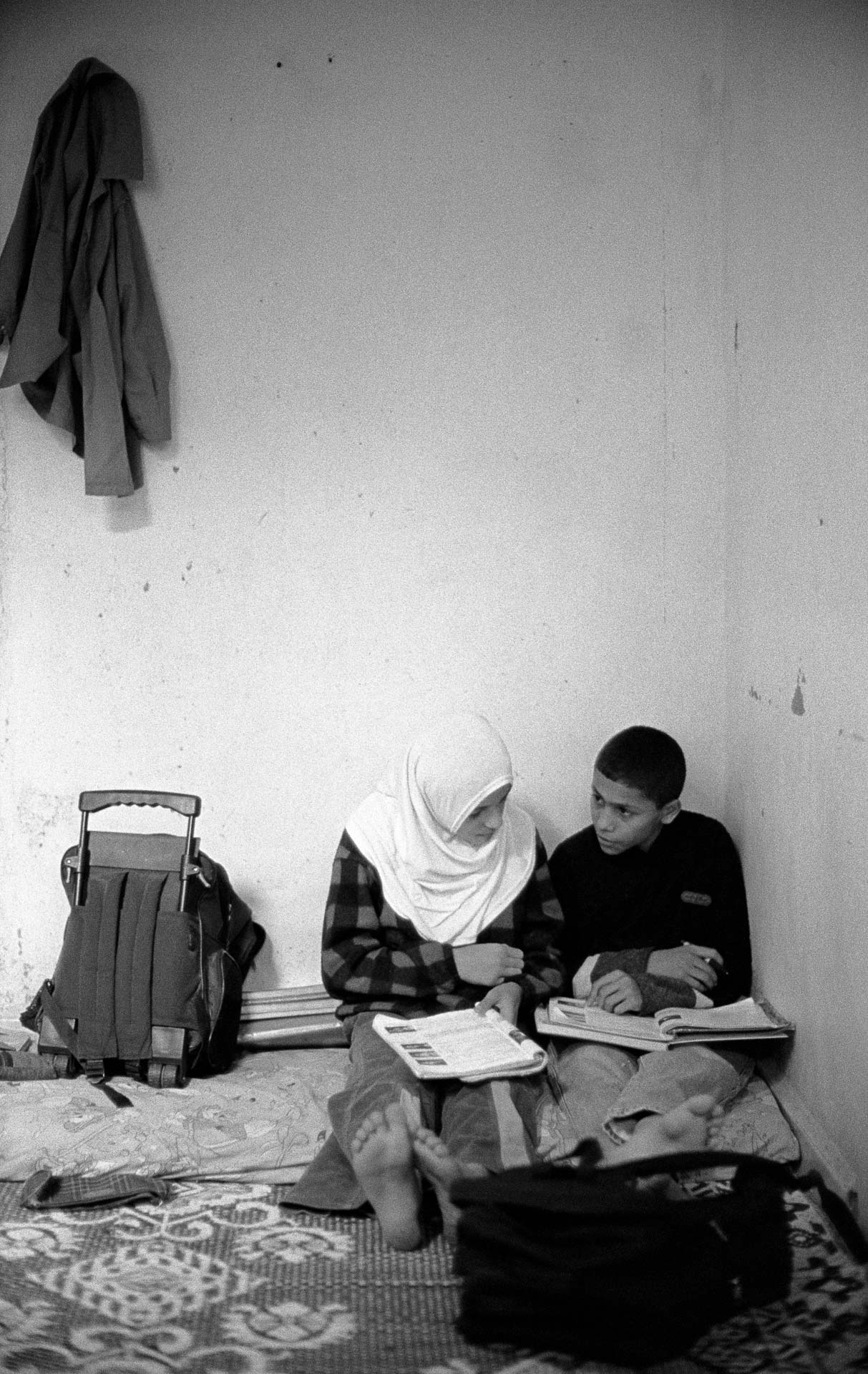
Homework
Shatila, UNRWA camp. With the (AL) Hindawi family. Mona and Jamal Hindawi are originally from Jaffa. Jamal is a marble polisher by profession, but often unemployed. Mona is a housewife and takes care of the six children that live with them. Ilham and Ahmad Al Hindawi are doing their homework. Ahmad, who is in the “Ariha” (Jericho) secondary school, wants to be a lawyer for his country. He knows it is nothing but a dream and that he cannot be a lawyer in Lebanon.

The elders
Beirut, Lebanon. Sabra. The senior men gather sometimes in a café to smoke the nargile (hookah). Here in the Sabra area, the “Abu Nader Al Salhan“ cafe.

The “Cité Sportive” (Sports City) of Beirut
Beirut, Lebanon. Shatila is near to the “sports city” of Beirut.

War games
Shatila, UNRWA camp. War games in the narrow alleys of the camp.

Kindergarten
Shatila, UNRWA camp. Beit Atfal Assumood. The kindergarten. Beit Atfal Assumood a humanitarian, non-sectarian and non-governmental organisation was established in 1976 after the Tal Al Zaatar massacre. It provides services for Palestinian refugees in Lebanon and other disadvantaged people with other nationalities living in the camps or close to them.
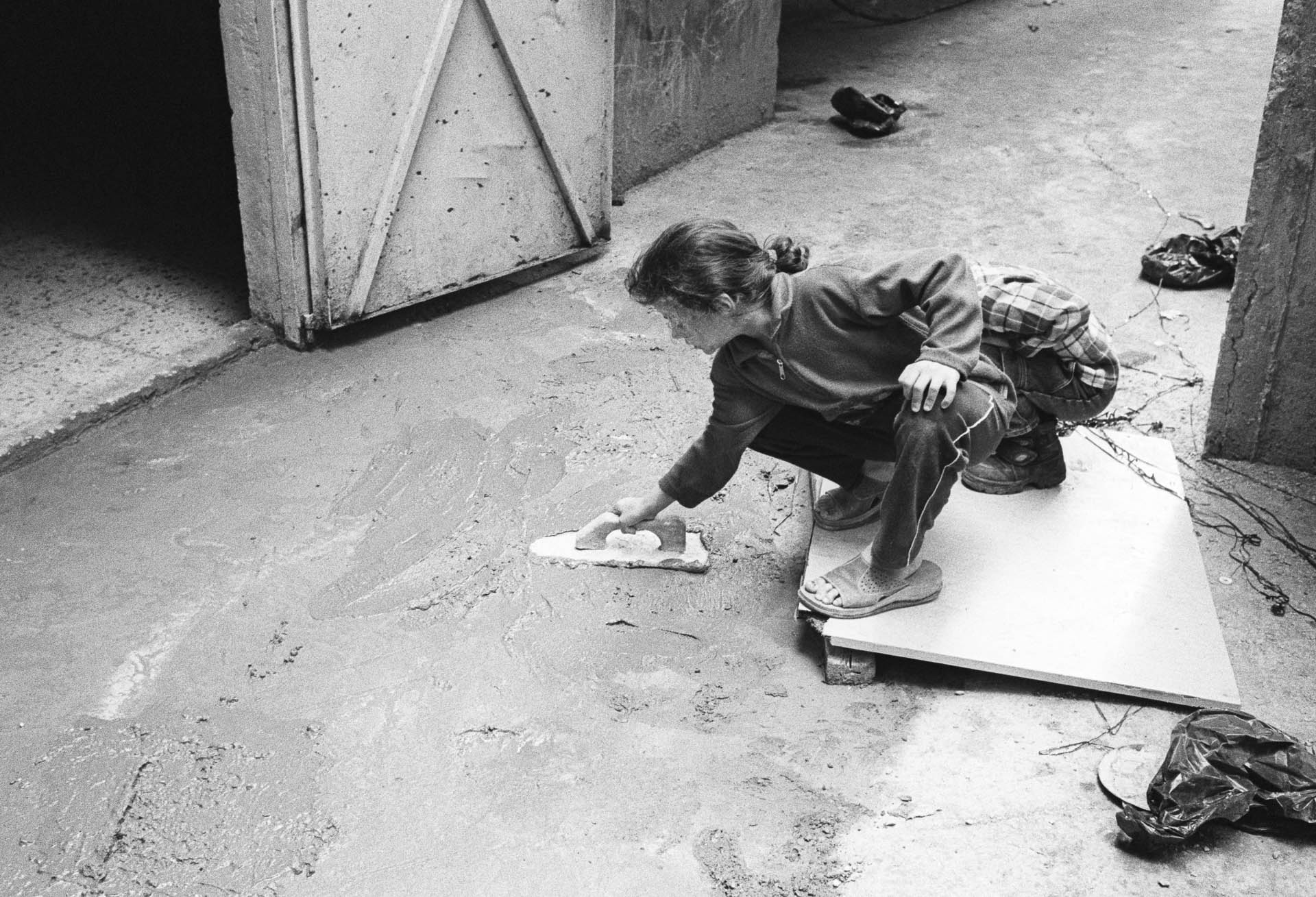
Children help out
Shatila, UNRWA camp. A little girl is equalizing the fresh concrete in front of her house.
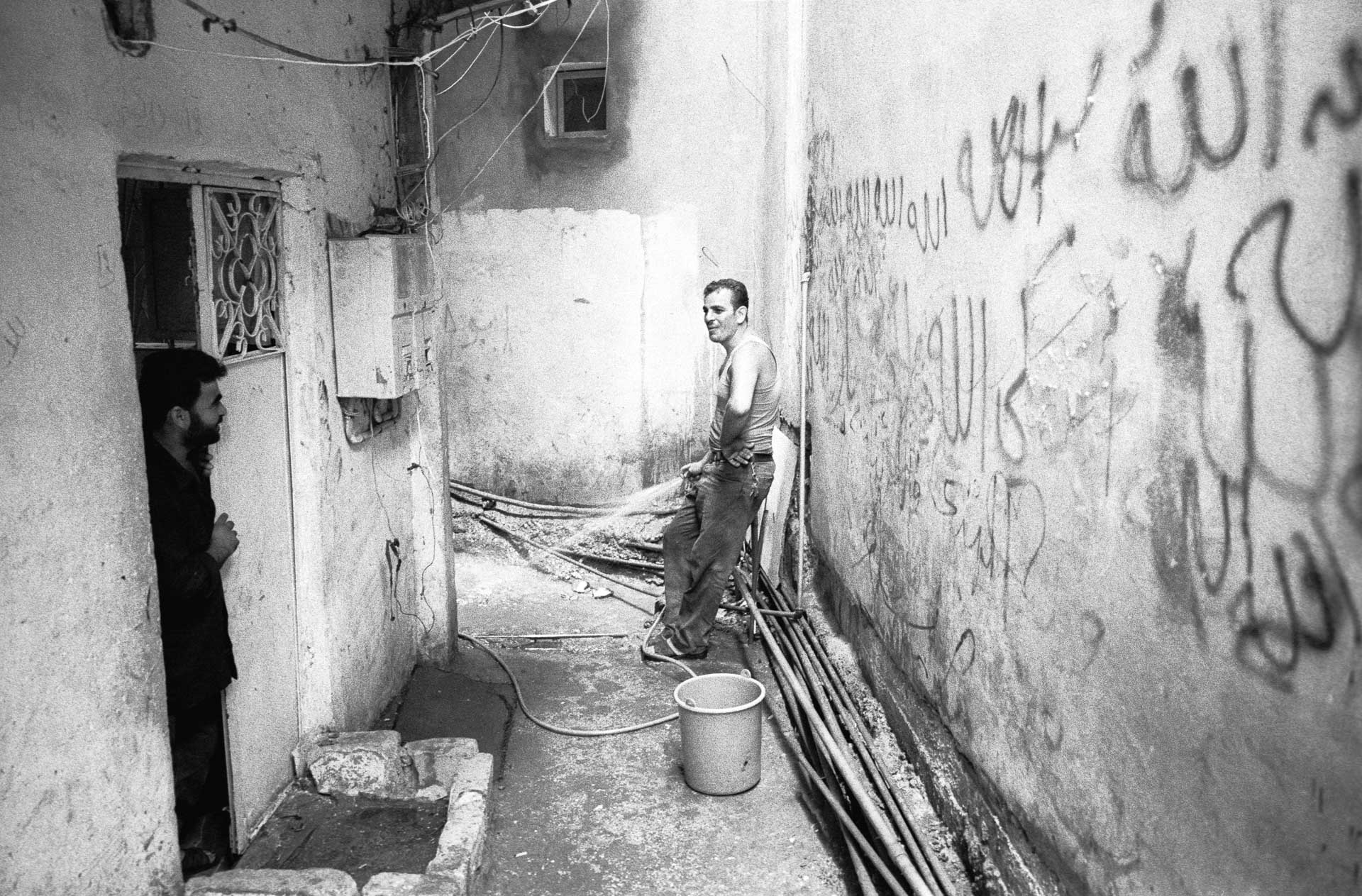
Cleaning
Shatila, UNRWA camp. The camp is cleaned by specific UNRWA services. The bigger streets are cleaned every day. The smaller alleys every second day.

Blood test
Shatila, UNRWA camp. At the PRCS Health Center. (PRCS = Palestinian Red Crescent Society). Here all day patients are treated regardless of their nationalities. The patient is treated for symbolic sums, one or two US$ – vaccinations are done for free. Serious cases are sent to one of the nearby PRCS hospitals, mainly the one in the “Bourj al-Barajneh“ camp. Blood sampling.

Children
Shatila, UNRWA camp. Boys in the alleys of the camp. How many fingers to victory?

Afternoon
Shatila, UNRWA camp. With the (AL) Hindawi family. Mona and Jamal Hindawi are originally from Jaffa. Jamal is a marble polisher by profession, but often unemployed. Mona is a housewife and takes care of the six children that live with them. Every evening, Mona Al Hindawi helps her children with homework.

Childplay
Shatila, UNRWA camp. Beit Atfal Assumood. The kindergarten, two little girls play with their teacher, Ms. Maryam Shamieh. Beit Atfal Assumood a humanitarian, non-sectarian and non-governmental organization was established in 1976 after the Tal Al Zaatar massacre. It provides services for Palestinian refugees in Lebanon and other disadvantaged people with other nationalities living in the camps or close to them.

The dentist
Shatila, UNRWA camp. Beit Atfal Assumood. The kindergarten. Beit Atfal Assumood a humanitarian, non-sectarian and non-governmental organization was established in 1976 after the Tal Al Zaatar massacre. It provides services for Palestinian refugees in Lebanon and other disadvantaged people with other nationalities living in the camps or close to them. The Shatila center has kindergarden classes and a dispensary. Dr. Ahmad Abu Rayya, the NGO’s dentist, treats Tarek, a pupil of the kindergarden.